D-Shape Mess Tin
The D-shaped mess tin, officially part of the “Mess Tin, D-shaped, Mk I” set, was developed in the late 19th century and remained standard issue through the First World War and beyond. Its origins trace back to reforms in British military equipment during the Victorian era, when the army sought to modernise and standardise kit following earlier logistical shortcomings observed in conflicts such as the Crimean War. Rather than being attributed to a single named designer, it was the product of War Office standardisation efforts, shaped by practical field requirements rather than individual invention.
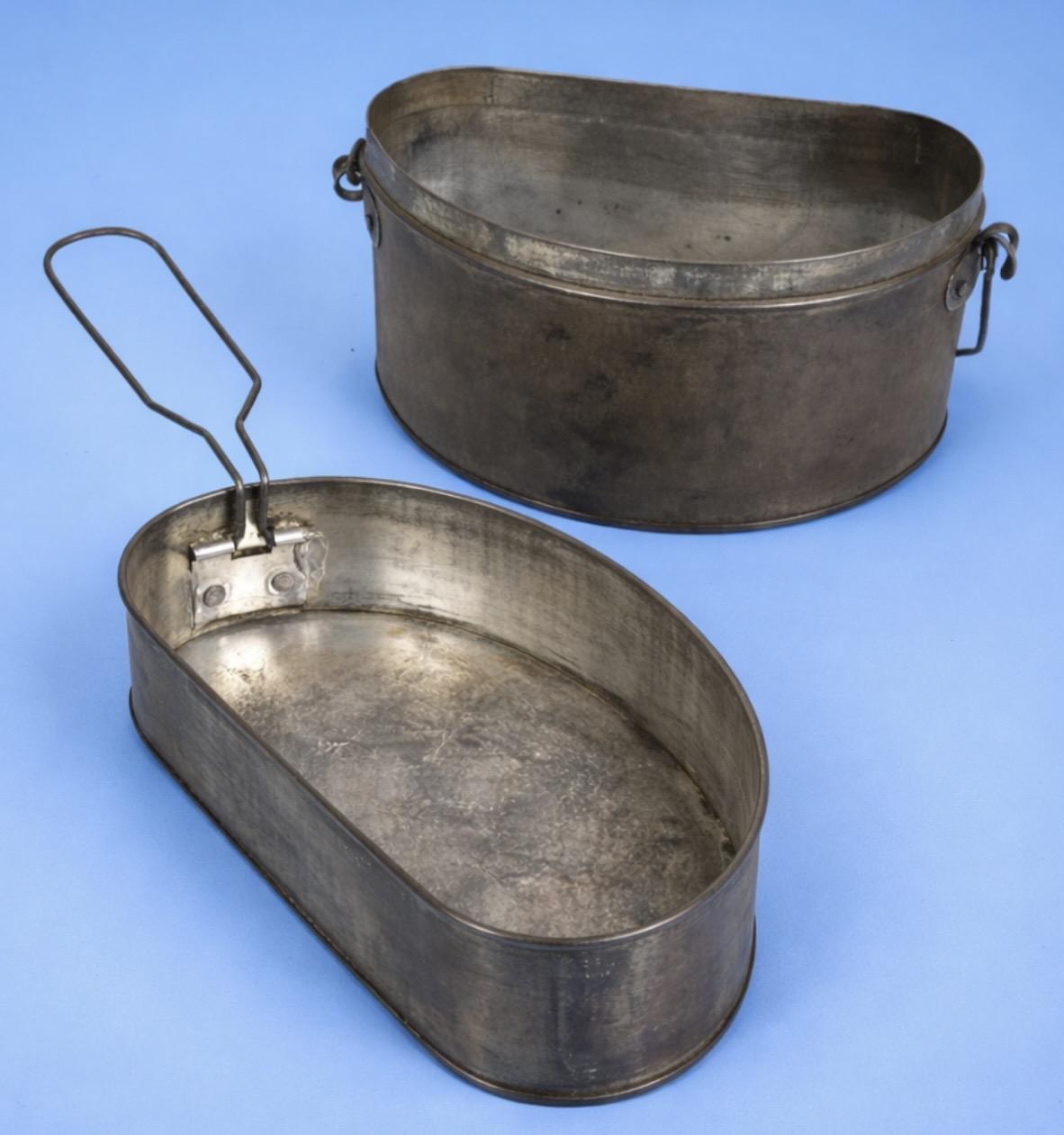
The design consists of two nesting tins: a larger outer container and a smaller inner one, both with the distinctive flattened D shape. This shape allowed the tins to sit comfortably against the body when carried in a soldier’s pack, maximising space efficiency and reducing discomfort. A folding metal handle was attached to the outer tin, enabling it to be suspended over a fire or carried when hot. The inner tin could be used separately for cooking or serving, giving soldiers flexibility in how they prepared and consumed their food.
Manufacture of these mess tins took place across Britain and the wider Empire, involving numerous contractors rather than a single factory. Companies specialising in metal goods, cookware, and military equipment were commissioned to produce them under War Office contracts. Production sites were spread across industrial centres such as Birmingham, Sheffield, and London, where metalworking industries were well established. Many tins were stamped with manufacturer marks, dates, and inspection stamps, which today help collectors identify their origin.
The scale of production was enormous. Millions of D-shaped mess tins were produced between the late 19th century and the end of the First World War. Given that the British Army expanded to several million men during the war, each requiring at least one set, production had to meet vast demand. While exact figures are difficult to pin down due to the number of contractors and incomplete surviving records, it is generally accepted that several million sets were manufactured, making them one of the most common surviving artefacts from the period.
The tins were typically made from tinned steel, sometimes referred to as “tinplate,” which is steel coated with a thin layer of tin to resist corrosion. This material was chosen because it was relatively cheap, strong, and resistant to rust, an essential property given the wet and muddy conditions of trench warfare. Earlier or higher-quality versions could occasionally be made from aluminium, which was lighter but more expensive and less robust. Over time, wear and exposure often caused the tin coating to wear off, leading to rust, which is why many surviving examples show significant corrosion.
In terms of use, the mess tins were a vital part of a soldier’s daily life. They were primarily used for cooking and eating meals. Soldiers would use them to boil water, heat rations such as bully beef or stew, and make tea, which was an essential part of British military culture. The handle allowed the tin to be placed directly over small fires or improvised stoves. The inner tin could serve as a plate or secondary cooking vessel, enabling basic meal preparation even in difficult conditions.
Beyond their intended purpose, soldiers often used mess tins in improvised ways. They could be used as shovels in emergencies, for carrying water or other supplies, or even as makeshift helmets or shields in extreme situations, though this offered minimal protection. Some soldiers also used them for personal hygiene tasks such as washing or shaving.
There are many interesting details and variations that make the D-shaped mess tin a subject of fascination for historians and collectors. Many examples bear unit markings, personal initials, or scratched inscriptions added by soldiers, giving a direct link to individual stories from the war. Some tins show evidence of battlefield repairs, such as soldering or patching, reflecting the need to make equipment last under harsh conditions.
Another notable aspect is how long the design endured. The D-shaped mess tin continued in use well into the Second World War and even beyond, demonstrating the effectiveness of its original concept. Later designs eventually replaced it, particularly with the introduction of more modern cooking systems, but the basic principle of nesting containers remained influential.
In archaeological terms, mess tins are among the most commonly recovered items from First World War sites. Their durability means they often survive when other materials have decayed. However, they also provide evidence of daily life rather than combat, offering insight into the routines and hardships of soldiers rather than just the battles themselves.