Embassy siege
The Iranian Embassy siege began on 30 April 1980 when six armed men belonging to an Arab separatist group burst into the Iranian Embassy at 16 Prince’s Gate in South Kensington, London. The gunmen were members of a group calling itself the Democratic Revolutionary Front for the Liberation of Arabistan, seeking autonomy for Iran’s oil-rich Khuzestan province. They took 26 hostages, including embassy staff, visitors, and a police officer who had been guarding the building. The leader of the group was a man known as Oan Ali Mohammed.
The siege unfolded over six days and became one of the first major hostage crises to be broadcast almost continuously on television in the United Kingdom. Police quickly surrounded the building and began negotiations, while the British government, led at the time by Margaret Thatcher, authorized contingency plans for a military intervention if needed. Responsibility for such an operation fell to the Special Air Service, particularly their Counter Revolutionary Warfare wing, which had been formed specifically for situations like this.
Inside the embassy, conditions became increasingly tense. The hostage-takers demanded the release of political prisoners in Iran and safe passage out of the United Kingdom. Negotiators managed to secure the release of a few hostages in the early days, including a pregnant woman and some non-Iranian staff, but the situation deteriorated as deadlines passed without the attackers’ demands being met. The gunmen grew more agitated and unpredictable, and the psychological pressure on the hostages intensified.
By 5 May 1980, after days of stalemate, the situation reached a breaking point when the gunmen killed one of the hostages, Abbas Lavasani, and threw his body out of the embassy. This act convinced the British authorities that further delay could result in more deaths. Margaret Thatcher personally approved a full-scale assault by the SAS.
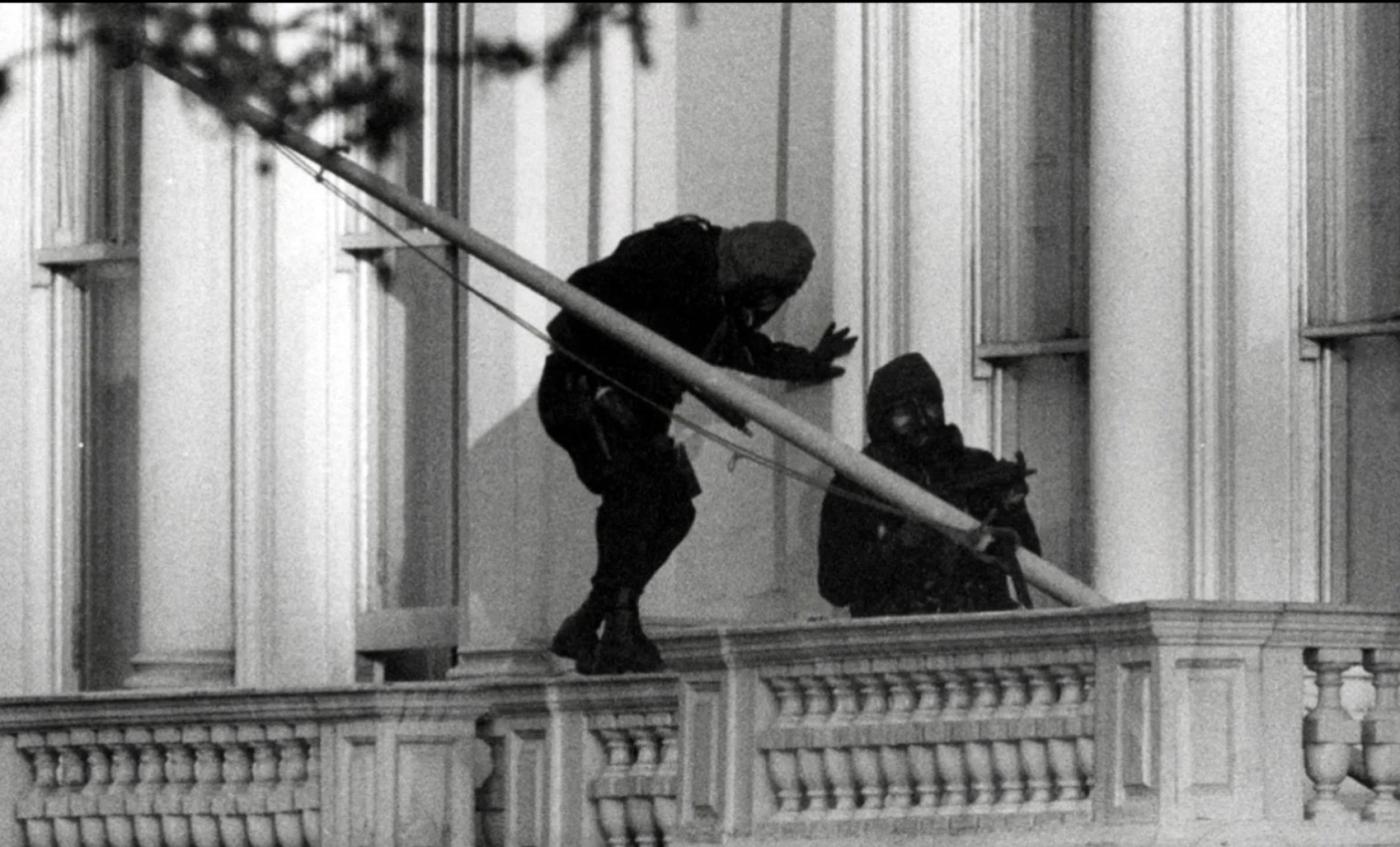
The assault, codenamed Operation Nimrod, began in the early evening of 5 May 1980. It was carried out by teams from B Squadron SAS, including soldiers such as John McAleese and Robin Horsfall, whose names later became publicly associated with the operation. The plan involved simultaneous entry points to overwhelm the hostage-takers with speed and surprise. Soldiers abseiled down the front of the building from the roof while others entered from the rear.
The operation was dramatic and highly dangerous. As SAS troopers descended the front of the embassy, one of the ropes became tangled and caught fire after a stun grenade detonated, forcing a soldier to quickly cut himself free and continue the assault under intense pressure. The team used explosive charges to breach windows and doors, flooding the interior with smoke and confusion. Within minutes, they moved room by room, engaging the gunmen at close quarters.
The entire assault lasted approximately 17 minutes. Five of the six hostage-takers were killed during the operation, while one, Fowzi Nejad, was captured alive after hiding among the hostages. Nineteen hostages were successfully rescued, although two died during the siege—one before the assault and another during the chaotic rescue. Several SAS soldiers and hostages were injured, but the operation was widely regarded as a success given the circumstances.
The event had a profound impact on public perception of special forces and counter-terrorism. Millions of viewers watched the assault live on television, an unusual and striking experience at the time. The images of black-clad SAS soldiers in gas masks storming the building became iconic and helped cement the regiment’s reputation worldwide. It also influenced how governments responded to hostage situations in the future, emphasizing rapid, decisive action when negotiations fail.
In the aftermath, the captured gunman was tried and sentenced to life imprisonment in the United Kingdom. The siege also led to improvements in security at diplomatic buildings and further development of counter-terrorism tactics. For the SAS, Operation Nimrod became one of its most famous missions, studied by military and police forces around the world.
The Iranian Embassy itself was heavily damaged by fire during the assault, particularly in the upper floors where the fiercest fighting took place. It was later repaired and continues to function today, but the events of those six days in 1980 remain one of the most dramatic and significant incidents in modern British history.