Dr Josef Mengele
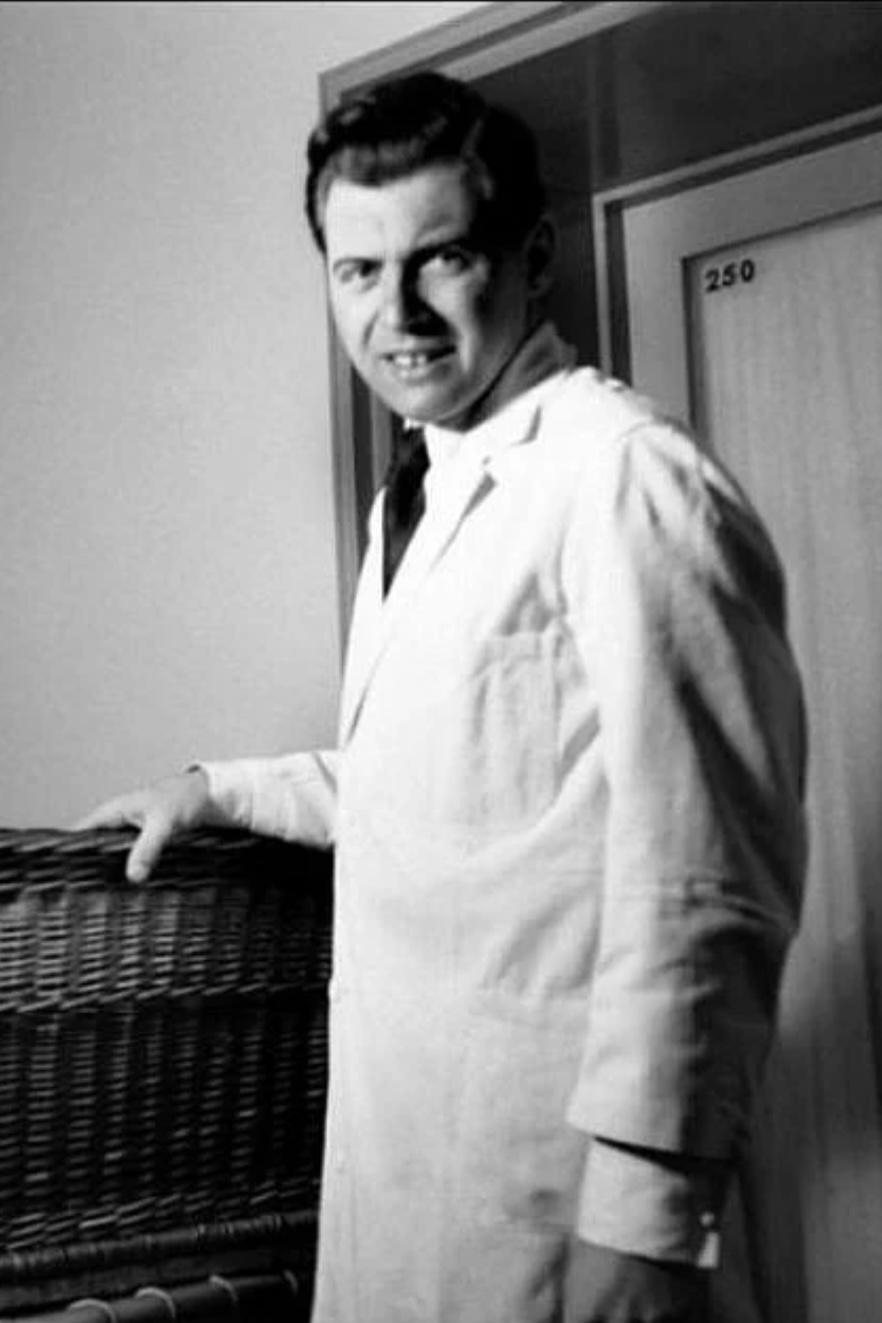
Josef Mengele was born in 1911 in the Bavarian town of Günzburg, into a prosperous and outwardly respectable Catholic family. He was intelligent, academically successful, and ambitious, studying philosophy, anthropology, and medicine at German universities during a period when racial ideology and pseudoscience were becoming embedded in higher education. By the mid-1930s he had earned doctorates and aligned himself with theories of racial hierarchy and heredity that were actively promoted in Nazi Germany. These ideas were not fringe beliefs but were increasingly treated as legitimate science, shaping Mengele’s worldview long before the war began.
In 1937 he joined the Nazi Party, and a year later the SS. During the Second World War he served as a medical officer on the Eastern Front, where he was wounded and subsequently deemed unfit for further frontline service. In 1943 he was posted to Auschwitz-Birkenau, a place that would define his historical legacy. There, as a camp doctor, he became notorious not only for his enthusiasm for duty but for the cruelty with which he carried it out.
At Auschwitz-Birkenau, Mengele regularly took part in selections on the arrival ramp, deciding within seconds who would be sent to forced labour and who would be sent directly to the gas chambers. He performed this task with chilling detachment, often presenting himself as calm and even courteous while determining life or death. Beyond these selections, he pursued what he described as medical research, focusing particularly on twins, people with dwarfism, and prisoners with physical abnormalities. Under the guise of science, he subjected them to agonising procedures that included injections, amputations, deliberate infections, and invasive examinations without consent or anaesthetic. Many victims died during these experiments, while others were killed afterwards so their bodies could be dissected and compared.
The experiments produced no meaningful scientific results. They were driven by racial ideology, career ambition, and a complete disregard for human life. Mengele’s status as a trained physician makes his actions especially disturbing, as he violated the most basic principles of medicine, transforming healing knowledge into a tool of torture and murder.
As the war drew to a close and Soviet forces approached Auschwitz in January 1945, Mengele fled west. He was briefly detained by Allied forces later that year but escaped identification and was released. For several years he lived in Germany under false identities before escaping to South America in 1949, assisted by networks that helped former Nazis evade prosecution. He lived first in Argentina, later in Paraguay and Brazil, supported by family money and sympathisers.
After the capture of Adolf Eichmann in 1960, Mengele became increasingly paranoid, moving frequently and living in isolation. Despite being one of the most wanted Nazi war criminals in the world, he was never captured or brought to trial. In 1979 he died after suffering a stroke while swimming off the coast of Brazil and was buried under an assumed name. It was not until years later that forensic investigation and DNA testing confirmed his identity.
Mengele’s legacy is one of extreme moral failure and lasting historical significance. His crimes played a role in shaping postwar medical ethics, particularly the development of strict standards around consent and human experimentation. More broadly, his life stands as a warning of how professional authority, when combined with ideology and unchecked power, can lead to unimaginable cruelty. He was not an isolated monster but a product of institutions and beliefs that allowed science and medicine to be stripped of humanity, with consequences that continue to resonate today.