On this day in military history…
The Battle of Fromelles, fought from 19 to 20 July 1916, was one of the most disastrous British and Australian attacks of the First World War. Conducted near the small French village of Fromelles, close to the border with Belgium, the assault was intended to distract the German Army from the much larger Battle of the Somme taking place around 50 miles to the south. Instead, it became a costly and unnecessary failure in which thousands of inexperienced soldiers were killed or wounded for no lasting gain.
The attack was launched against a strongly defended section of the German front line known as the Sugar Loaf salient. The Germans had occupied the high ground around Aubers Ridge since 1914 and had spent nearly two years improving their positions. Their defences included deep concrete shelters, thick belts of barbed wire, carefully positioned machine-gun posts and artillery observation points overlooking the flat countryside.
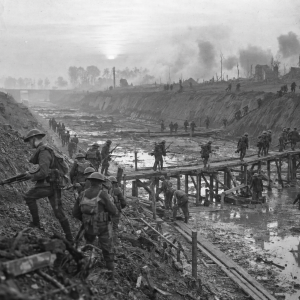
Any troops advancing across no man’s land could be observed almost immediately. The terrain offered little natural protection, while drainage ditches, shell holes and waterlogged ground made rapid movement difficult. Previous British attacks in the area during 1915 had already demonstrated the strength of the German position, yet another assault was ordered during the summer of 1916.
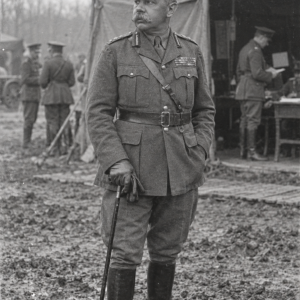
The main Allied offensive on the Somme had begun on 1 July 1916. British commanders were concerned that German divisions stationed farther north might be transferred south to reinforce the Somme battlefield. General Sir Richard Haking, commander of the British XI Corps, proposed an attack near Fromelles to persuade the Germans that a larger offensive might be developing in French Flanders.
The operation was therefore intended mainly as a diversion rather than an attempt to achieve a major breakthrough. However, the troops ordered to carry it out were given real objectives and expected to capture and hold the enemy’s trenches. The attack would be made by the British 61st Division and the newly arrived Australian 5th Division.
For the Australians, Fromelles would be their first major battle on the Western Front. The Australian Imperial Force had recently been expanded following the Gallipoli campaign, and the 5th Division had been formed in Egypt during February 1916. It was commanded by Major General James McCay and included the 8th, 14th and 15th Australian Infantry Brigades.
Many of its soldiers had only recently arrived in France and had limited experience of trench warfare on the Western Front. They had been introduced to the front line in the relatively quiet Armentières sector, where they learned the routines of trench duty, patrolling and surviving enemy artillery fire. They were not yet prepared for the scale of the operation they were about to undertake.
The British 61st Division, sometimes known as the 2nd South Midland Division, was also inexperienced. It had arrived in France only a few weeks before the Australians and had not previously taken part in a major offensive. Both divisions were therefore being asked to assault one of the strongest sections of the German line without the experience possessed by formations that had already fought major battles in France.
Opposing them was the German 6th Bavarian Reserve Division. Its troops knew the ground well and had created a defensive system designed to channel attackers into areas covered by overlapping machine-gun fire. Among the German soldiers serving in the area was a young runner named Adolf Hitler, although there is no evidence that he played any significant part in the battle itself.
The original plan was repeatedly changed in the days before the attack. Heavy rain and poor visibility caused delays, while doubts were raised about whether the artillery could destroy the German wire and defensive positions. The assault was eventually scheduled for the evening of 19 July, giving the attackers only a limited period of daylight before darkness fell.
British and Australian artillery began bombarding the German lines during the morning. The shelling continued for several hours and created clouds of smoke and dust across the battlefield. Although some sections of enemy wire were cut, much of it remained intact. Many German shelters also survived because the artillery lacked enough heavy shells to destroy the deepest positions.
The long preliminary bombardment removed any possibility of surprise. German troops were alerted to the coming attack and moved into their defensive positions as soon as the shelling began. Machine guns were prepared, artillery was registered on likely approaches and reserves were brought forward to reinforce threatened areas.
Shortly before the main attack, Australian soldiers began moving out of their trenches and assembling in no man’s land. This unusual decision was intended to reduce congestion in the front line and allow the assaulting waves to advance together. The men lay in the open under the protection of the artillery barrage, waiting for the order to move.
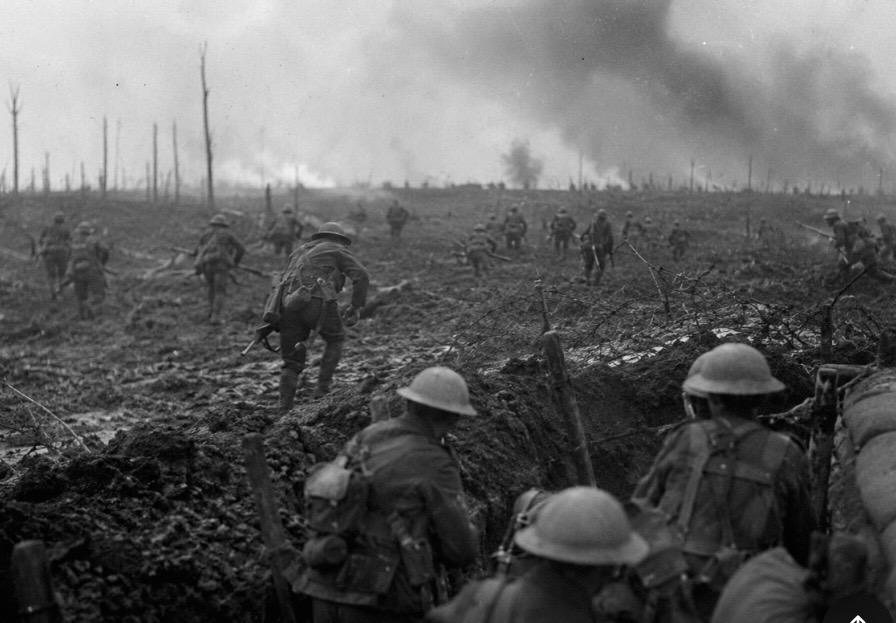
At approximately 6.00 p.m. on 19 July 1916, the first assaulting troops rose and began advancing towards the German line. The British 61st Division attacked on the right, while the Australian 5th Division attacked on the left. Almost immediately, German machine guns opened fire.
The strongest resistance came from the Sugar Loaf salient, which projected towards the Allied positions and allowed German machine-gunners to fire across the attackers from several directions. The British troops advancing directly towards it were cut down in large numbers. Many could not get through the unbroken wire, while others were forced to seek cover in shell holes and drainage ditches.
The Australian battalions attacking farther north initially achieved greater success. Soldiers from the 8th and 14th Brigades crossed no man’s land and entered sections of the German front line. In places, the bombardment had been effective enough to force German troops into their shelters, allowing the Australians to rush the trenches before the defenders could fully recover.
The Australians captured prisoners, cleared dugouts and pushed beyond the first German position. However, they soon encountered serious difficulties. The German trench system did not match the inaccurate maps issued before the battle, and some troops became confused about the location of their objectives.
What appeared to be a second enemy trench was sometimes little more than a drainage ditch or shallow communication line. As different units moved forward, they became mixed together and lost contact with their headquarters. Telephone cables were quickly cut by shellfire, while runners attempting to carry messages were frequently killed or wounded.
The Australians also discovered that the neighbouring British attack had failed. This left their right flank exposed to fire from the Sugar Loaf position. German machine guns were able to sweep across no man’s land and prevent reinforcements, ammunition and supplies from reaching the troops who had entered the enemy lines.
Attempts were made to continue the attack during the evening. Additional Australian battalions were sent forward, but they were caught by machine-gun and artillery fire as they crossed the open ground. Some units suffered devastating losses before reaching the German wire.
The 60th Australian Infantry Battalion was among the formations hit particularly hard. It entered the attack with hundreds of men but was almost destroyed as an effective fighting unit. Officers and non-commissioned officers were killed in such numbers that small groups of survivors were often left without leadership or clear orders.
In the captured German positions, Australian soldiers worked desperately to establish a defensive line. They reversed firing steps, built barricades and collected German weapons and ammunition. However, they lacked sufficient grenades, machine guns and reinforcements to resist a determined counterattack.
German commanders quickly realised that the assault was limited in scale and did not represent the beginning of a major offensive. Reinforcements were brought forward, and counterattacks were organised during the night. German troops moved through communication trenches and across the open ground behind their lines, gradually isolating the Australian groups that had broken into the position.
Fighting continued at close quarters with rifles, bayonets, grenades and entrenching tools. Some Australian parties held out for several hours, but their position became increasingly hopeless. Ammunition ran low, casualties mounted and communication with the original front line had almost completely broken down.
Major General McCay ordered further attempts to support the men in the German trenches, even though the scale of the disaster was becoming clear. Controversy later surrounded his conduct during the battle, with some survivors believing that attacks had been continued after there was little chance of success. The confusion and poor communications of the battlefield, however, made it difficult for commanders to understand exactly what was happening.
During the early hours of 20 July, surviving Australians began withdrawing across no man’s land. The retreat was extremely dangerous because daylight was approaching and German machine-gunners could clearly see the men crossing the open fields. Wounded soldiers struggled back alone or were helped by comrades, while many others remained trapped in shell holes between the opposing lines.
Some troops did not receive the withdrawal order and continued fighting until they were surrounded. Approximately 470 Australians were captured during the battle. Others attempted to return to their own trenches only to be killed by machine-gun or artillery fire.
By around 8.00 a.m. on 20 July, the battle was effectively over. The Allies had failed to capture or hold any significant ground, and the German defensive line remained intact. The diversion had also failed in its wider purpose because the Germans quickly recognised that the operation was not a serious breakthrough attempt. It had no meaningful effect on the movement of German forces towards the Somme.
The scale of the losses was appalling. The Australian 5th Division suffered 5,533 casualties in less than 24 hours, including almost 2,000 men killed or later dying from their wounds. The British 61st Division suffered approximately 1,547 casualties. German losses were considerably lower, although more than 1,000 German soldiers were reported killed, wounded or missing.
For Australia, Fromelles became the most costly 24-hour period in its military history. Entire communities were affected because battalions had often recruited men from the same towns and suburbs. Friends, brothers, workmates and neighbours had enlisted together and were killed or wounded together in the fields around Fromelles.
The 5th Australian Division was so badly damaged that it could not take part in another major offensive for several months. It had to be rebuilt with replacements before returning to serious operations. Many surviving soldiers carried a lasting bitterness towards the commanders who had planned and continued the attack.
The British 61st Division also suffered heavily and gained an unfair reputation for failure. Its soldiers had been ordered to attack an exceptionally strong position with inadequate artillery support and insufficient preparation. Their inability to capture the Sugar Loaf salient contributed greatly to the disaster, but the task placed before them was beyond what an inexperienced division could reasonably have been expected to achieve.
After the battle, no man’s land was covered with dead and wounded soldiers. Under cover of darkness, stretcher-bearers and volunteers repeatedly went out to recover casualties. Some wounded men remained exposed for several days, surviving on water and food carried to them by comrades who risked their own lives to reach them.
The German defenders recovered many Australian bodies from the trenches and ground they had retaken. A large number were buried behind the German lines near Pheasant Wood. Their location was later lost, leaving many Australian families without any knowledge of where their relatives had been buried.
For decades, the missing men of Fromelles were commemorated on memorials to soldiers with no known grave. The principal Australian memorial in the area was constructed at VC Corner, where more than 400 unidentified Australian soldiers were buried following the war. It remains the only exclusively Australian cemetery maintained by the Commonwealth War Graves Commission on the Western Front.
The battlefield attracted renewed attention many years later through the work of researchers who examined wartime records, German documents and aerial photographs. Evidence increasingly suggested that the missing Australian soldiers buried by the Germans remained in mass graves near Pheasant Wood.
Archaeological investigations eventually confirmed the location of the graves. In 2009, the remains of 250 Australian and British soldiers were recovered. They were reburied with full military honours in the newly created Fromelles Pheasant Wood Military Cemetery, the first new Commonwealth War Graves Commission cemetery to be constructed in more than 50 years.
Efforts were made to identify the soldiers using military records, personal objects and DNA supplied by descendants. Many men were successfully identified more than 90 years after their deaths, allowing names to be placed on their headstones and giving their families a known grave for the first time.
The Battle of Fromelles remains a powerful example of the dangers of poor planning, unrealistic objectives and attacks launched without adequate intelligence. The operation was conceived as a diversion, yet inexperienced troops were committed against a defensive position that had already defeated earlier assaults.
Artillery failed to destroy the German fortifications, the enemy had ample warning and the assaulting divisions were given inaccurate information about the ground ahead of them. Once sections of the Australian force entered the German trenches, they were left dangerously exposed because the neighbouring attack had failed and communications had collapsed.
Fromelles produced no strategic advantage, captured no lasting ground and did not prevent German forces from responding to the Somme offensive. Its only enduring result was the destruction of thousands of lives in a battle that need never have been fought.
Today, the peaceful farmland around Fromelles gives little indication of the violence that swept across it on the evening of 19 July 1916. The cemeteries, memorials and preserved sections of battlefield now stand as reminders of the British and Australian soldiers who advanced across the open fields under devastating fire.
For Australia, the name Fromelles has come to represent courage and sacrifice, but also military failure on a terrible scale. It was the first major Australian action on the Western Front and became a brutal introduction to the type of industrial warfare that would dominate the following years. The soldiers of the 5th Australian Division entered battle expecting to support the great Allied offensive of 1916, but instead experienced one of the darkest and most costly nights in Australian military history.