On this day in military history…
The Battle of Hamburger Hill was one of the most controversial and brutal battles of the Vietnam War. It took place during the spring of 1969 in the remote A Shau Valley of South Vietnam, close to the border with Laos. The battle officially began on May 11, 1969, and lasted until May 20, 1969. It involved intense fighting between United States Army forces and soldiers of the North Vietnamese Army during a period when American public support for the war was already collapsing. The hill itself was officially known as Hill 937 because of its height in meters, but American soldiers gave it the nickname “Hamburger Hill” because they felt they were being “ground up like hamburger” during repeated assaults against heavily defended enemy positions.
The battle occurred during Operation Apache Snow, a larger military operation designed to disrupt North Vietnamese supply routes and troop concentrations in the A Shau Valley. The valley was strategically important because it served as a major infiltration corridor for North Vietnamese troops and supplies moving south along branches of the Ho Chi Minh Trail. Dense jungle, steep mountains, heavy rain, and poor visibility made the region extremely difficult to fight in. American commanders believed the enemy had established strongholds there that threatened South Vietnam.
The main American force involved in the battle was the 101st Airborne Division, especially the 3rd Battalion, 187th Infantry Regiment, often called the “Rakkasans.” Supporting units included elements of the 9th Marines and the Army of the Republic of Vietnam. Facing them were hardened troops from the 29th Regiment of the North Vietnamese Army. The North Vietnamese soldiers had fortified the mountain with bunkers, trenches, hidden fighting positions, and interlocking fields of fire concealed beneath thick jungle cover.
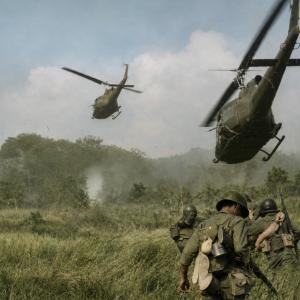
From the beginning, the terrain created enormous problems. Helicopters struggled to land due to fog, clouds, and enemy fire. Soldiers had to climb steep slopes through mud and dense vegetation while carrying heavy weapons and equipment. Temperatures were high, insects were everywhere, and monsoon rains turned the battlefield into slippery chaos. Visibility was often only a few feet because of the jungle canopy.
The Americans launched repeated assaults up the mountain over ten days. Many attacks failed because troops became separated in the jungle, communication broke down, and enemy bunkers were extremely well hidden. The North Vietnamese defenders fought with determination and discipline, allowing American troops to come close before opening fire with machine guns, rocket-propelled grenades, and mortars.
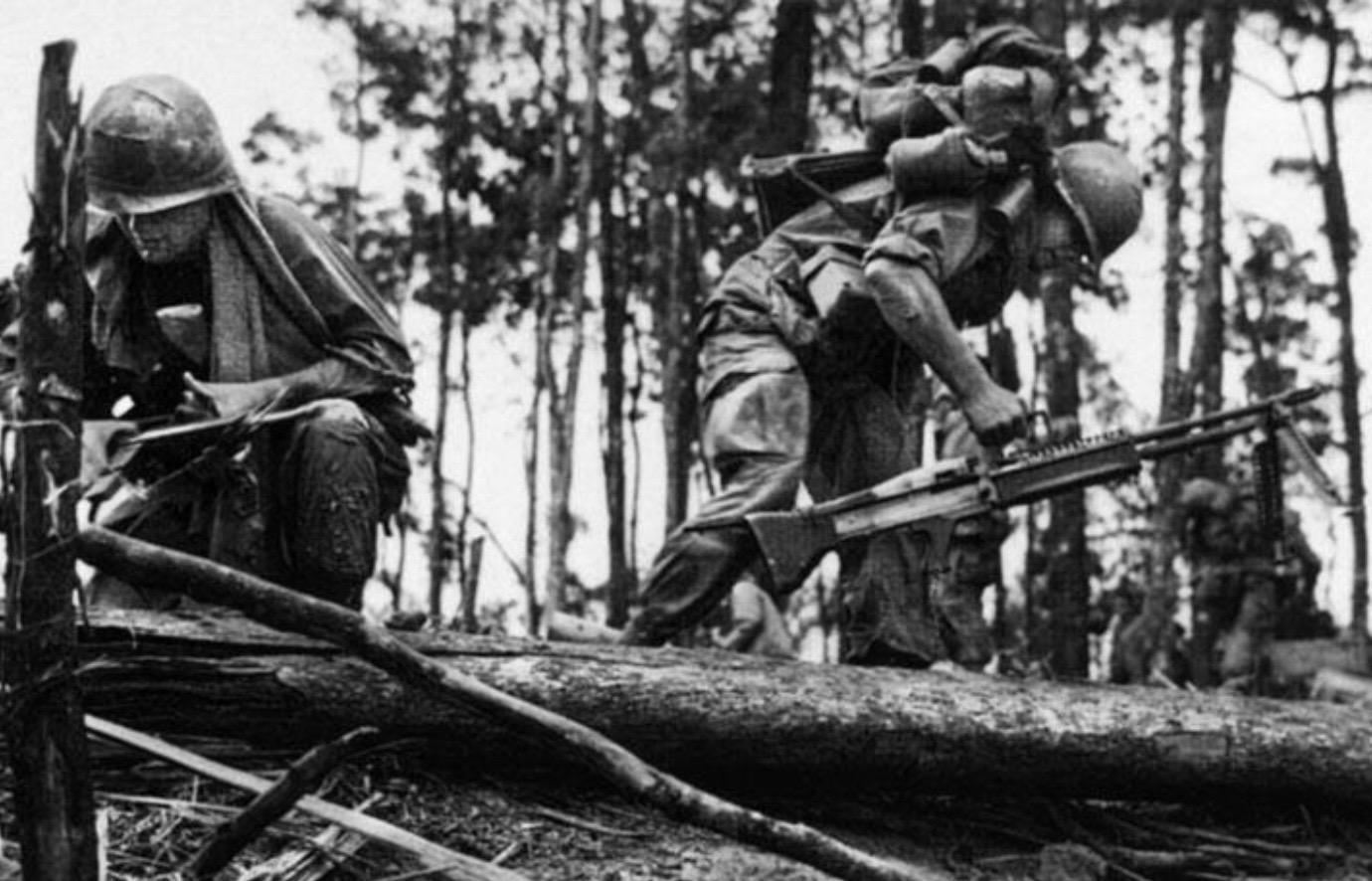
One of the most tragic aspects of the battle was the number of casualties suffered during repeated frontal assaults. American troops often gained small sections of the hill only to be driven back. The dense jungle prevented effective use of armored vehicles, meaning infantry soldiers had to clear bunkers one by one using grenades, rifles, flamethrowers, and explosives. Combat was frequently hand-to-hand and at extremely close range.
The final assault on May 20 involved coordinated attacks supported by artillery and airstrikes. After fierce fighting, American troops finally captured Hill 937. The summit revealed a shattered landscape of destroyed bunkers, burned trees, and bodies scattered among the ruins. The cost of victory was extremely high. The United States suffered around 72 killed and more than 370 wounded. North Vietnamese casualties were estimated to be several hundred dead, though exact numbers remain uncertain.
What made Hamburger Hill especially controversial was what happened afterward. Only about two weeks after capturing the hill, American forces abandoned it because it held little long-term strategic value. When journalists reported that so many soldiers had died for territory that was quickly given up, public outrage exploded in the United States. Newspapers and television broadcasts questioned the purpose of the battle and the overall strategy of the war.
The battle became a symbol of what critics saw as senseless sacrifice and poor military decision-making. American politicians began openly challenging military leadership. Senator Edward Kennedy described the battle as “senseless and irresponsible.” Public anger contributed to growing pressure on President Richard Nixon to reduce American involvement in Vietnam.
The nickname “Hamburger Hill” itself became famous because it captured the emotional experience of the soldiers. It was inspired partly by the Korean War phrase “Pork Chop Hill,” another costly hill battle. Soldiers felt trapped in a grinding meat machine where survival depended on luck as much as skill. Many veterans later described the battle as one of the most psychologically devastating experiences of the war.
The terrain on Hill 937 was among the most difficult encountered during the Vietnam War. The mountain rose steeply from the valley floor and was covered in triple-canopy jungle. Triple-canopy jungle means vegetation grew in multiple layers so thick that sunlight barely reached the ground. This made air support less effective because pilots could not clearly see enemy positions. It also reduced the effectiveness of artillery because shells often exploded in the treetops rather than on enemy bunkers.
Friendly fire incidents also occurred during the battle due to poor visibility and confusion. In one incident, American helicopters mistakenly fired on American troops. Such accidents were tragically common in Vietnam’s jungle warfare conditions.
The North Vietnamese defenders demonstrated remarkable preparation and endurance. Their bunkers were built using logs, earth, and reinforced overhead cover designed to survive artillery bombardment. Some bunkers had hidden exits allowing soldiers to move between positions without exposure. American troops often believed a bunker had been destroyed only to receive fire from it moments later.
The battle reflected a larger American strategy known as “search and destroy,” where U.S. forces sought to locate and eliminate enemy units through aggressive offensive operations. Critics argued that this strategy focused too much on body counts and temporary battlefield victories rather than holding territory or winning civilian support.
Hamburger Hill also highlighted changing attitudes within the U.S. military. After the controversy, American commanders became more cautious about ordering direct assaults likely to produce high casualties. The battle accelerated the shift toward “Vietnamization,” Nixon’s policy of gradually transferring combat responsibilities to South Vietnamese forces while withdrawing American troops.
Several soldiers who fought at Hamburger Hill later received medals for bravery. Stories emerged of medics risking their lives to rescue wounded comrades under fire and small units fighting for hours while isolated on steep jungle slopes. Many survivors formed lifelong bonds because of the intensity of the combat.
The battle later inspired books, documentaries, and films. The 1987 movie “Hamburger Hill” attempted to portray the experience of American soldiers during the battle with a focus on exhaustion, fear, racial tensions within the military, and the emotional toll of combat. Veterans praised the film for showing the confusion and brutality of jungle warfare more realistically than many earlier Vietnam War movies.
Another interesting fact is that many American soldiers fighting there were very young, often only 18 or 19 years old. Some had been in Vietnam for only a short time before being thrown into one of the war’s deadliest battles. Soldiers counted down the days remaining in their tours of duty, and many feared dying just before going home.
The A Shau Valley itself remained dangerous throughout the war. Despite repeated American operations, North Vietnamese forces continued using the area because of its strategic location near Laos and the Ho Chi Minh Trail. This reinforced criticism that battles like Hamburger Hill achieved only temporary results.
Military historians still debate whether the battle was necessary. Some argue the operation inflicted heavy losses on North Vietnamese forces and disrupted their activities. Others believe the casualties and political damage outweighed any tactical success. Regardless of interpretation, Hamburger Hill became one of the defining battles of the Vietnam War because it exposed the growing gap between military objectives and public support back home.