On this day in military history…
Germany’s invasion of Belgium in the Second World War began in the early hours of 10 May 1940, part of a wider offensive known as Fall Gelb, or Case Yellow. This was the long-anticipated German push into Western Europe, aimed at defeating France and knocking Britain out of the war by forcing its army off the continent. Belgium, like the Netherlands and Luxembourg, stood in the way, and although it had declared neutrality, its territory was crucial to Germany’s plan.
The overall strategy was shaped under the direction of Adolf Hitler, but the key operational idea came from General Erich von Manstein. Rather than simply repeating the First World War plan of sweeping through Belgium in a broad front, Manstein proposed something far more daring. Germany would still attack Belgium and the Netherlands to draw Allied forces north, but the main удар would come further south, through the dense Ardennes forest, a region the Allies believed was unsuitable for large armoured forces. This deception would prove decisive.
Belgium had tried to avoid being dragged into another European war after the devastation of the First World War. It had fortified its borders, most famously with the massive fortress of Fort Eben-Emael, which was considered one of the strongest defensive positions in Europe. The Belgian army was on alert, but like the French and British, it expected the main German attack to follow a more predictable route.
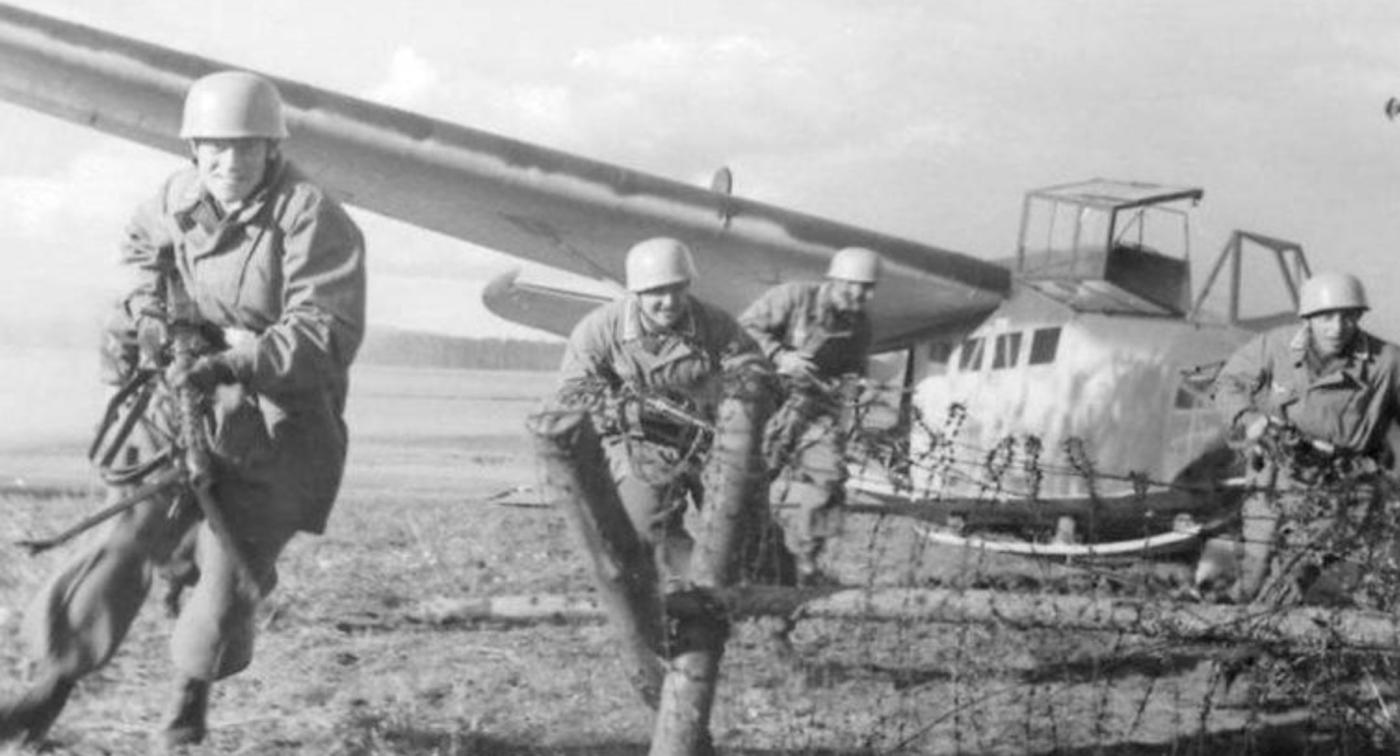
When the invasion began on 10 May, it opened with one of the most innovative assaults of the war. German airborne troops, using gliders rather than parachutes for precision, landed directly on top of Fort Eben-Emael. In a matter of hours, they neutralised its powerful guns using shaped charges, something few had seen before. The fall of this supposedly impregnable fortress shocked the Allies and opened key crossings over the Albert Canal, allowing German forces to pour into Belgium much faster than expected.
At the same time, German forces advanced across the border in multiple columns. Army Group B, under General Fedor von Bock, was tasked with pushing into Belgium and the Netherlands. This movement was not just about conquest but about bait. The Allied command, including British and French forces, responded exactly as the Germans hoped. Under what was known as the Dyle Plan, they advanced into central Belgium to meet the German attack, expecting to hold a defensive line there.
The British Expeditionary Force, supported by French armies, moved quickly into Belgium, believing they were confronting the main German thrust. Meanwhile, further south, German panzer divisions under commanders like Heinz Guderian were already smashing through the Ardennes. Within days, they reached the Meuse River and broke through at Sedan, effectively outflanking the Allied armies in Belgium.
Belgium’s own forces fought hard but were increasingly overwhelmed. King Leopold III of Belgium took personal command of the Belgian army, staying with his troops as they retreated under pressure. Belgian resistance slowed the Germans in places, but the speed and coordination of the German advance made the situation untenable. The collapse of neighbouring defences and the rapid German advance toward the English Channel meant Belgian forces were being cut off.
One of the most significant consequences of the invasion of Belgium was the encirclement of Allied forces. As German units pushed west and reached the coast, they trapped British, French, and Belgian troops in a shrinking pocket around the port of Dunkirk. This led to the famous evacuation known as Dunkirk evacuation, where over 300,000 Allied soldiers were rescued across the Channel to Britain.
Belgium itself could not hold out much longer. With its army exhausted, its territory overrun, and its allies retreating, King Leopold III made the controversial decision to surrender on 28 May 1940, just eighteen days after the invasion began. His surrender caused political shock, especially in Britain, where it was seen as abandoning the Allied cause, although the Belgian government continued the fight from exile.
There are several interesting aspects that make the invasion of Belgium stand out. The use of airborne troops in such a precise and targeted way was groundbreaking and set a pattern for future operations. The speed of the German advance, often referred to as blitzkrieg or “lightning war,” demonstrated a new kind of warfare based on coordination between tanks, aircraft, and infantry. The Ardennes breakthrough, which caught the Allies off guard, showed how dangerous it could be to rely too heavily on assumptions about terrain.
The reasons behind the invasion were both strategic and political. Germany needed to defeat France quickly to avoid a long two-front war, especially with Britain still in the fight. By going through Belgium, Germany could bypass the heavily fortified Maginot Line along the French-German border. Belgium’s neutrality did not protect it, just as it had not in the First World War, because its geographic position made it unavoidable in any German plan to strike west.