On this day in military history…
Victory in Europe Day, observed on 8 May 1945, marked the end of nearly six years of war in Europe, bringing relief, celebration, and reflection to millions who had endured the devastation of World War II. The day signified the formal cessation of hostilities between the Allied forces and Nazi Germany, following Germany’s unconditional surrender.
The path to that moment had been unfolding rapidly in the final weeks of the war. By early May 1945, German military resistance had collapsed under the pressure of Allied advances from the west and Soviet forces from the east. Adolf Hitlerhad taken his own life on 30 April in Berlin, leaving the crumbling regime in disarray. His successor, Admiral Karl Dönitz, sought to negotiate surrender terms, hoping to allow as many German troops and civilians as possible to flee westward and avoid Soviet capture.
The official surrender process began on 7 May 1945 in Reims, France, where German General Alfred Jodl signed the unconditional surrender document at Allied headquarters. The agreement stipulated that all German forces would cease operations at 23:01 Central European Time on 8 May. However, the Soviet Union insisted on a second formal signing in Berlin, which took place late on 8 May, reinforcing the total and undeniable defeat of Germany.
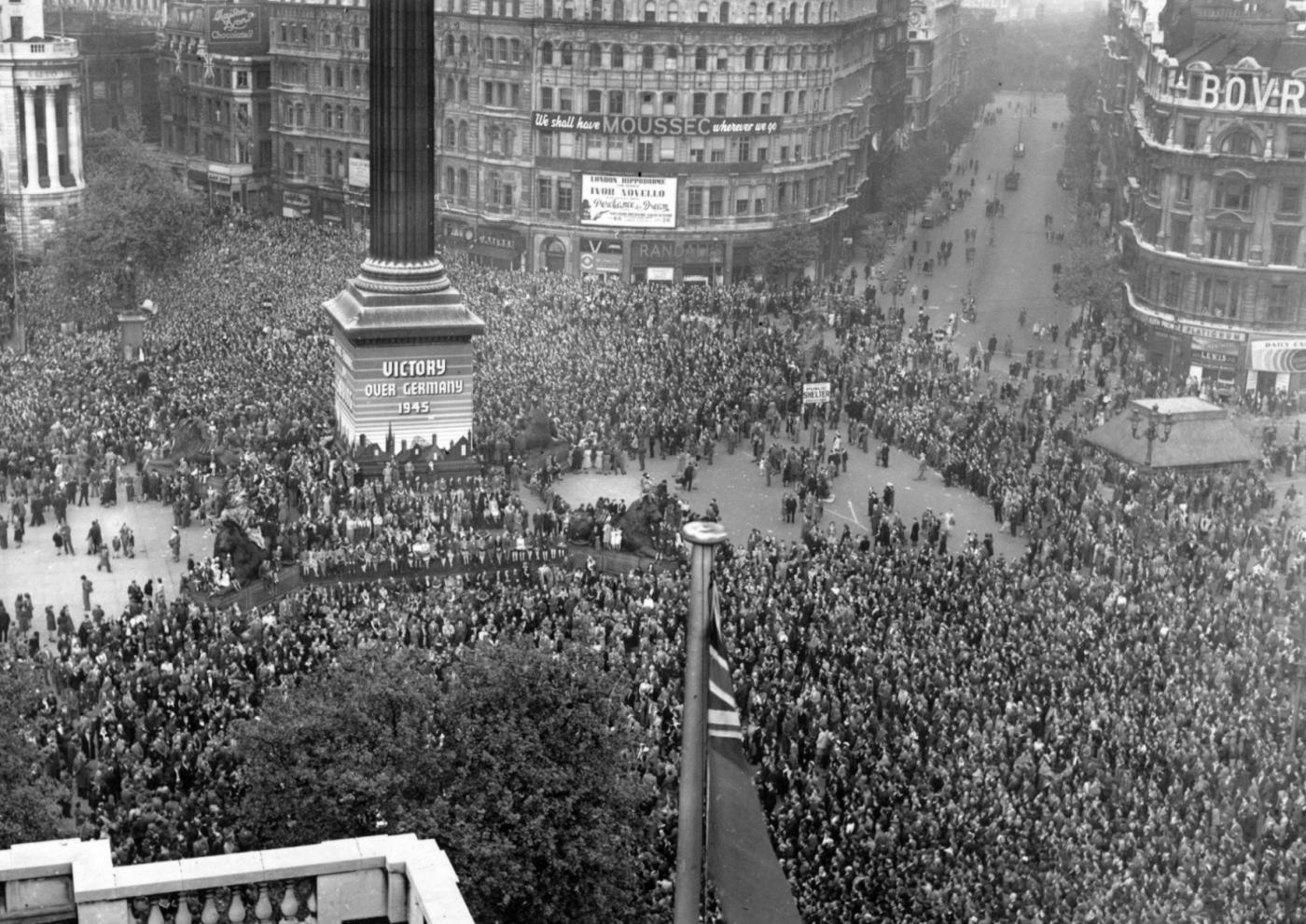
In Britain, the announcement of victory was made to the public on 8 May. Prime Minister Winston Churchill addressed the nation by radio, declaring that the war in Europe had ended. His speech acknowledged both triumph and sacrifice, reminding listeners that the war against Japan was still ongoing. Churchill later appeared on the balcony of Buckingham Palace alongside King George VI, Queen Elizabeth, and the two princesses, Elizabeth and Margaret. Vast crowds gathered in central London, cheering, singing, and waving flags in a spontaneous outpouring of joy.
Celebrations spread across the United Kingdom. Streets were decorated with bunting, bonfires were lit, and communities held parties that often lasted late into the night. In London, Trafalgar Square and Piccadilly Circus were packed with people, while in smaller towns and villages, neighbours came together after years of rationing, bombing, and loss. For many, it was the first moment of collective relief after prolonged fear and hardship.
In the United States, President Harry S. Truman dedicated the victory to his predecessor, Franklin D. Roosevelt, who had died less than a month earlier. Americans also celebrated widely, particularly in cities like New York, where Times Square became a focal point for jubilant crowds. Across Europe, scenes varied. In liberated countries such as France, the Netherlands, and Belgium, VE Day symbolised freedom regained, though many regions were still recovering from occupation and destruction.
The Soviet Union, having borne immense losses during the war, commemorated victory on 9 May due to the time difference and the timing of the Berlin signing. This became known as Victory Day in the USSR and remains a major national holiday in Russia and several former Soviet states.
Despite the celebrations, VE Day was also a moment of reflection and grief. Millions had lost their lives, cities lay in ruins, and countless families were mourning loved ones. For soldiers still stationed abroad, especially those preparing for the continued war in the Pacific, the day brought mixed emotions. Victory in Europe did not yet mean peace worldwide.
An interesting aspect of VE Day in Britain was the temporary easing of wartime restrictions. Pubs were allowed to stay open longer, and food rationing rules were relaxed slightly for the celebrations, although shortages remained severe. The government had even prepared for potential unrest or disorder, but the atmosphere remained largely good-natured and communal.
Princess Elizabeth, the future Queen Elizabeth II, later described how she and her sister slipped out into the crowds incognito to join the celebrations, an experience she recalled as one of the most memorable nights of her life. This small but human detail reflects the unique spirit of the day, where social barriers briefly dissolved in shared relief and happiness.
VE Day did not mark the official end of World War II globally; that would come later with the surrender of Japan in August 1945, known as Victory over Japan Day. However, 8 May remains one of the most significant dates in modern history, representing the defeat of fascism in Europe and the beginning of a long process of rebuilding and reconciliation.
Today, VE Day is commemorated annually in many countries, particularly in the United Kingdom, with ceremonies, moments of silence, and public events that honour the sacrifices of those who lived through the war. Major anniversaries, such as the 50th, 75th, and upcoming 80th commemorations, often include parades, flypasts, and gatherings at historic locations, ensuring that the memory of that extraordinary day continues to be passed down through generations.