On this day in military history…
The Prague Uprising was one of the final major episodes of resistance against Nazi rule in Europe during the closing days of World War II. It began on 5 May 1945 in the city of Prague, at a moment when Nazi Germany was already collapsing under the combined pressure of Allied forces advancing from both west and east. Despite the inevitability of German defeat, the situation within Prague remained tense and dangerous, with strong German military and SS units still present and determined to maintain control.
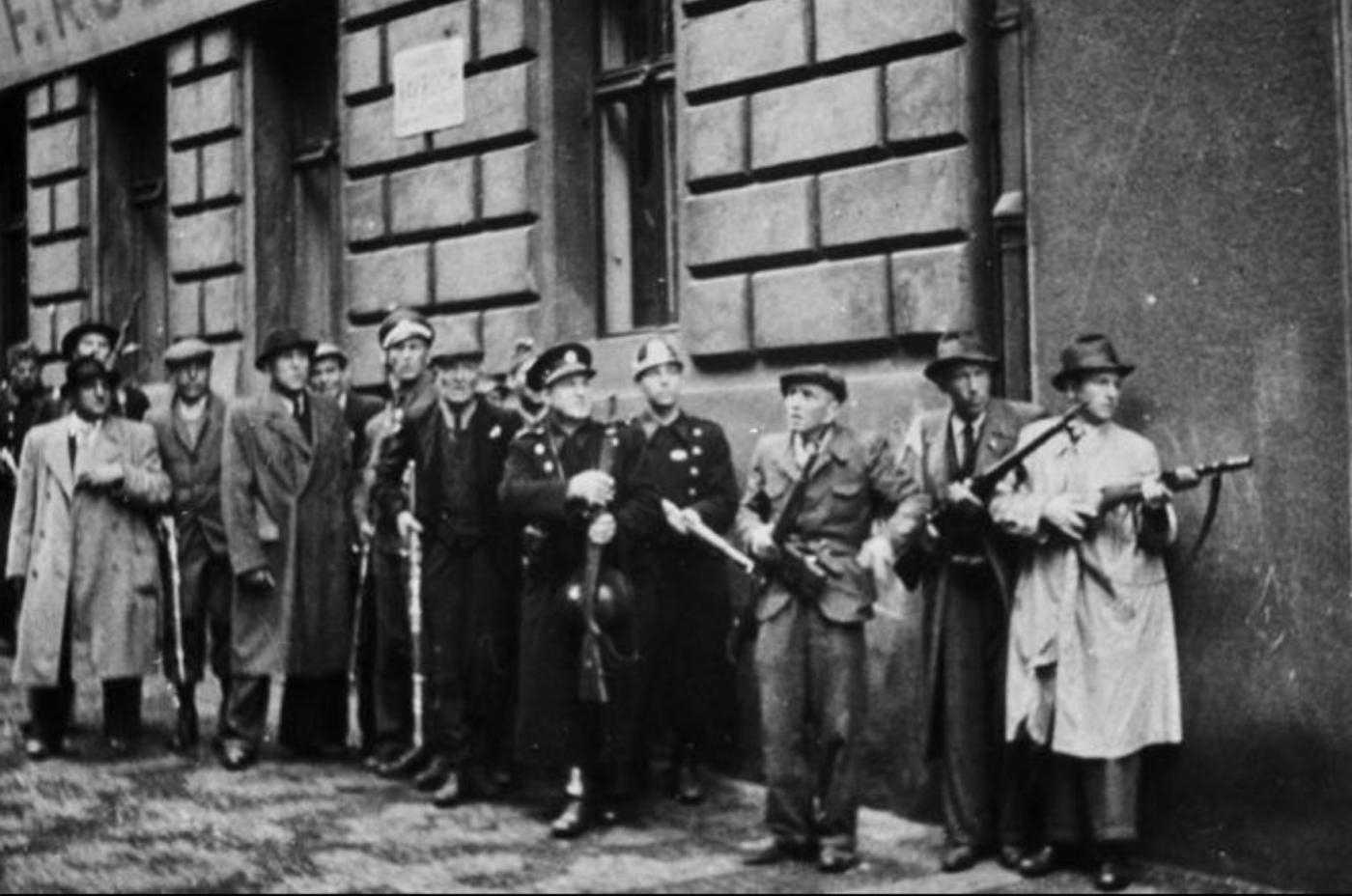
The uprising was sparked by a mixture of spontaneous civilian action and organized resistance. Czech police, resistance fighters, and ordinary citizens reacted to growing signals that German authority was weakening. A key trigger came when Czech voices took over radio broadcasts, urging the population to rise against the occupiers. The call spread rapidly, and within hours barricades began to appear across the city. Civilians armed themselves with whatever weapons they could find, from rifles to improvised tools, transforming Prague’s streets into a patchwork of defensive positions.
German forces, including SS units, responded with force, attempting to crush the rebellion before it could fully take hold. Fighting quickly escalated into intense urban combat. The insurgents, though motivated and familiar with the city’s layout, were poorly equipped compared to the experienced and heavily armed German troops. Street battles erupted around key locations, especially near government buildings, bridges, and radio stations. The struggle for control of communication points was particularly fierce, as both sides recognized their importance in coordinating efforts and influencing morale.
A significant and controversial element of the uprising was the involvement of forces from the Russian Liberation Army, led by Andrey Vlasov. These troops, originally aligned with Germany but opposed to Soviet communism, chose to support the Czech insurgents during the uprising. Their intervention provided the rebels with temporary military strength, helping them push back German units in certain areas. However, this alliance was short-lived and politically complex, as the advancing Soviet forces viewed Vlasov’s army as traitors.
The broader strategic situation heavily influenced events in Prague. American forces under General George S. Patton had advanced into western Bohemia but halted short of Prague due to prior agreements with the Soviet Union regarding spheres of operation. This left the city within the zone to be liberated by the Red Army. As a result, the Czech resistance had to endure several days of fighting without immediate large-scale Allied support, relying instead on their own efforts and limited external assistance.
Conditions in the city became increasingly desperate as German forces attempted to suppress the uprising. Civilians were caught in the crossfire, and reprisals were harsh. The Germans used artillery and armored vehicles to target resistance strongholds, and there were instances of summary executions. Despite these dangers, the uprising continued, driven by a determination to liberate the city before the arrival of outside forces and to assert national control over the country’s future.
The turning point came as the Red Army approached Prague. By 8–9 May 1945, Soviet troops entered the city, effectively ending the uprising. German forces, already aware that the war was lost following the broader German surrender, began to withdraw or surrender. The arrival of Soviet forces brought an end to the immediate fighting, although it also marked the beginning of a new political reality in which Czechoslovakia would fall under strong Soviet influence.
The human cost of the uprising was significant. Thousands of people were killed or wounded during the fighting, including civilians who had taken part in the resistance. Large parts of Prague suffered damage, though the city was spared the level of destruction seen in some other European capitals. The uprising remains a powerful symbol of national resistance and sacrifice, representing both the courage of those who rose against occupation and the complex political circumstances of liberation at the end of the war.
In the years that followed, interpretations of the uprising were shaped by political changes. Under communist rule, emphasis was placed on the role of Soviet forces in liberating Prague, while the contributions of other groups, including Western Allies and the Russian Liberation Army, were often minimized or portrayed negatively. After the end of communist rule in 1989, a more nuanced understanding emerged, recognizing the diverse participants and the complicated nature of the final days of the war.
Today, the Prague Uprising is remembered as a defining moment in Czech history. It reflects both the desire for freedom after years of occupation and the reality that liberation came intertwined with the shifting power dynamics of postwar Europe.