On this day in military history…
The raid on Zeebrugge Raid took place on 23rd April 1918, St George’s Day, and remains one of the most daring naval operations of the First World War. At the time, German U-boats were causing serious losses to Allied shipping, and the Belgian ports of Zeebrugge and Ostend had become key bases for these attacks. Rather than attempt to capture the ports outright, the British decided on a bold alternative—block the canal entrances and trap the submarines inside.
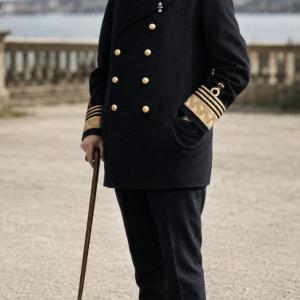
The plan was simple in concept but incredibly dangerous in execution. Old cruisers would be filled with concrete and deliberately sunk in the narrow canal leading from Zeebrugge to Bruges, effectively sealing it off. To give these blockships a chance of reaching their target, a diversionary assault would take place on the long stone mole that protected the harbour. This attack was meant to draw German fire away at the critical moment. The operation was led by Roger Keyes, who was determined to strike back at the U-boat threat.
At the centre of the assault was the ageing cruiser HMS Vindictive. She had been heavily modified for the mission, fitted with extra gangways and weapons to land troops directly onto the mole. Supporting her were the ferries HMS Iris and HMS Daffodil, whose job was to push her alongside the structure under fire. Meanwhile, three blockships—HMS Thetis, HMS Intrepid, and HMS Iphigenia—would attempt to force their way into the canal entrance and sink themselves in position.
As the force approached on the night of the raid, much depended on a smoke screen laid to conceal the ships. Unfortunately, the wind did not behave as expected, and visibility became unpredictable. German defenders soon realised something was happening and opened fire with guns and machine guns, turning the approach into chaos.
Vindictive did reach the mole, but not at the intended position. This meant that her carefully designed gangways did not line up as planned, leaving the landing parties exposed. Even so, the Royal Marines and sailors went ashore under heavy fire and fought fiercely, creating enough confusion to help the blockships press on. The fighting on the mole was intense and costly, with many men killed or wounded, but the diversion did its job.
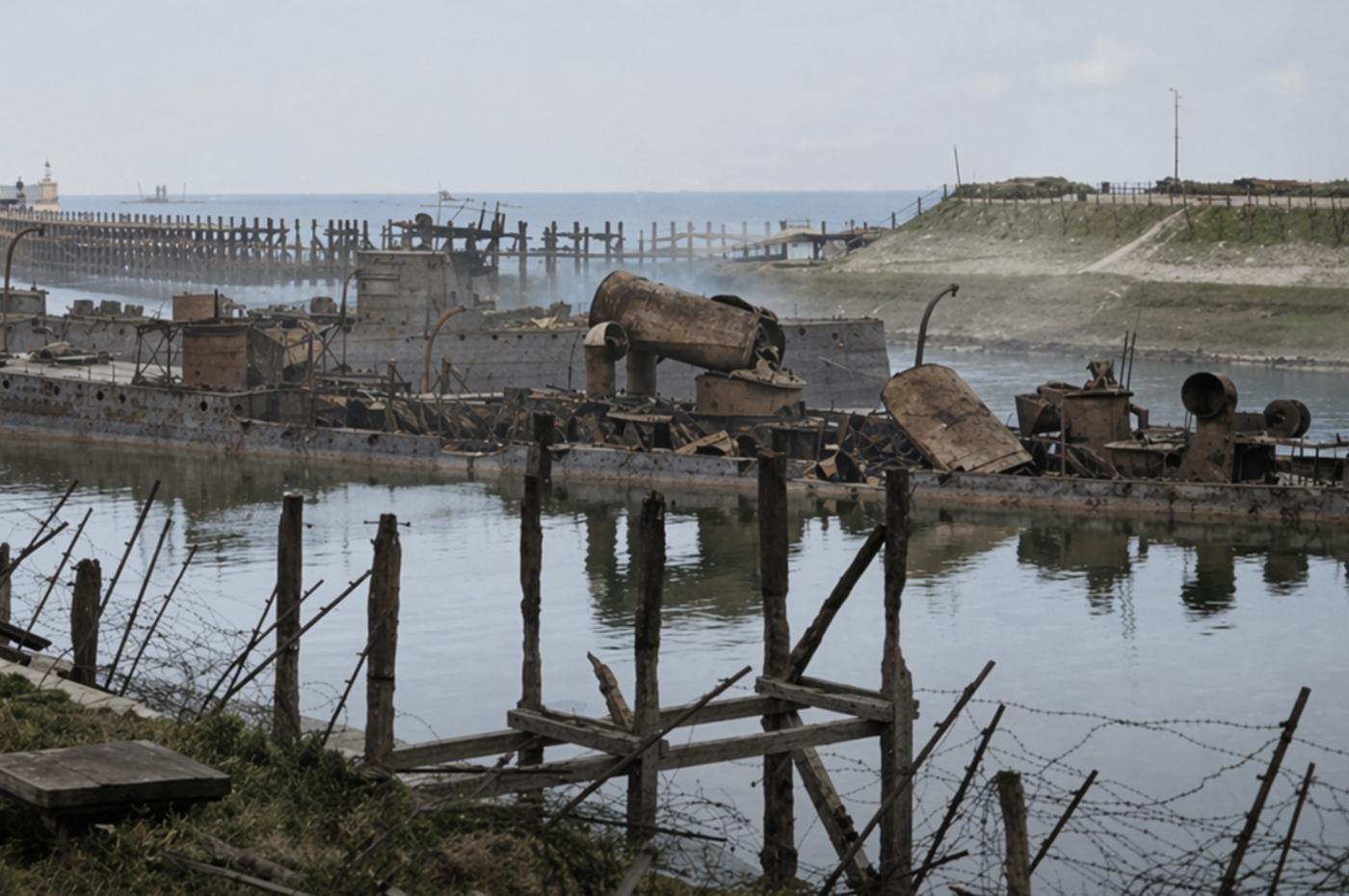
Out at the canal entrance, events were equally dramatic. Thetis struck an obstruction and had to be sunk earlier than planned, but Intrepid and Iphigenia managed to push through and were scuttled across the channel. Although not perfectly placed, they did partially block the canal, making it harder for German submarines to move in and out.
One of the most striking moments of the raid involved the submarine HMS C3. Packed with explosives, she was steered into the viaduct connecting the mole to the shore. The crew set the charges and escaped just before the submarine exploded, destroying part of the structure and briefly isolating the German defenders on the mole.
The cost of the raid was high. Of the roughly 1,700 men involved, more than 200 were killed and many others wounded. Despite this, the operation was celebrated in Britain as a remarkable act of bravery. Eleven Victoria Crosses were awarded, reflecting the courage shown in what was, by any measure, an extremely hazardous mission.
In strict military terms, the results were limited. The canal was not completely blocked, and German forces managed to clear a route within weeks. Even so, the raid disrupted their operations and forced them to divert time and resources to repairs. More importantly, it provided a much-needed boost to morale, showing that bold action was still possible in a war often defined by stalemate.