
Admiral Roger Keyes
Roger John Brownlow Keyes was born on 4 October 1872 in Tundiani, a hill station in British India, now part of Pakistan. He was the son of General Sir Charles Patton Keyes of the British Army, and his upbringing was shaped by the traditions and expectations of a military family serving the British Empire. His early childhood was spent partly in India, where he was exposed to the disciplined and hierarchical world of imperial service, but like many children of British officers he was later sent back to England for his education. This separation from his parents at a young age was common at the time and often instilled independence and resilience. His schooling in England prepared him for a naval career, and at the age of thirteen he entered the Royal Navy as a cadet aboard HMS Britannia, the Royal Navy’s training ship.
From his earliest days in the Navy, Keyes showed strong ambition and a tendency toward bold thinking. He became a midshipman in 1887 and steadily progressed through the ranks, gaining experience in different parts of the world as the British Empire maintained a global naval presence. Promoted to lieutenant in 1896, he built a reputation as a capable and energetic officer. His early career included active service during the Boxer Rebellion in China around 1900, where he distinguished himself through initiative and bravery. This period helped cement his belief in decisive and aggressive action, qualities that would later define his leadership style. He was promoted to commander in 1905 and to captain in 1910, continuing to rise as a respected officer with strong views on naval warfare.
At the outbreak of the First World War in 1914, Keyes was already an experienced and well-regarded captain. He initially served as Chief of Staff to Admiral Sir Sackville Carden during the Dardanelles Campaign. This operation aimed to force a passage through the Dardanelles Strait and knock the Ottoman Empire out of the war. Keyes played a key role in planning and coordinating naval attacks during the early stages. Although the campaign ultimately failed due to strong Turkish resistance, mines, and poor coordination between naval and land forces, it gave Keyes significant operational experience and reinforced his belief that bold, concentrated naval power could achieve decisive results if properly applied.
In 1917, Keyes was appointed Director of Plans at the Admiralty, where he contributed to broader naval strategy. However, he preferred active command and soon returned to sea when he was appointed commander of the Dover Patrol later that year. This force was responsible for safeguarding the English Channel, one of the most vital shipping routes of the war, and for countering the threat posed by German U-boats operating from bases along the Belgian coast. Keyes approached this role with energy, reorganising operations and advocating offensive action against enemy bases rather than simply defending against submarine attacks.
His most famous achievement came with the Zeebrugge Raid in April 1918. The German-held ports of Zeebrugge and Ostend were key submarine bases, and Keyes devised a plan to block their access canals by sinking obsolete ships filled with concrete. The operation combined naval bombardment, smoke screens, and commando-style assaults by Royal Marines to distract and disrupt German defences. On 23 April 1918, the raid on Zeebrugge was carried out under extremely dangerous conditions. Despite heavy casualties, British forces succeeded in sinking blockships in the canal entrance, partially achieving the objective. A follow-up raid at Ostend encountered more difficulties but demonstrated the same level of determination.
Although the long-term strategic effectiveness of these raids has been debated, they were widely celebrated at the time as acts of extraordinary courage and ingenuity. Keyes became a national hero, and the operation provided a significant boost to British morale during a difficult phase of the war. He was honoured for his leadership and recognised as one of the Royal Navy’s most daring commanders.
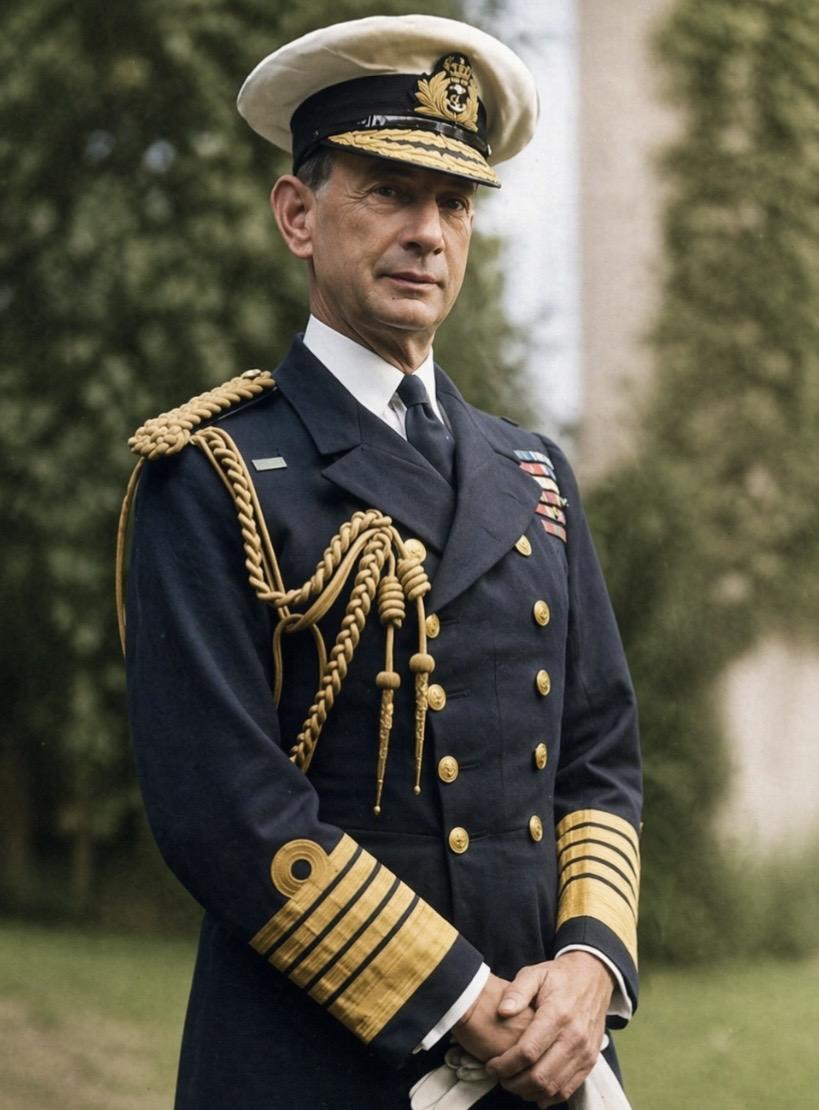
By the end of the war, Keyes had risen to the rank of Vice-Admiral. He was known for his outspoken nature and willingness to challenge more cautious approaches within the Admiralty, which sometimes caused tension but also highlighted his commitment to decisive action. His career during the First World War, especially his leadership of the Dover Patrol and his role in the Zeebrugge Raid, secured his place as one of Britain’s most notable naval figures of the conflict.