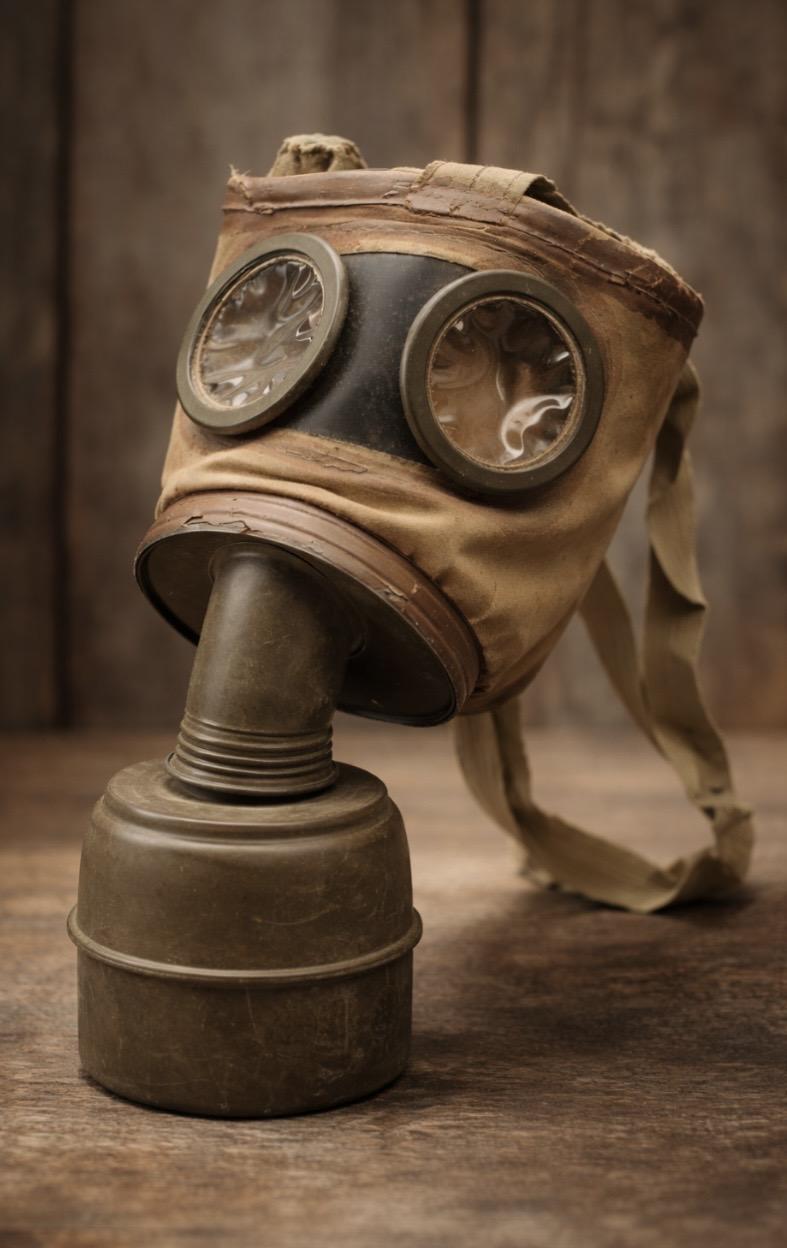
M2 Gas mask
The French M2 gas mask was one of the earliest widely issued protective masks of the First World War, created in response to the first large-scale gas attacks in 1915. It was developed in France by military medical and engineering teams rather than a single inventor, with scientists and army officials working together under urgent wartime conditions.
The mask was produced by various French industries that shifted to wartime manufacturing. Textile factories made the fabric hoods, while chemical companies produced the treated filter materials. Production was spread across many facilities to meet demand, and several million masks were made between 1915 and 1916.
The design was simple. It consisted of a hood made from chemically treated fabric that covered the head, usually blue or grey in colour. Glass or celluloid eye pieces allowed vision, and a breathing pad over the mouth and nose contained chemicals such as sodium thiosulfate to help neutralise chlorine gas.
To use it, a soldier pulled the hood over his head and tucked it into his uniform. Air passed through the treated fabric and filter pad before being inhaled. However, it did not seal tightly and offered limited protection, especially against newer gases like phosgene and mustard gas.
Even with its flaws, the M2 mask saved lives, particularly early in the war when chlorine was the main threat. Before its introduction, soldiers relied on improvised methods like urine-soaked cloths. The mask reduced deaths and allowed troops to hold their positions during attacks.
It quickly became outdated as gas warfare advanced, leading to improved masks with better seals and separate filters, such as later French and British designs. The M2 could not cope with more dangerous chemical agents.
The mask also had psychological value. It gave soldiers a sense of protection and reduced panic, helping maintain morale during gas attacks.