On this day in military history…
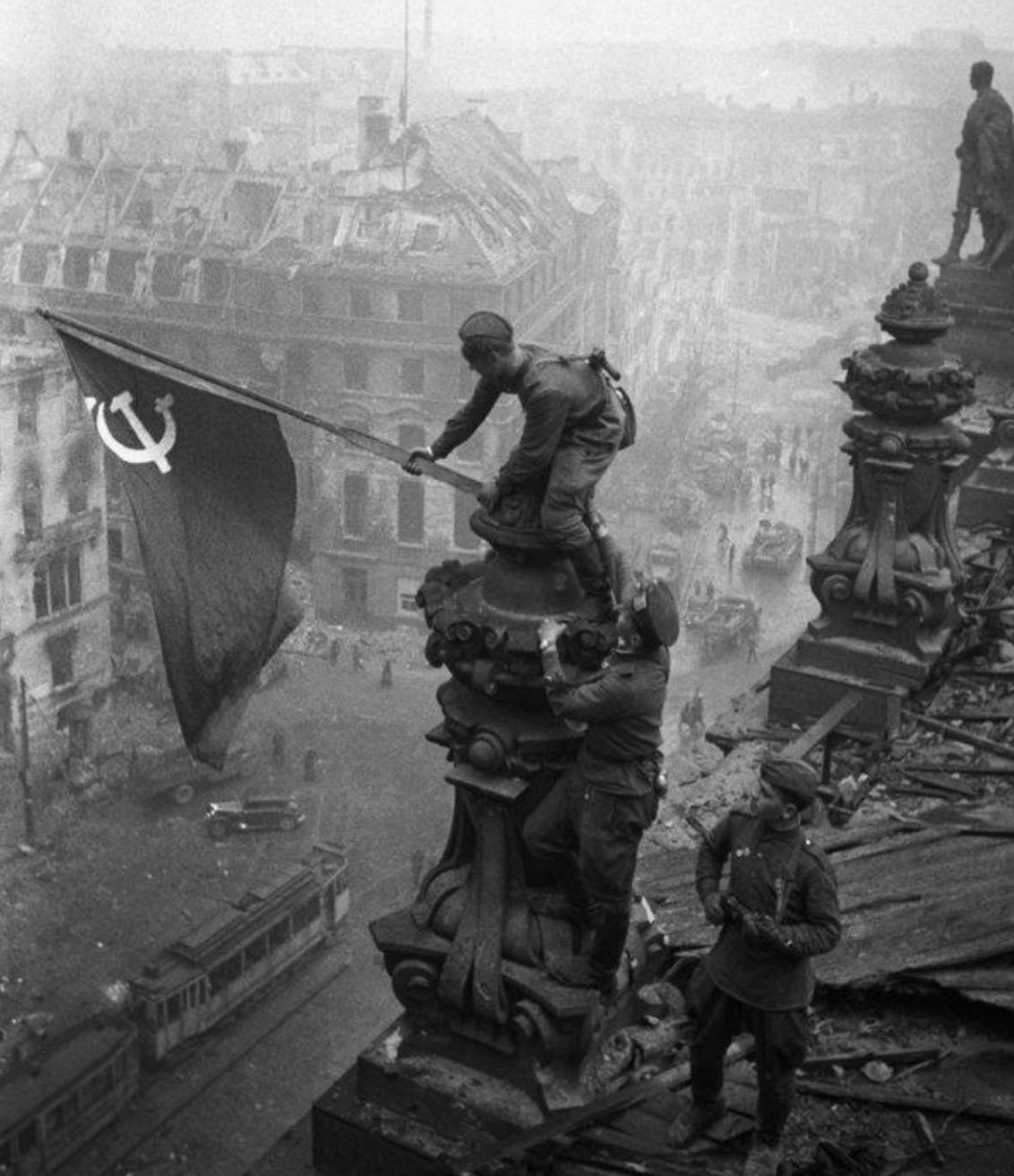
The capture of Berlin by Soviet forces in 1945 marked the final phase of the European theatre of the Second World War. The operation, known as the Battle of Berlin, began on 16 April 1945 when the Soviet Union launched a massive assault on the German capital from the east. This offensive was led primarily by Marshal Georgy Zhukovcommanding the 1st Belorussian Front, alongside Marshal Ivan Konev of the 1st Ukrainian Front. Together, they coordinated a pincer movement designed to encircle and crush Berlin while preventing any organized German withdrawal.
The opening stage of the attack saw Soviet forces cross the Oder and Neisse rivers and confront entrenched German defensive lines at the Seelow Heights, just east of Berlin. These defenses were among the last major barriers protecting the city. The fighting there was intense and costly, but by 19 April Soviet troops had broken through, clearing the way toward Berlin itself. From that point forward, the Red Army advanced rapidly, surrounding the city by 25 April. On that same day, Soviet and American forces met at the Elbe River, effectively splitting Nazi Germany into two isolated halves.
Inside Berlin, the situation deteriorated quickly. The city was defended by a mixture of exhausted Wehrmacht troops, SS units, Hitler Youth, and poorly equipped militia known as the Volkssturm. Adolf Hitler, still in his bunker beneath the Reich Chancellery, refused to leave and ordered continued resistance despite the hopelessness of the situation. Street-by-street fighting engulfed Berlin, with Soviet troops encountering fierce resistance but steadily gaining ground. Artillery bombardments and aerial attacks reduced large sections of the city to ruins.
By 30 April 1945, with Soviet forces closing in on the government district, Adolf Hitler committed suicide in his bunker. Leadership of what remained of Nazi Germany fell to Grand Admiral Karl Dönitz, but Berlin itself was effectively leaderless and encircled. The battle continued for several more days as isolated German units fought on.
The formal surrender of Berlin came shortly afterward. On 2 May 1945, after approximately 17 days of continuous assault since the Soviet offensive began on 16 April, the city capitulated. The German officer responsible for surrendering Berlin was General Helmuth Weidling, who had been appointed commander of the Berlin Defense Area in the final days of the battle. Recognizing that further resistance would only result in unnecessary destruction and loss of life, Weidling surrendered the city to Soviet forces.
He handed control to General Vasily Chuikov, commander of the Soviet 8th Guards Army, which had played a central role in the assault on Berlin and the capture of the city center. Chuikov accepted the surrender and oversaw the occupation of Berlin by Soviet troops.
The fall of Berlin effectively marked the collapse of Nazi Germany. Although the official unconditional surrender of all German forces would be signed a few days later on 8 May 1945, known as Victory in Europe Day, the capture of the capital was the decisive moment that ended organized resistance. The battle itself was one of the bloodiest urban conflicts in history, with hundreds of thousands of casualties on both sides and immense destruction across the city.
In total, the Soviet onslaught on Berlin lasted just over two weeks, but it represented the culmination of years of brutal warfare on the Eastern Front. The capture of the city not only ended the war in Europe but also symbolized the total defeat of the Nazi regime and the beginning of a new geopolitical order shaped heavily by Soviet influence in Eastern Europe.