On this day in military history…
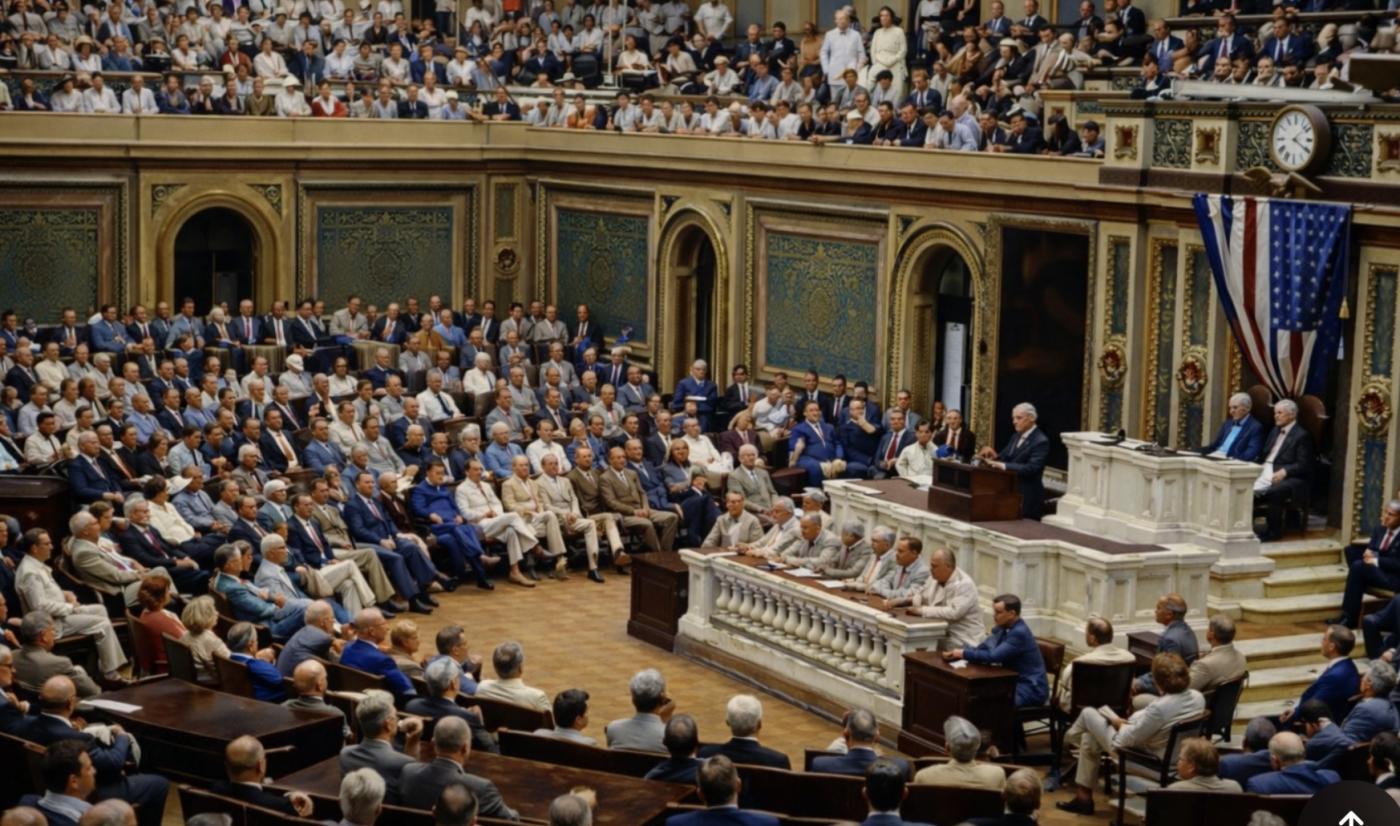
On the evening of 6 April 1917, in the chamber of the United States Congress in Washington, D.C., the long and often reluctant path that had kept America out of the Great War finally came to an end. President Woodrow Wilson, who had only months earlier been re-elected under the slogan “He kept us out of war,” now stood as the leader who would bring the United States into one of the most devastating conflicts the world had yet seen. The declaration of war against Germany was not a sudden decision, but the culmination of mounting tensions, provocations, and a gradual shift in both political thinking and public mood.
Wilson had addressed Congress just days earlier, on 2 April 1917, in what would become one of the most famous war speeches in American history. He spoke in the House chamber of the Capitol, laying out his case with a calm but resolute tone. He did not frame the war in terms of conquest or revenge, but rather as a moral necessity. His words, “The world must be made safe for democracy,” echoed far beyond the chamber, capturing the idealistic justification for entering the war. Wilson portrayed Germany’s actions as a direct challenge not only to American interests but to the principles of international law and human rights.
The road to that speech had been long and fraught with difficulty. When war broke out in Europe in 1914, Wilson had declared American neutrality, urging citizens to remain impartial in thought as well as action. Many Americans supported this stance, particularly those with ties to the diverse nations now at war. However, neutrality proved increasingly difficult to maintain. Economic ties bound the United States more closely to the Allies, especially Britain and France, as American banks and industries supplied them with loans, weapons, and goods.
The first major shock came in 1915 with the sinking of the British ocean liner RMS Lusitania by a German U-boat. Nearly 1,200 people died, including 128 Americans. Although Germany argued that the ship carried munitions, the loss of civilian life caused outrage in the United States. Wilson protested strongly but stopped short of declaring war, instead demanding that Germany curb its submarine warfare. For a time, Germany complied, aware that provoking the United States could tip the balance of the war.
Yet by early 1917, Germany made a fateful decision. Facing a prolonged stalemate on the Western Front and hoping to defeat the Allies before American involvement could become decisive, German leaders resumed unrestricted submarine warfare. This meant that any ship, neutral or otherwise, could be attacked without warning in the waters around Britain. American merchant ships were soon targeted, and several were sunk, bringing the reality of the war directly to American shores.
Then came the revelation that would decisively shift opinion. In January 1917, British intelligence intercepted and decrypted a secret communication from Germany to Mexico, known as the Zimmermann Telegram. In it, Germany proposed a military alliance with Mexico in the event that the United States entered the war, promising to support Mexico in reclaiming lost territories such as Texas, New Mexico, and Arizona. When this message was made public in March, it caused a sensation. Many Americans who had previously been hesitant now saw Germany not just as a distant aggressor, but as a direct threat to national security.
By the time Wilson addressed Congress, the mood of the country had shifted dramatically. Isolationist sentiment still existed, particularly in parts of the Midwest and among certain political groups, but it was increasingly overshadowed by anger and a sense of inevitability. Wilson himself had undergone a transformation, moving from a determined neutral to a leader convinced that American intervention was both justified and necessary.
When Congress voted on 6 April 1917, the decision was clear, though not unanimous. The Senate approved the declaration of war by a large margin, followed shortly by the House of Representatives. There were dissenting voices—most notably that of Representative Jeannette Rankin, who voted against the war—but they were in the minority. The United States was now officially at war with Germany.
The immediate reaction across the country was a mixture of patriotic fervour, relief, and apprehension. In cities, crowds gathered to cheer, wave flags, and sing patriotic songs. Recruitment offices saw a surge of volunteers eager to serve. Newspapers largely supported the decision, framing it as a necessary step to defend both American rights and global democracy. At the same time, there was an undercurrent of anxiety. Many Americans understood that this would not be a short or easy conflict, and families across the nation began to prepare for the possibility of loss.
There were also darker reactions. Anti-German sentiment intensified rapidly, leading to suspicion and hostility toward German-Americans. Schools stopped teaching the German language, German books were removed from libraries, and even foods and place names were changed in an effort to distance American culture from anything associated with Germany. This wave of nationalism, while unifying in some respects, also revealed the tensions and divisions beneath the surface of American society.
In practical terms, the declaration of war marked the beginning of a massive mobilisation effort. The United States had a relatively small standing army at the time, so the government quickly introduced conscription through the Selective Service Act. Industry was reorganised to support the war effort, and the economy shifted onto a wartime footing. Within a year, American troops would begin arriving in Europe in significant numbers, helping to turn the tide in favour of the Allies.