On this day in military history…
On 22 March 1944 a small but striking armoured clash took place near the frontier town of Tamu on the Indo-Burma border. The engagement occurred in the opening phase of the invasion of India in 1944 and demonstrated the enormous difference between British and Japanese armoured fighting vehicles in the Burma theatre. Although it was not a large tank battle by European standards, the encounter ended with several Japanese tanks burning along the road and the survivors withdrawing back toward Burma.
The clash took place during the offensive aimed at capturing the important Allied bases at Imphal and Kohima. The plan was to cut supply routes and potentially trigger unrest against British rule in India. Large forces crossed the Chindwin River and pushed westward through the mountains toward the Indian frontier. One of the main approaches ran through the small town of Tamu, which sat directly on the border and served as a gateway between Burma and India. Because of this position, Tamu quickly became an early point of contact between advancing troops and British-Indian defenders.
Armoured vehicles accompanied the advancing infantry as they moved toward the frontier. Most of these were Type 95 Ha-Go light tanks. Designed in the early 1930s, the Ha-Go was intended mainly to support infantry in colonial fighting in China and Southeast Asia. It carried a 37 mm gun and had very thin armour, in some places only a few millimetres thick. Against poorly equipped opponents this design had been adequate, but against modern Allied tanks it was badly outclassed.
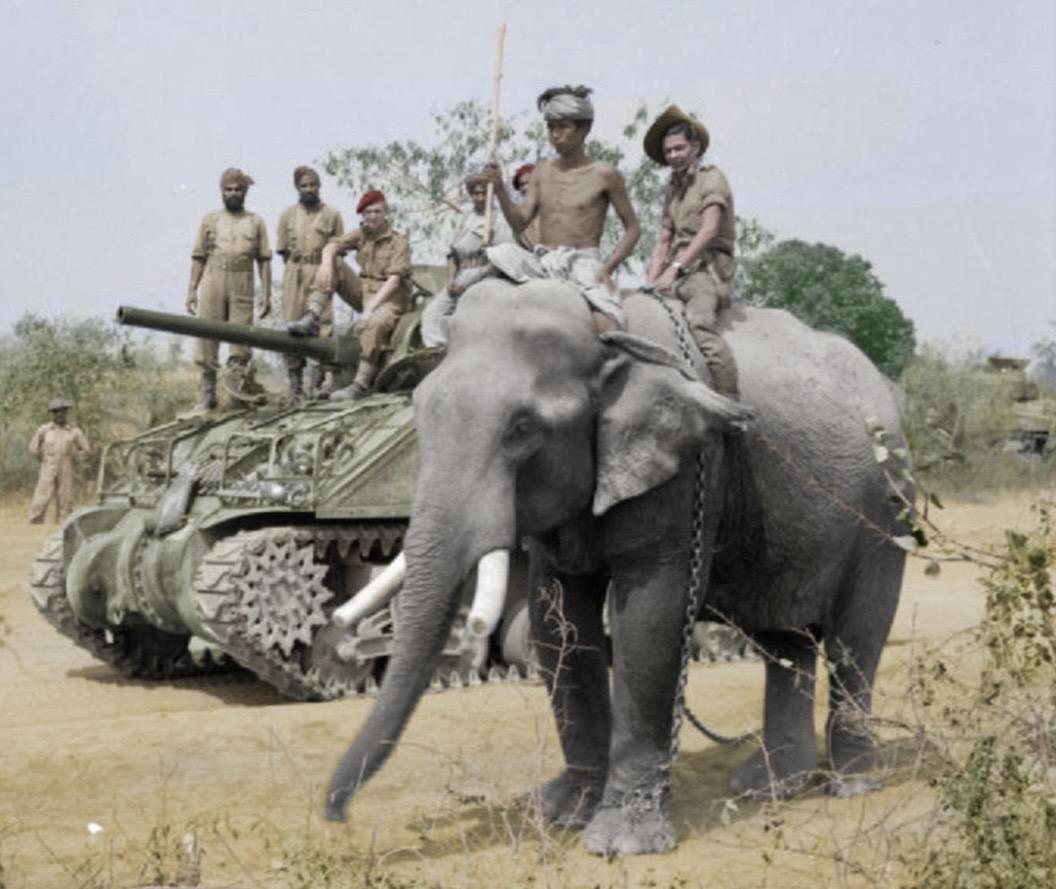
British and Indian armoured units defending the frontier possessed American-built tanks supplied through Allied aid programmes. Among them were M3 Lee medium tanks and M3 Stuart light tanks. Even the smaller Stuart mounted a similar calibre gun to the Ha-Go but had much thicker armour. The M3 Lee was even more formidable, carrying a powerful 75 mm gun in its hull as well as a turret-mounted 37 mm cannon. Its armour was strong enough that the Ha-Go’s gun often struggled to penetrate it except at close range.
The terrain around Tamu made armoured fighting unpredictable. Dense jungle covered most of the region and movement was restricted to narrow dirt roads, small clearings and occasional paddy fields. Tanks could rarely manoeuvre freely and often advanced in single file along the few available tracks. Because of this, encounters between opposing vehicles often occurred suddenly and at short range.
As advancing forces moved through the Tamu area on 22 March, their tanks rolled along one of the jungle roads expecting to support infantry pushing toward Imphal. Instead they ran into British-Indian armoured units positioned to block the route. Allied crews had taken up good firing positions covering the road and nearby open ground.
When the approaching tanks appeared the British opened fire almost immediately. The results were devastating. The 75 mm guns of the M3 Lee tanks easily penetrated the thin armour of the Ha-Go vehicles. Several were knocked out almost as soon as the engagement began. British shells passed straight through the light armour and often ignited fuel or ammunition inside the tanks, producing sudden explosions and columns of smoke rising above the jungle canopy.
Crews in the lighter vehicles attempted to return fire with their 37 mm guns but found it difficult to damage the British tanks. The heavier armour of the Allied machines could often withstand these hits unless they struck a vulnerable point at close range. In addition, many of the attacking tanks lacked radios, making it difficult for commanders to coordinate movements once the shooting started.
Some vehicles attempted to close the distance in order to improve their chances of penetrating British armour, but the open patches near the road left them exposed to accurate fire. As more Ha-Go tanks were hit and disabled, burning wrecks began to block the narrow jungle track and the advancing column quickly fell into confusion.
Within a short time the engagement had turned into a rout. Several tanks were destroyed outright while others were damaged or abandoned. Surviving crews attempted to reverse or turn their vehicles back toward Burma while accompanying infantry scattered into the jungle after losing their armoured support.
The battle highlighted the weaknesses of armoured forces in this theatre. Tanks had been designed mainly for infantry support rather than fighting enemy armour. Their protection was extremely thin compared with Allied designs and their guns lacked the power needed to defeat heavier vehicles. Japan’s limited industrial capacity also meant improved tank models appeared only in small numbers in Burma.
British tank crews had additional advantages beyond firepower and armour. Allied vehicles were equipped with reliable radios, allowing commanders to direct movements and concentrate fire effectively. Training and coordination between British and Indian soldiers also played an important role, as many of the armoured units defending the frontier included Indian crewmen serving in the British Indian Army alongside British personnel.
Scenes after the clash were dramatic. Destroyed Ha-Go tanks lay smoking along the jungle road, some with turrets blown open by internal explosions. Ammunition inside the vehicles occasionally detonated after the tanks were knocked out, producing blasts that echoed through the surrounding hills. The wrecks created obstacles that slowed further movement in the area.
Although the engagement was relatively small, its effect on the wider fighting was immediate. Without tank support, infantry advancing through the Tamu sector had to face British defensive positions alone. The encounter also reinforced Allied confidence that these light tanks posed little threat to properly supported British armour.
The clash occurred during the opening days of what would become one of the largest battles of the Burma campaign. From March to July 1944 the fighting around Imphal and Kohima developed into a massive struggle between Allied forces and the invading army. The offensive eventually collapsed with enormous losses, marking a turning point in the war in Burma.
Several details about tank warfare in this theatre stand out. The Ha-Go was so lightly armoured that British soldiers sometimes joked that heavy machine guns could damage it. The tall silhouette of the M3 Lee made it awkward to hide in jungle terrain, yet its powerful gun made it extremely dangerous whenever enemy armour appeared. In the jungle environment the sound of tank engines often echoed through the valleys long before the vehicles came into sight, giving defenders valuable warning.