On this day in military history…
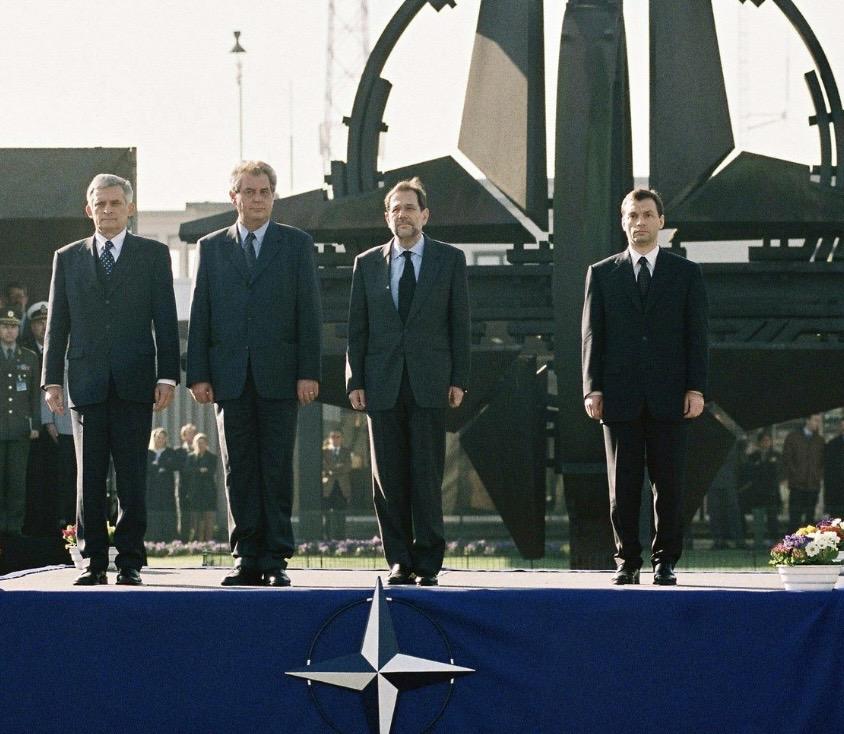
On 12 March 1999 Poland, Hungary and the Czech Republic formally joined the North Atlantic Treaty Organization, marking the first expansion of NATO into former Warsaw Pact territory after the end of the Cold War. Their accession represented a decisive shift in the political and military structure of Europe, symbolising the movement of Central European states away from Soviet influence and into the Western security system. The ceremony took place in Independence, Missouri, the birthplace of former United States president Harry Truman, who had been instrumental in founding NATO in 1949, giving the event a strong historical resonance.
Poland was the largest and most militarily significant of the three new members. At the time of accession, the Polish Armed Forces had roughly 180,000 active personnel, although this number had been significantly reduced from Cold War levels of over 400,000. Poland possessed a large conscript-based army with Soviet-designed equipment such as T-72 tanks, MiG-21 and MiG-29 fighter aircraft, and a substantial artillery force. Despite the ageing equipment, Poland maintained one of the largest armies in Europe and had a long land border with both Germany and the Russian exclave of Kaliningrad, making it strategically important to NATO planners. After joining NATO, Poland began a long-term modernisation programme to align with Western standards, eventually acquiring modern F-16 fighter jets, upgrading its tank fleet, and increasing defence spending. Poland’s geographic position made it a central component of NATO’s eastern flank and later a key staging area for alliance deployments in response to tensions with Russia.
Hungary entered NATO with a much smaller military, numbering approximately 45,000 to 60,000 personnel in the late 1990s. Its armed forces had also undergone significant reductions after the collapse of the Warsaw Pact and faced budgetary constraints that limited rapid modernisation. Hungary’s capabilities included Soviet-era tanks, armoured vehicles and a modest air force equipped primarily with MiG-29 fighters. Despite its smaller size, Hungary’s central European location and airspace made it strategically useful for NATO operations in the Balkans. Shortly after joining, Hungary supported NATO’s 1999 intervention in Kosovo by allowing alliance aircraft to use its airspace and bases, demonstrating its willingness to integrate into NATO operations. Over time Hungary transitioned toward a professional volunteer military and invested in modernisation, including the purchase of JAS 39 Gripen fighter aircraft and updated armoured vehicles.
The Czech Republic joined with an active military of around 65,000 personnel at the time. Like its neighbours, it inherited a large stockpile of Soviet-designed equipment and a conscription-based structure from the Cold War era. The Czech Armed Forces included a capable mechanised army, an air force with MiG-21 and MiG-23 aircraft, and significant experience in industrial military production. After NATO accession the Czech Republic moved to professionalise its forces and modernise equipment, focusing on interoperability with NATO systems. The country later contributed troops to NATO missions in Afghanistan and the Balkans, demonstrating its integration into alliance operations. Its defence industry also continued to produce armoured vehicles, small arms and aircraft components, supporting both domestic and export markets.
The inclusion of these three countries was the result of years of political reform and military restructuring following the collapse of communist governments in Central Europe between 1989 and 1991. Each state had participated in NATO’s Partnership for Peace programme and undertook reforms to ensure civilian control of the military, democratic governance and compatibility with NATO command structures. Their accession was widely seen in the West as a way to stabilise Central Europe, encourage democratic institutions and prevent any return to Russian dominance over the region.
Russia viewed the enlargement with deep suspicion and hostility. Throughout the 1990s Russian leaders had been assured informally that NATO would not expand significantly eastward after German reunification, although no formal treaty prohibited expansion. When NATO began considering the membership of former Warsaw Pact states, Russian officials argued that the move violated the spirit of post-Cold War cooperation and threatened Russian security. In 1999 Russian political and military leaders publicly condemned the inclusion of Poland, Hungary and the Czech Republic, describing it as a strategic encirclement. The timing of NATO’s air campaign against Serbia during the Kosovo War, which began just days after the new members formally joined, further inflamed Russian opposition and deepened mistrust between Moscow and the alliance.
Despite Russian objections, NATO maintained that enlargement was defensive and voluntary, emphasising that each country sought membership to guarantee its sovereignty and security after decades of Soviet dominance. For Poland, Hungary and the Czech Republic, joining NATO was viewed domestically as a historic return to Europe and a safeguard against future external pressure. Public support for membership in all three countries was strong, and political leaders framed accession as a cornerstone of their post-communist transformation.
The 12 March 1999 enlargement set the precedent for further expansion. It demonstrated that NATO was willing to accept former communist states and reshape the European security landscape. In later years additional Central and Eastern European countries, including the Baltic states and several Balkan nations, would join the alliance. The accession of Poland, Hungary and the Czech Republic remains a significant milestone in post-Cold War history, marking the moment when NATO crossed the former Iron Curtain and established a lasting presence in Central Europe while simultaneously contributing to the long-term tensions that developed between NATO and Russia in the decades that followed.