On this day in military history…
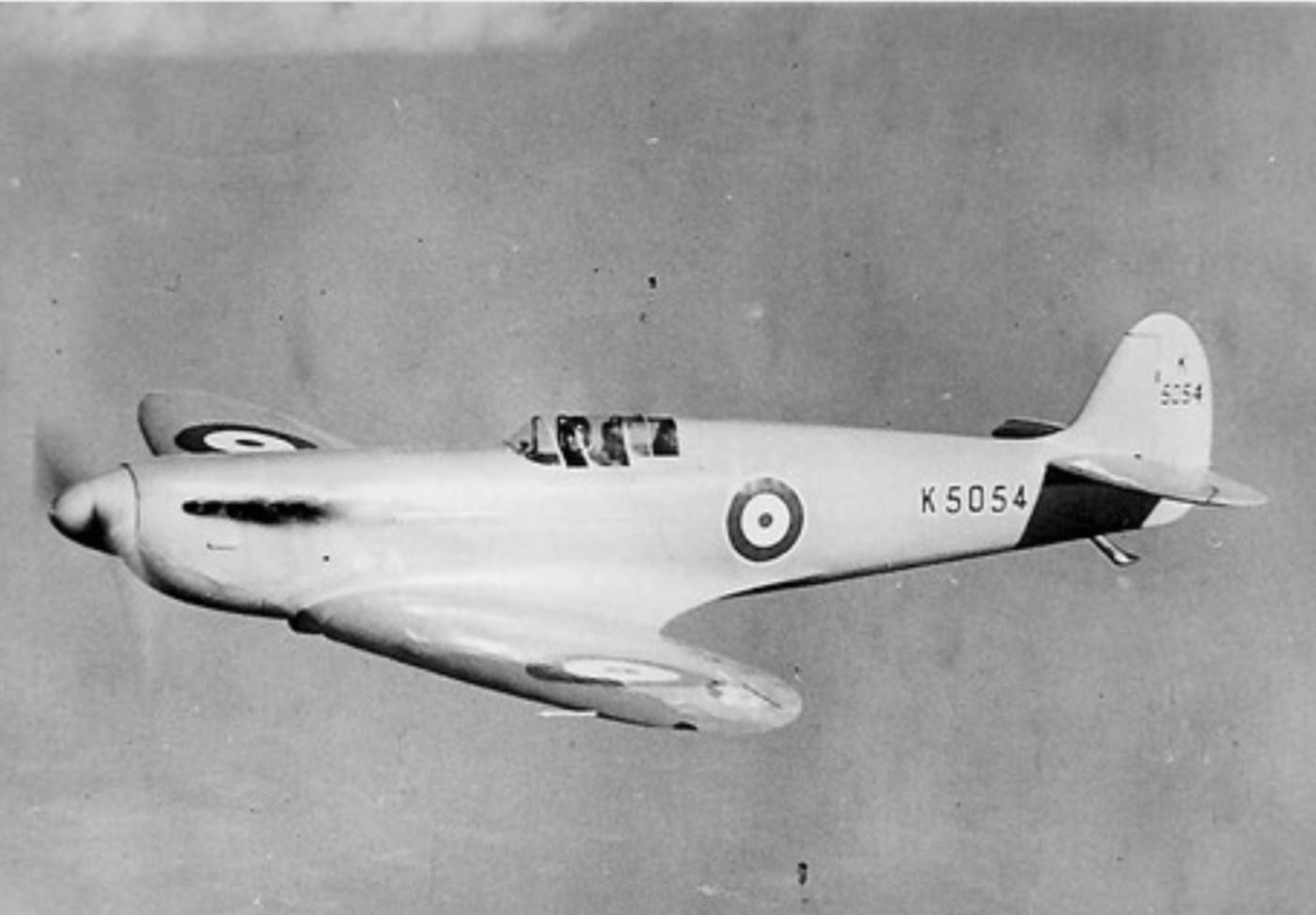
On 5 March 1936, at Eastleigh Aerodrome in Hampshire, later known as Southampton Airport, a sleek, revolutionary monoplane lifted gracefully into the grey spring sky for the very first time. The aircraft was the prototype Supermarine Spitfire, bearing the serial number K5054, and its maiden flight marked the beginning of one of the most celebrated chapters in aviation history. Designed by the brilliant aeronautical engineer R. J. Mitchell, the Spitfire would go on to become a symbol of British resilience, but on that day it was simply an unproven machine taking its first cautious steps into the air.
The man at the controls was Joseph 'Mutt' Summers, Supermarine’s chief test pilot. Summers was already highly respected for his calm temperament and sharp technical understanding. As he advanced the throttle of the Rolls-Royce Merlin engine, the aircraft gathered speed along the grass runway and rose smoothly into the air. The flight lasted only about eight minutes, yet it was enough to demonstrate that Mitchell’s design was something extraordinary. After landing, Summers is famously reported to have said, “Don’t change a thing,” a remarkable endorsement for a prototype on its first outing.
The Spitfire’s design had evolved from Supermarine’s successful Schneider Trophy seaplanes, which had pushed the boundaries of speed in the early 1930s. Mitchell and his team at Supermarine, part of Vickers-Armstrongs, sought to create a high-performance fighter capable of meeting the Air Ministry’s demanding Specification F.37/34. The result was a low-wing monoplane of all-metal stressed-skin construction, featuring the now-legendary elliptical wing. This distinctive shape was not chosen purely for beauty; it minimized drag and allowed space for eight .303 Browning machine guns, giving the aircraft formidable firepower for its day.
Tragically, Mitchell would not live to see the Spitfire’s wartime fame. He died of cancer in 1937 at the age of 42, but his chief draughtsman, Joseph Smith, continued refining the aircraft, overseeing its development through numerous variants during the war years.
Following the successful first flight in March 1936, the prototype underwent further testing and modifications. The Air Ministry quickly recognized its potential, and an initial order was placed even before testing was fully complete — a testament to the urgency of rearmament as tensions in Europe grew. It took just over two years from that first flight for the Spitfire to enter operational service. The first production Spitfire Mk I was delivered to Royal Air Force No. 19 Squadron at Duxford in August 1938.
By the time the Second World War began in September 1939, the Spitfire was already in frontline service, though in limited numbers compared with the Hawker Hurricane. Its true test would come during the Battle of Britain in 1940, where its speed, agility and climbing ability allowed RAF pilots to challenge the Luftwaffe on equal terms. Yet all of that lay in the future on that quiet March day in 1936, when K5054 first left the ground over Hampshire.
The original prototype itself would later be lost in a crash in September 1939, but by then the Spitfire had secured its place in history. More than 20,000 would be built in numerous variants, serving not only with the RAF but with Allied air forces around the world. From that brief eight-minute maiden flight at Eastleigh, a legend was born — an aircraft whose elegant lines and extraordinary performance would make it one of the most admired fighters ever created.