On this day in military history…
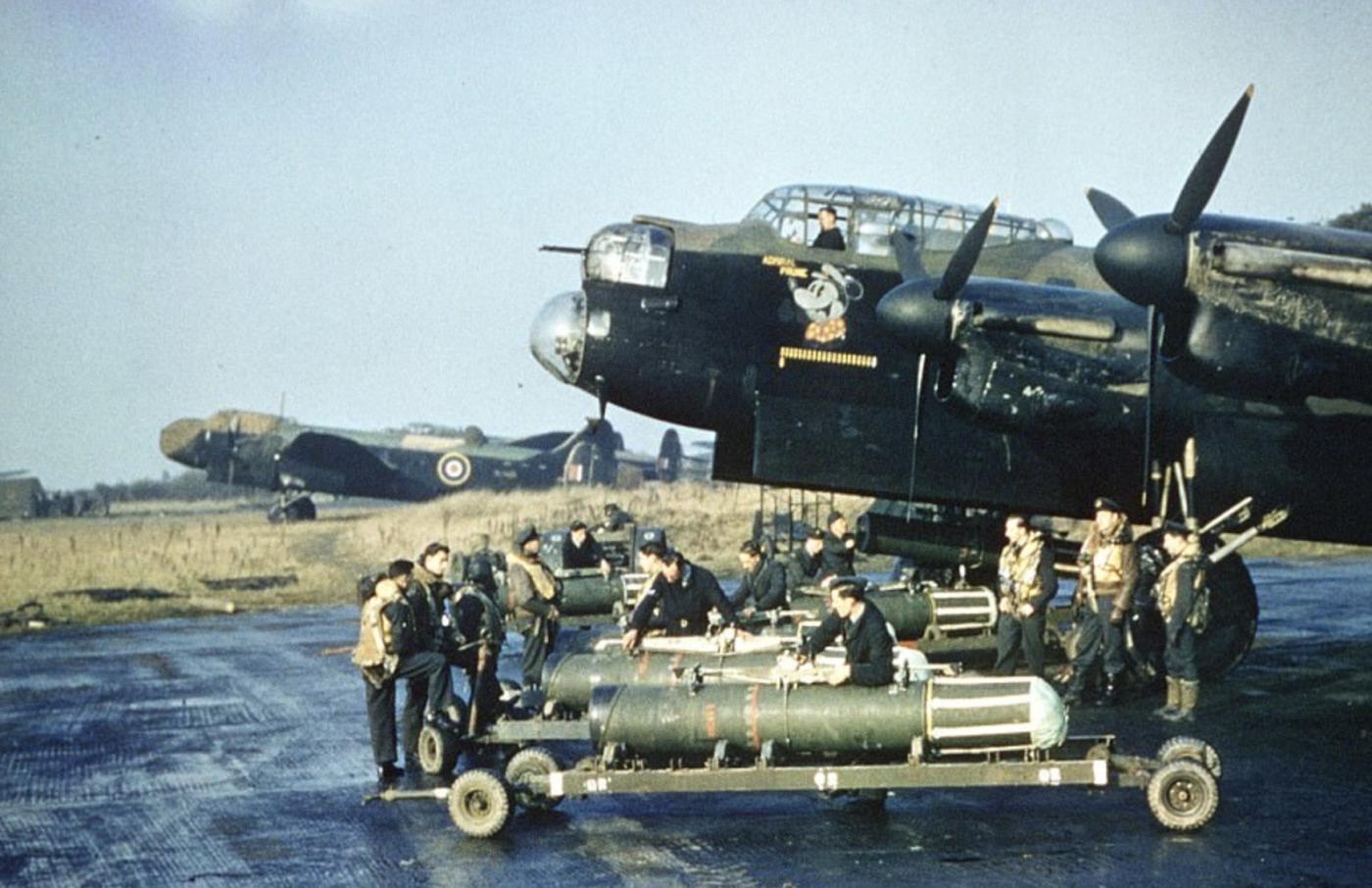
On the night of 3 March 1942, a new chapter quietly opened in the air war over Europe. The aircraft was the Avro Lancaster, soon to become the principal heavy bomber of RAF Bomber Command, and its first operational sortie was not a dramatic attack on a city but a cold, methodical minelaying mission over the Heligoland Bight. In the understated language of the RAF, it was a “gardening” operation. Yet this apparently modest task proved the worth of the mighty new bomber more convincingly than any publicity raid could have done.
The squadron entrusted with introducing the Lancaster to combat was No. 44 Squadron RAF, known as “Rhodesia.” It operated from RAF Waddington in Lincolnshire, one of the key heavy bomber stations feeding aircraft into the night offensive. The squadron had only recently begun converting from the Handley Page Hampden to the much larger four-engined Lancaster, built by A.V. Roe and Company. The new aircraft represented a dramatic leap in capability: powered by four Rolls-Royce Merlin engines, with a cavernous bomb bay and exceptional range for its class, it was designed to carry heavier loads farther than its predecessors. But promise on paper meant little until proven under operational conditions over enemy waters.
Overall command of Bomber Command at the time rested with Air Chief Marshal Arthur Harris, who had only recently taken up the post and was determined to intensify the strategic bombing campaign against Germany. The specific tasking for the night fell within the routine planning machinery of Bomber Command’s headquarters at High Wycombe, but the responsibility for executing the mission lay squarely with the crews and commanders at Waddington. The squadron’s commanding officer, Wing Commander John Nettleton—who would later win the Victoria Cross for a daring daylight raid—was instrumental in bringing the unit and its new aircraft to operational readiness.
Minelaying was no soft introduction to war. “Gardening” required aircraft to fly long distances, often at low altitude, over heavily defended coastal waters. The Heligoland Bight, off the north-west German coast, was a vital maritime corridor. Mines dropped there could sink or damage enemy shipping, disrupt supply lines, and force the Kriegsmarine to divert ships and resources into minesweeping. It was strategic pressure applied silently and persistently.
On that March night, the Lancasters lifted off from RAF Waddington’s long runways and climbed into the dark. The weather over the North Sea was never to be trusted, and navigation in 1942 relied on a combination of dead reckoning, astro-navigation when possible, and early radio aids. The Lancaster’s relatively stable handling and strong performance at operational altitudes immediately impressed its crews. Compared with the twin-engined Hampden, it offered more space, better defensive armament, and crucially, the reassurance of four engines over cold water.
As they approached the designated mining areas, the crews descended to the required height to release their loads. The mines themselves were air-dropped naval weapons fitted with parachutes to control their descent into the sea. Accuracy was vital; the mine had to enter the water within a defined zone to be effective. Flying straight and level at low altitude in darkness over enemy-patrolled waters was hazardous work. Searchlights and flak batteries around the German coast posed a constant threat, and night fighters were an ever-present danger. Yet the Lancaster’s power and steady flight characteristics made it a stable platform for this delicate task.
The operation was carried out successfully. The mines were laid in their assigned sectors of the Heligoland Bight, adding to the invisible barrier that would claim numerous enemy vessels in the months to come. Perhaps most importantly for the future of the aircraft, the mission demonstrated that the Lancaster could carry substantial loads over long distances with reliability and manageable crew workload. The aircraft’s systems functioned as intended, and its performance over sea and hostile territory inspired confidence.
All the Lancasters involved returned safely to Waddington, a result that was far from guaranteed in early 1942. Loss rates for Bomber Command were already sobering, and new aircraft types often revealed weaknesses only under combat strain. The safe return of the crews not only validated the Lancaster’s engineering but also strengthened morale within the squadron. Ground crews and aircrews alike had tangible proof that this new machine was more than a paper specification; it was a robust and capable warplane.
Though overshadowed in public memory by later massed raids and legendary operations, the first Lancaster sortie was a quiet turning point. In proving itself on a demanding minelaying mission, the aircraft showed it could handle long overwater flights, deliver heavy loads accurately, and bring its crews home. From that night forward, the Lancaster would expand its role from “gardening” to major industrial targets deep in Germany, eventually becoming the backbone of Britain’s strategic bombing effort.