On this day in military history…
Defender of the Fatherland Day is celebrated every year on 23 February across Russia and several former Soviet republics. The holiday has its roots in the early years of the Soviet state and commemorates what was long described as the first victory of the newly formed Red Army over the forces of Imperial Germany during the First World War. Over time it has evolved into a broader celebration honouring military service and those who defend their country, while still retaining strong historical associations with the Red Army and the revolutionary period of 1917–1918.
The origins of the celebration date back to the chaotic months following the Russian Revolution of 1917. After the Bolsheviks seized power in Petrograd in October 1917, Russia began withdrawing from the First World War. However, negotiations with Germany and its allies stalled, and in February 1918 German forces launched a major offensive known as Operation Faustschlag. German troops advanced rapidly across territories of the former Russian Empire, moving into what are now parts of Belarus, Latvia, Estonia, and Ukraine. The advance created panic among the Bolshevik leadership, who were still consolidating power and had not yet established a fully organized national army.
In response to the German advance, the Bolshevik government issued urgent appeals for volunteers to defend the revolutionary state. On 23 February 1918, mass enlistment drives were held in Petrograd (now Saint Petersburg) and Moscow. Workers and soldiers were encouraged to join the newly formed Workers’ and Peasants’ Red Army. Soviet-era accounts later described this date as marking the Red Army’s first significant victories against German forces near the towns of Narva in present-day Estonia and Pskov in northwestern Russia. According to official Soviet narratives, Red Army units halted or pushed back German troops in these areas, symbolizing the birth of the Soviet military.
Modern historians note that the situation was more complicated and that German forces continued to advance in many areas, with the Bolsheviks soon signing the Treaty of Brest-Litovsk in March 1918 to end Russia’s participation in the war. Nevertheless, the symbolic importance of the mobilization and the resistance around Narva and Pskov became central to Soviet memory. By the early 1920s, 23 February was officially designated as Red Army Day, celebrating the creation of the Soviet armed forces and the defence of the revolutionary state against external enemies.
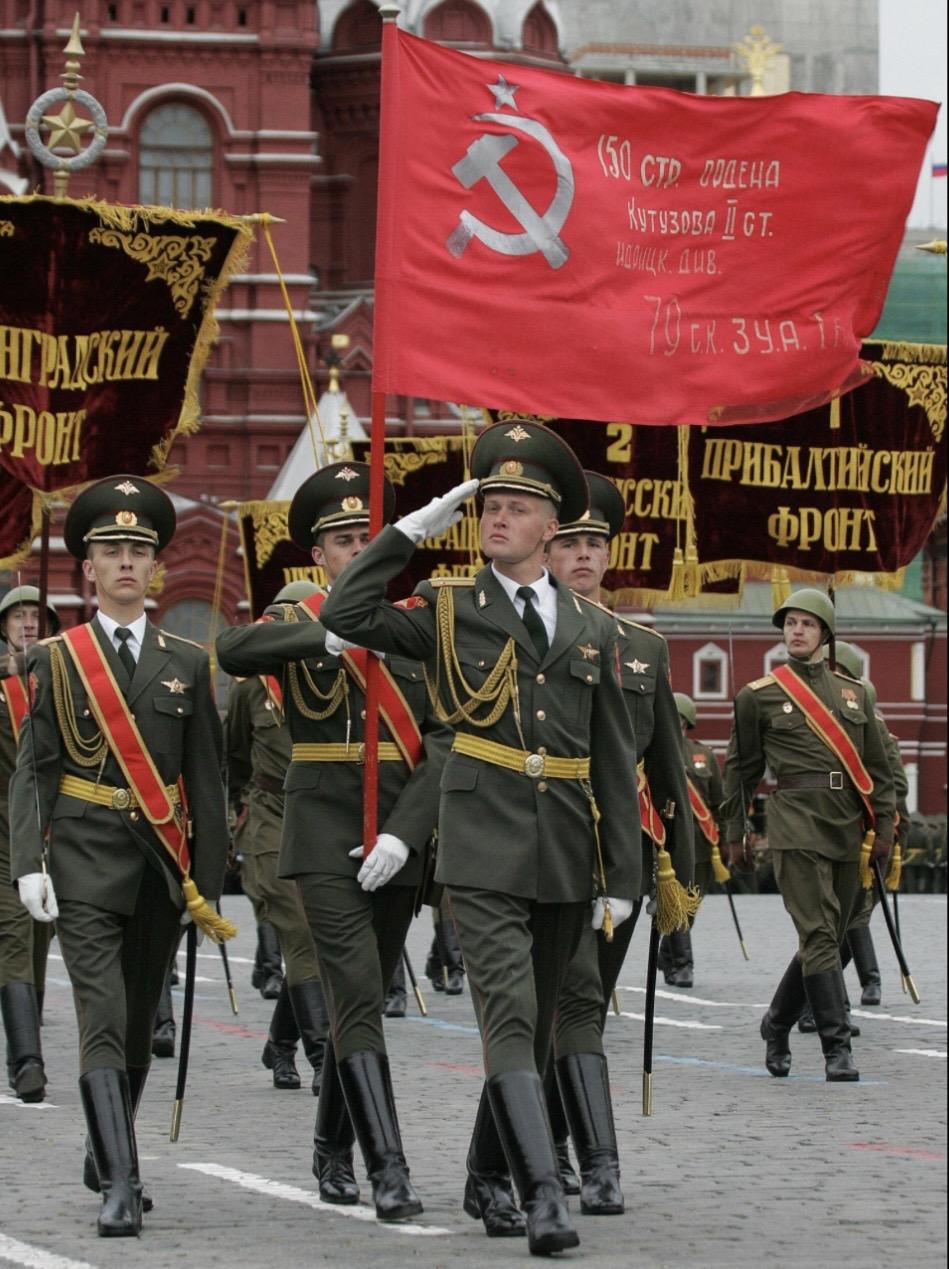
Throughout the Soviet period, Red Army Day became one of the major annual patriotic celebrations. Military parades, ceremonies, and public events were held across the Soviet Union. Schools and workplaces organized gatherings to honour soldiers and veterans, and citizens were encouraged to express gratitude to those serving in the armed forces. The holiday reinforced the image of the Red Army as the defender of socialism and the protector of the Soviet homeland. During the Second World War, known in the Soviet Union as the Great Patriotic War, the significance of the day deepened further, as it became associated with the immense sacrifices and eventual victory over Nazi Germany.
After the collapse of the Soviet Union in 1991, the holiday continued to be observed in Russia and some other former Soviet states. In 1995, Russia officially renamed it Defender of the Fatherland Day. While it still commemorates the historical roots of the Red Army and its early struggles, it has taken on a broader meaning. The day now honours all members of the armed forces, past and present, as well as anyone considered to be a defender of the nation. It is also informally celebrated as a day recognizing men in general, somewhat similar to how International Women’s Day on 8 March honours women.
Celebrations on 23 February often include laying wreaths at war memorials, especially at monuments dedicated to soldiers of the Great Patriotic War. In major cities such as Moscow and Saint Petersburg, official ceremonies involve military representatives, government leaders, and veterans. Concerts, exhibitions of military equipment, and patriotic performances are common. Fireworks displays are sometimes held in large cities to mark the occasion. Schools and cultural institutions frequently organize educational activities about military history, including the formation of the Red Army and its role in defending the country during times of conflict.
In addition to Russia, the holiday is observed in Belarus, Kyrgyzstan, Tajikistan, and some other countries that were once part of the Soviet Union, though the meaning and scale of celebrations vary. In Ukraine and the Baltic states, the date has largely lost its official status following independence, reflecting different historical interpretations and national narratives.
Defender of the Fatherland Day remains an important part of historical memory for many people in the post-Soviet world. It reflects the legacy of the early Soviet struggle for survival during the final phase of the First World War, the symbolic victories near Narva and Pskov against German Kaiser troops, and the later development of one of the largest military forces in modern history. Over more than a century, the day has transformed from a revolutionary commemoration of the Red Army’s formation into a wider celebration of national defence, military service, and remembrance of those who have served.