On this day in military history…
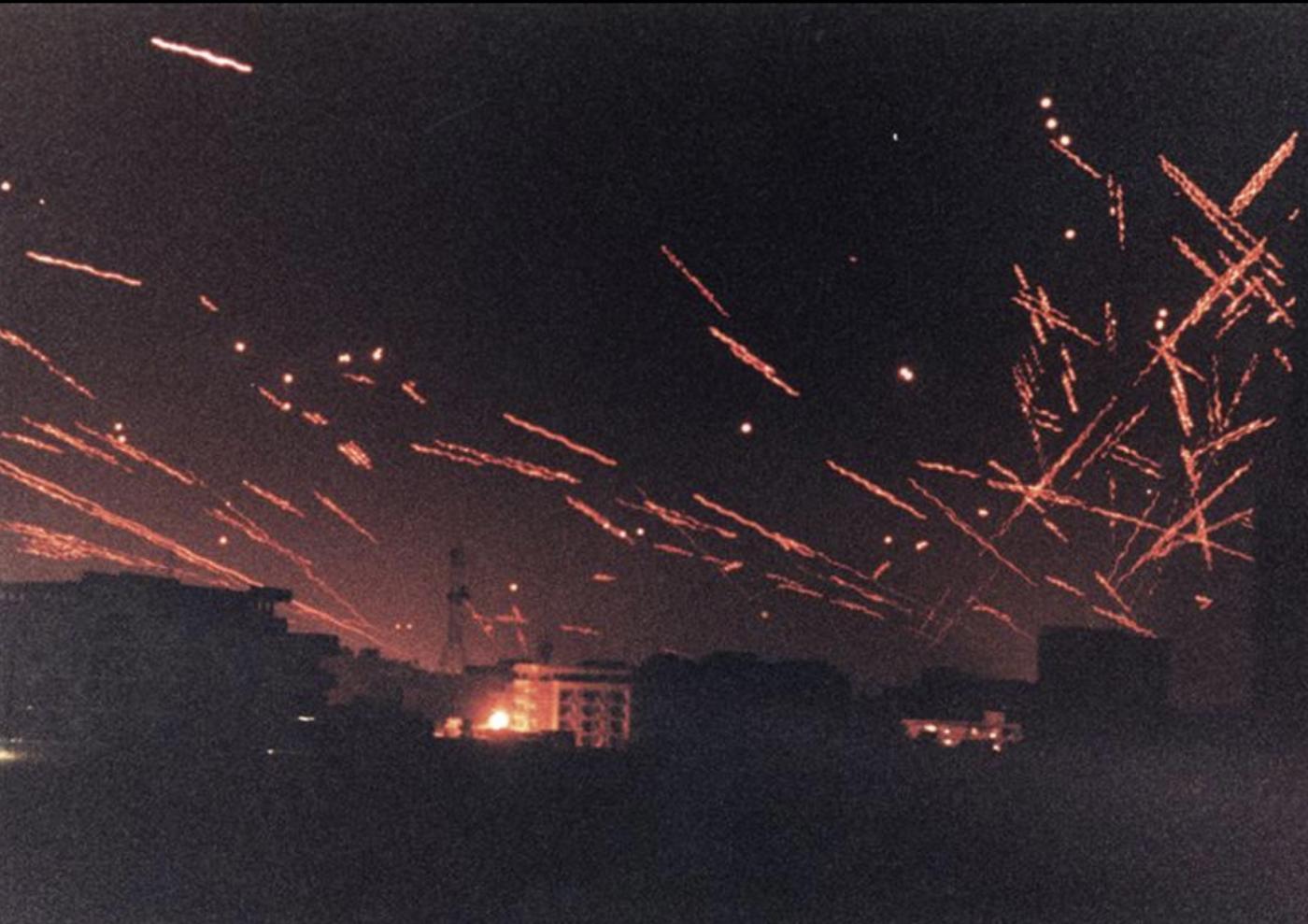
On the evening of 16 January 1991, United States time, the air war that opened the Gulf War began when coalition aircraft crossed into Iraqi airspace, and although the first weapons were released while it was still the 16th in North America, the bombs fell on Iraq after midnight local time on 17 January, marking the start of what many Iraqis experienced as a sudden and overwhelming assault; the opening phase involved roughly 700 coalition aircraft overall within the first 24 hours, with around 400 strike and support aircraft committed during the initial night alone, flying from bases in Saudi Arabia, Turkey, and from aircraft carriers in the Persian Gulf and Red Sea, and they dropped or launched several hundred tons of ordnance, including an unprecedented concentration of precision-guided munitions such as laser-guided bombs and Tomahawk land-attack cruise missiles, with estimates often citing more than 1,000 precision weapons used in the first day of the campaign; the principal attacking forces came from the United States and the United Kingdom, supported by aircraft and facilities from coalition partners including Saudi Arabia, Kuwait, and France, with British Tornado GR1 aircraft flying some of the most dangerous low-level missions against Iraqi airfields while American stealth F-117 Nighthawks struck heavily defended targets in Baghdad; the first-night target set was carefully planned to blind and paralyse Iraq’s ability to respond and included command and control bunkers, air defence radar sites, surface-to-air missile batteries, airfields and hardened aircraft shelters, key communications nodes, electrical power stations, and symbols of regime authority in Baghdad, with cruise missiles threading through air defences to hit leadership and intelligence facilities while electronic warfare aircraft jammed Iraqi radars and communications; television viewers around the world saw green tracer fire and explosions over Baghdad in near real time, creating a powerful psychological effect, and although the phrase “shock and awe” was coined years later, many journalists and military observers retrospectively applied it to this opening night because of the speed, precision, and scale of the attack, which demonstrated a new style of warfare that combined stealth technology, satellite navigation, real-time intelligence, and tightly coordinated multinational air power, and an often-noted detail is that despite Iraq possessing one of the largest and densest air defence networks in the world at the time, the coalition achieved air supremacy remarkably quickly, with relatively few aircraft losses during the opening strikes, setting the conditions for a sustained air campaign that would continue for weeks before the ground offensive began.