On this day in military history…
Operation Drumbeat, known to the Germans as Unternehmen Paukenschlag, marked the opening phase of a major German submarine offensive against the eastern seaboard of the United States and the Caribbean during the Second World War. It began in January 1942, only weeks after the United States entered the war, and rapidly exposed deep weaknesses in Allied coastal defenses, convoy systems, and anti-submarine coordination.
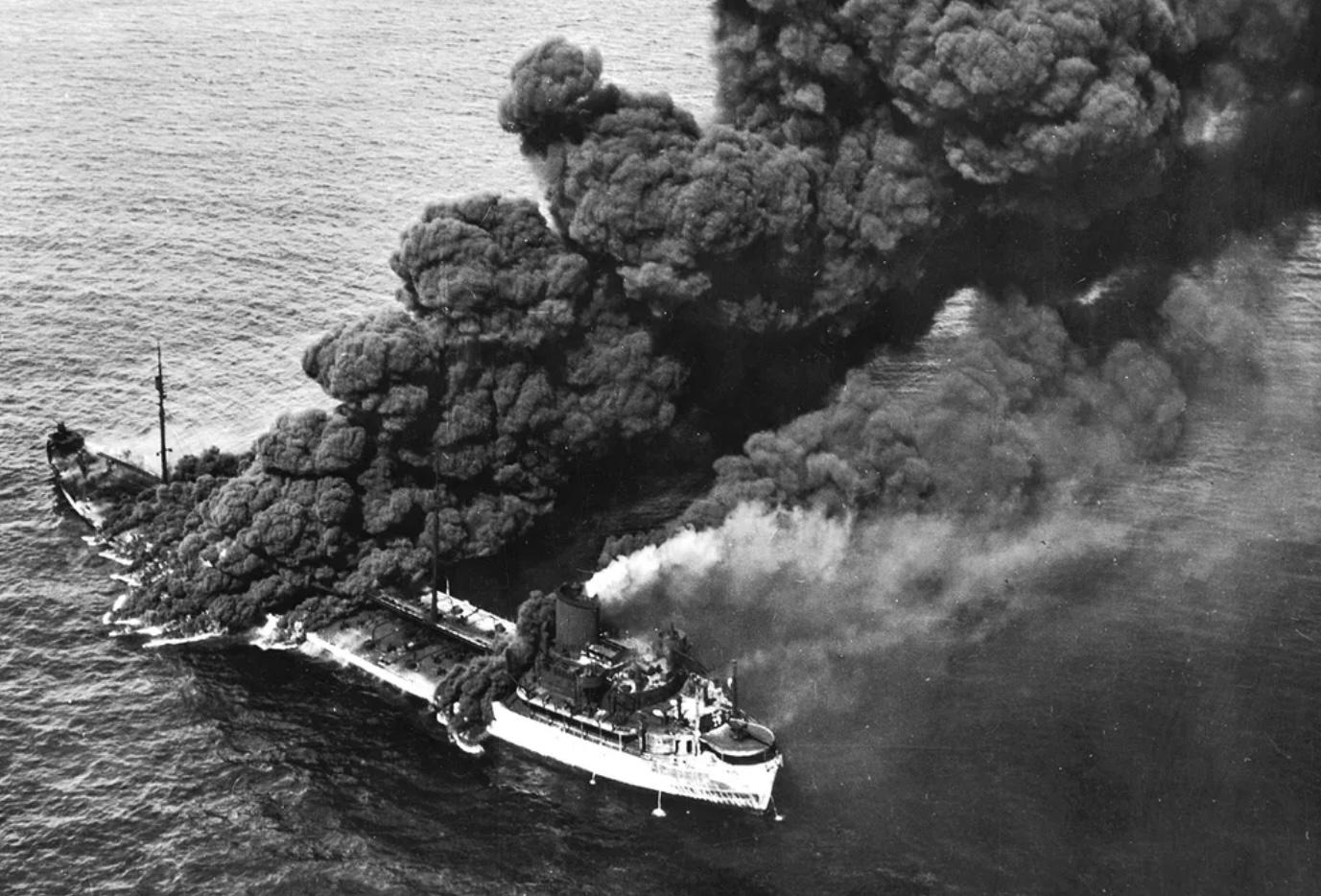
The operation formally commenced on the night of 11 January 1942 when the first German U-boats reached American coastal waters. The opening blow fell against the Norwegian tanker Norness, which was sailing independently off Long Island. Late on 11 January she was torpedoed and badly damaged, sinking in the early hours of 12 January. This made her the first Allied merchant ship lost in the campaign. Her burning hull was clearly visible from shore, a dramatic and unsettling indication that the Atlantic war had reached North America itself.
The German operation was directed by Karl Dönitz, commander of the Kriegsmarine’s U-boat arm. Dönitz had long believed in aggressive, close-range submarine warfare and recognized that the sudden entry of the United States into the war created a rare opportunity. He correctly judged that American coastal defenses were poorly organized, shipping was sailing independently and predictably, and there would be delays before effective countermeasures could be implemented.
At the outset, Germany could deploy only a small number of long-range Type IX submarines, as most U-boats were already committed to operations in the North Atlantic. Despite this limitation, the initial phase of Drumbeat proved extraordinarily successful. American coastal cities remained fully lit at night, silhouetting merchant ships against the shoreline. There were no comprehensive coastal convoy systems, air patrols were limited, and coordination between naval and air forces was weak. German submarines were often able to attack on the surface, sometimes within sight of land, before slipping away undetected.
Within days of the first sinking, attacks increased in frequency and spread southward along the American coastline and into the Caribbean and Gulf of Mexico. What began as a limited January operation quickly evolved into a sustained campaign through the spring and summer of 1942. Tankers carrying vital oil supplies proved particularly vulnerable, and the loss of these ships caused serious disruption to Allied fuel distribution at a critical moment in the war.
The damage inflicted during Operation Drumbeat and its follow-on actions was immense. In the first six months of 1942, German U-boats sank hundreds of Allied merchant vessels in the western Atlantic, amounting to several million tons of shipping. Losses off the American coast exceeded those suffered during the darkest periods of the earlier Battle of the Atlantic near Britain. Many crews were lost with their ships, and the psychological impact on coastal communities was severe, as wreckage, oil slicks, and survivors frequently reached shore.
The success of the German campaign, however, forced rapid change. As losses mounted, Allied tactics began to evolve. Coastal convoys were gradually introduced, despite early resistance and logistical challenges. Air patrols were expanded, radar and radio direction-finding equipment improved, and strict blackouts were enforced along the coastline to deny U-boats easy visual targets. The incorporation of British and Canadian anti-submarine experience played a crucial role in accelerating these reforms.
German tactics also had to adapt as Allied defenses strengthened. Surface attacks became increasingly dangerous, forcing submarines to operate more frequently while submerged, which reduced their speed and effectiveness. Improved escort tactics, better-trained crews, and more lethal depth charges steadily increased U-boat losses. By mid to late 1942, the balance had begun to shift decisively against the attackers.
Operation Drumbeat demonstrated both the devastating effectiveness of submarine warfare against an unprepared enemy and the limitations of that success once countermeasures were fully implemented. While Paukenschlag inflicted enormous material losses and temporarily threatened Allied supply routes, it failed to achieve the strategic knockout blow envisioned by Dönitz. Instead, it triggered a rapid and costly learning process that ultimately contributed to the defeat of the German U-boat campaign in the Atlantic.