
Capture of Qaruh Island
The capture of Qaruh Island on 24 January 1991 marked the first liberation of Kuwaiti territory during the Gulf War and carried symbolic importance far beyond the island’s small size. Qaruh Island lies off the coast of Kuwait in the Persian Gulf and had been occupied by Iraqi forces since the invasion of Kuwait in August 1990. Although little more than a rocky outcrop with a lighthouse, its location made it useful as an observation point over maritime traffic and coalition naval movements in the northern Gulf.
By late January 1991, the coalition air campaign against Iraq was well underway, severely degrading Iraqi command, control, and morale. Coalition naval forces operated throughout the Gulf to enforce maritime blockades, gather intelligence, and prepare for potential amphibious operations. Intelligence assessments indicated that Iraqi troops stationed on Qaruh Island were lightly armed, isolated, and primarily tasked with observation rather than sustained defense. Even so, the possibility of mines, prepared firing positions, and small-arms resistance meant the island could not simply be ignored and required a carefully planned assault.
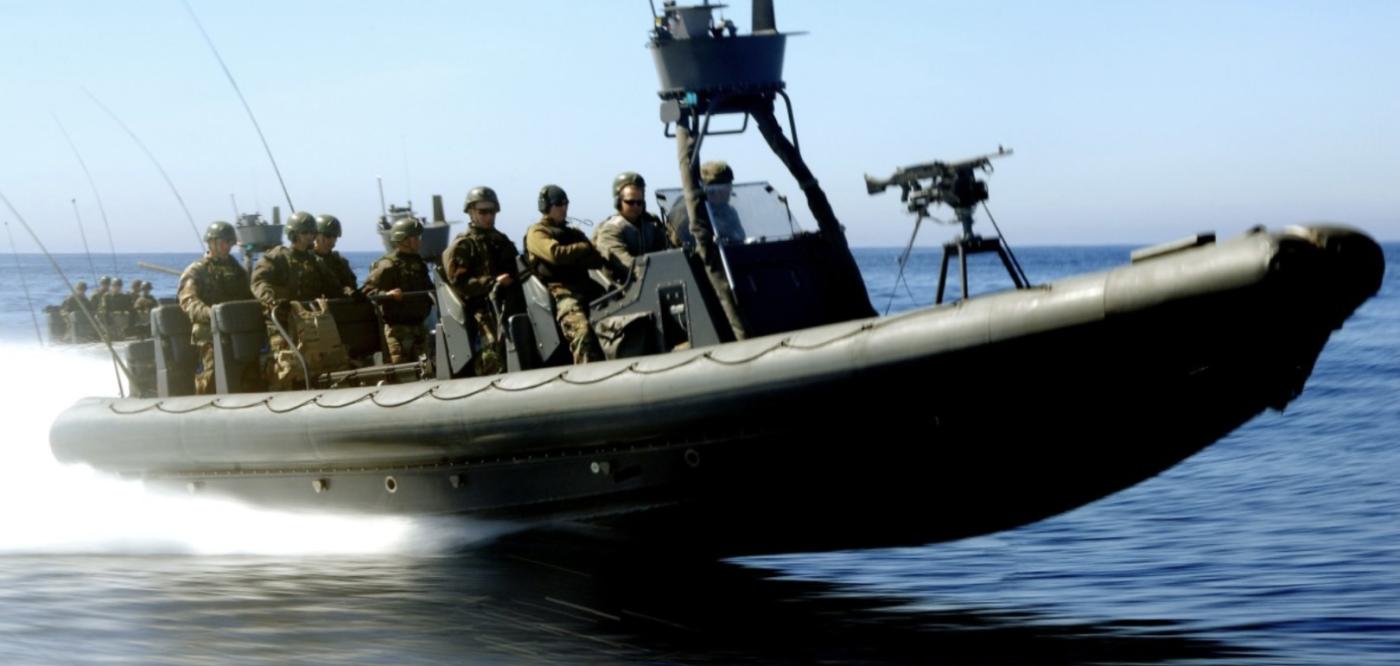
The mission to retake the island was assigned to United States Navy SEALs, operating from coalition naval vessels positioned offshore. Planning emphasized surprise, speed, and the use of darkness to neutralize any defensive advantage held by the Iraqi garrison. The assault force embarked in rigid-hulled inflatable boats launched from a U.S. Navy ship during the night, approaching the island quietly to avoid detection. At the same time, coalition naval and air units monitored the surrounding waters and airspace to ensure the assault would not be disrupted.
In the early hours of 24 January, the SEAL teams landed on Qaruh Island without encountering immediate resistance. The troops moved swiftly to secure the island, clearing defensive positions and advancing toward the lighthouse, which was believed to be the focal point of Iraqi observation activities. The island was methodically searched to eliminate any remaining threats. Iraqi soldiers encountered during the operation were taken prisoner without a fight, while others appeared to have already fled or abandoned their posts, likely discouraged by weeks of intense coalition bombing and their complete isolation.
Once the island was fully secured, explosive ordnance disposal checks were conducted to locate and neutralize any mines or booby traps. With the area declared safe, coalition forces raised the Kuwaiti flag over Qaruh Island. This moment carried significant symbolic weight, as it represented the first physical reversal of Iraq’s occupation of Kuwait. Images of the flag being raised were quickly disseminated and used to demonstrate progress in the war effort.
From a military perspective, the capture of Qaruh Island eliminated a potential Iraqi observation post and strengthened coalition control over the northern Persian Gulf. It also highlighted the effectiveness of special operations forces in conducting precise, limited-objective missions under combat conditions. Politically and psychologically, the operation boosted morale among Kuwaitis and coalition forces alike, reinforcing the message that Iraqi control over occupied territory was weakening. Although small in scale, the operation on Qaruh Island underscored coalition dominance and foreshadowed the larger ground offensive that would soon liberate Kuwait entirely.