Alan Turing
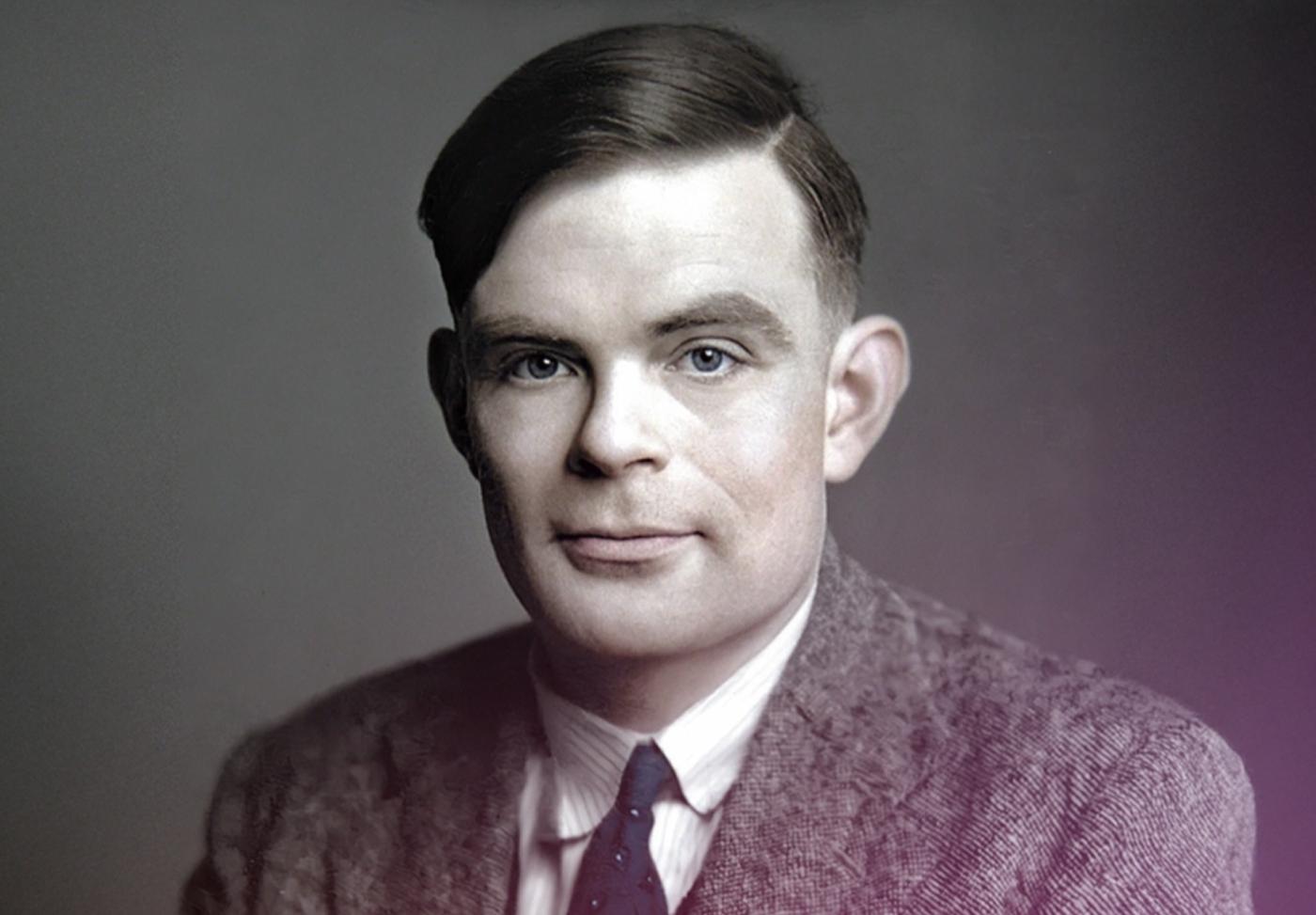
Alan Mathison Turing was one of the most influential mathematicians and thinkers of the twentieth century, a man whose ideas shaped modern computing and whose work during the Second World War helped shorten the conflict. He was born on 23 June 1912 in Maida Vale, London, England. His father, Julius Mathison Turing, worked in the Indian Civil Service, which governed British India, and his mother, Ethel Sara Turing, had spent part of her youth in India as well. Because his father’s job required long periods abroad, Alan and his older brother John were often left in England with foster families while their parents traveled back and forth between Britain and India. This somewhat unusual upbringing meant that Turing spent much of his childhood separated from his parents, though they remained close and supportive of his education.
From an early age Turing displayed a remarkable curiosity about the natural world. As a child he was fascinated by numbers, puzzles, and scientific experiments. Teachers and family members noticed that he could solve complicated problems in ways that were far beyond his years. At the same time, he did not always fit comfortably into the rigid expectations of traditional British schooling. He sometimes appeared absent-minded and uninterested in subjects that did not capture his imagination. What did excite him were mathematics and science, and he would often perform experiments on his own, sometimes constructing simple chemical laboratories at home.
One famous story from his childhood illustrates both his determination and his unconventional nature. In 1926, when he was only fourteen years old, Turing was due to begin at Sherborne School in Dorset, a prestigious boarding school. Unfortunately a national transport strike disrupted the railways on the day he was meant to travel there. Rather than postpone his journey, Turing reportedly cycled nearly sixty miles from Southampton to Sherborne in order to arrive at the school on time.
Sherborne School valued classical education more than mathematics and science, which meant that Turing did not always receive encouragement from teachers. Some even thought his interests were too narrow. Despite this, he continued to pursue mathematics independently. During this period he formed an intense friendship with a fellow student named Christopher Morcom, who shared his passion for science and intellectual exploration. Morcom’s sudden death in 1930 deeply affected Turing. It was a turning point in his life, leading him to think seriously about questions of mind, consciousness, and whether human thought could exist independently of the physical body. These reflections would later influence his work in computing and artificial intelligence.
After leaving Sherborne, Turing won a scholarship to study mathematics at King’s College, Cambridge, one of the most respected universities in the world. He began there in 1931 and quickly distinguished himself through his brilliance in mathematical logic. His studies focused on areas such as probability theory, cryptography, and the foundations of mathematics. In 1935 he was elected a Fellow of King’s College at the age of just twenty-two after writing an important paper on the central limit theorem, a key concept in statistics.
Turing’s most famous theoretical contribution came in 1936 when he published a paper titled “On Computable Numbers.” In this work he explored the limits of what could be calculated by a machine. To explain his ideas he imagined a simple abstract machine that could read and write symbols on a strip of tape according to a set of rules. This hypothetical device, later called the Turing machine, became a fundamental concept in computer science. It showed that many different types of calculations could be performed by a single universal machine if given the correct instructions. The idea anticipated the programmable digital computer years before such machines were actually built.
Following his groundbreaking paper, Turing traveled to the United States to study at Princeton University. There he worked with the mathematician Alonzo Church, one of the leading figures in mathematical logic. Turing earned his PhD in 1938 with research on ordinal logic and the concept of computation. While at Princeton he also designed theoretical ideas for electronic computing machines, although the technology to build them did not yet fully exist.
When Turing returned to Britain in 1938, Europe was moving rapidly toward war. He soon became involved with the Government Code and Cypher School, the organization responsible for breaking enemy communications. When the Second World War began in 1939, Turing joined a secret codebreaking center at Bletchley Park in Buckinghamshire. This location would become one of the most important intelligence sites of the war.
The German military relied heavily on encrypted communications generated by a machine known as the Enigma. The Enigma machine looked like a typewriter but used a complex system of rotating wheels and electrical circuits to scramble messages into seemingly random letters. Each day the settings of the machine changed, creating an enormous number of possible combinations. To read German messages, the Allies had to discover the correct settings for that day’s transmissions.
Turing became one of the key figures working to solve this problem. He was assigned to Hut 8 at Bletchley Park, which focused on decrypting communications used by the German Navy. Naval Enigma was particularly difficult because the Germans used extra security measures. Turing developed new mathematical techniques to analyze encrypted messages and helped design an electromechanical machine known as the Bombe. The Bombe was built to test large numbers of possible Enigma settings rapidly. By identifying likely patterns in German messages, the machine could narrow down the correct configuration for that day.
These breakthroughs allowed British intelligence to read large volumes of German communications. The intelligence gathered from decrypted messages was given the code name “Ultra.” Ultra intelligence provided crucial information about German submarine movements in the Atlantic, enabling Allied convoys to avoid attacks and helping turn the tide in the Battle of the Atlantic. Historians widely believe that the work done at Bletchley Park shortened the war in Europe by several years and saved countless lives.
Turing’s personality at Bletchley Park was distinctive. He was known for his eccentric habits, which included chaining his tea mug to a radiator so that no one else would take it and wearing a gas mask while cycling during hay fever season. Colleagues remembered him as shy and socially awkward but also warm, humorous, and intensely focused when working on difficult problems.
Later in the war Turing also worked on improving secure communications for the Allies themselves. He spent time in the United States collaborating with American cryptographers and engineers, helping develop encryption systems used by Allied forces.
After the war ended in 1945, Turing turned his attention to building actual computing machines. He worked at the National Physical Laboratory in London, where he designed plans for one of the first stored-program computers called the Automatic Computing Engine (ACE). Although bureaucratic delays prevented the full machine from being completed exactly as he envisioned, his design strongly influenced early computer development.
In 1948 Turing moved to the University of Manchester, where he worked on the Manchester Mark I computer, one of the earliest operational electronic computers. During this period he also began exploring ideas about artificial intelligence. In 1950 he published a famous paper titled “Computing Machinery and Intelligence.” In it he proposed a thought experiment that later became known as the Turing Test. The test suggested that if a machine could engage in a conversation indistinguishable from that of a human, it might reasonably be considered intelligent.
Despite his scientific achievements, Turing’s life after the war took a tragic turn. In 1952 he was prosecuted under British laws that criminalized homosexual relationships. After admitting to a relationship with another man, Turing was convicted of “gross indecency,” a criminal offense at the time. Instead of serving a prison sentence he accepted a form of chemical treatment intended to suppress his sexuality, a process sometimes described as chemical castration. The treatment caused physical and emotional side effects and also led to the loss of his security clearance, effectively ending his involvement in government cryptographic work.
On 7 June 1954 Alan Turing was found dead at his home in Wilmslow, Cheshire, at the age of forty-one. The official investigation concluded that he had died from cyanide poisoning and ruled the death a suicide. An apple partially eaten beside his bed was believed to have been contaminated with cyanide, though the apple itself was never tested. Some historians have speculated about alternative explanations, but the most widely accepted account remains suicide.
For many years after his death, much of Turing’s wartime work remained classified and unknown to the public. As secrecy around Bletchley Park gradually lifted in the 1970s, the full importance of his contributions became widely recognized. He is now regarded as one of the founding figures of computer science and artificial intelligence.
In 2009 the British government issued an official apology for the way he had been treated after the war. In 2013 he received a posthumous royal pardon from Queen Elizabeth II. His legacy continues to grow, and his name is commemorated in many ways, including the Turing Award, often described as the Nobel Prize of computer science.
Today Alan Turing is remembered not only as a brilliant codebreaker who helped defeat Nazi Germany but also as a visionary thinker who imagined machines capable of performing complex calculations and even intelligent behavior. Many of the digital technologies that define the modern world trace their origins to ideas he first developed nearly a century ago.