Aim-9 Sidewinder Missile
The AIM-9 Sidewinder is one of the most successful and long-lived air-to-air missiles ever developed, remaining in frontline service for more than seventy years and being used by air forces across the world. Its origins lie in the early Cold War period, when jet aircraft were becoming faster and more agile and traditional gun-based air combat was increasingly ineffective. Development began in the late 1940s and early 1950s at the US Navy’s Naval Ordnance Test Station at China Lake, California. Unlike many major weapons systems, the Sidewinder was not the result of a huge, centrally controlled program but rather the work of a small, highly creative group of engineers and scientists led by physicist William B. McLean, who believed that a simple infrared-guided missile could be built using existing technology.
The first successful test firings took place in 1951, and the missile officially entered service with the US Navy in 1956 as the AIM-9A. The name Sidewinder was inspired by the desert rattlesnake, which uses heat-sensitive organs to detect prey, mirroring the missile’s method of tracking aircraft by the heat from their engines. Early Sidewinders were designed strictly as tail-chase weapons, meaning they had to be fired from behind an enemy aircraft where the exhaust heat was strongest. Despite this limitation, the concept was revolutionary and represented a major leap forward in aerial combat technology.
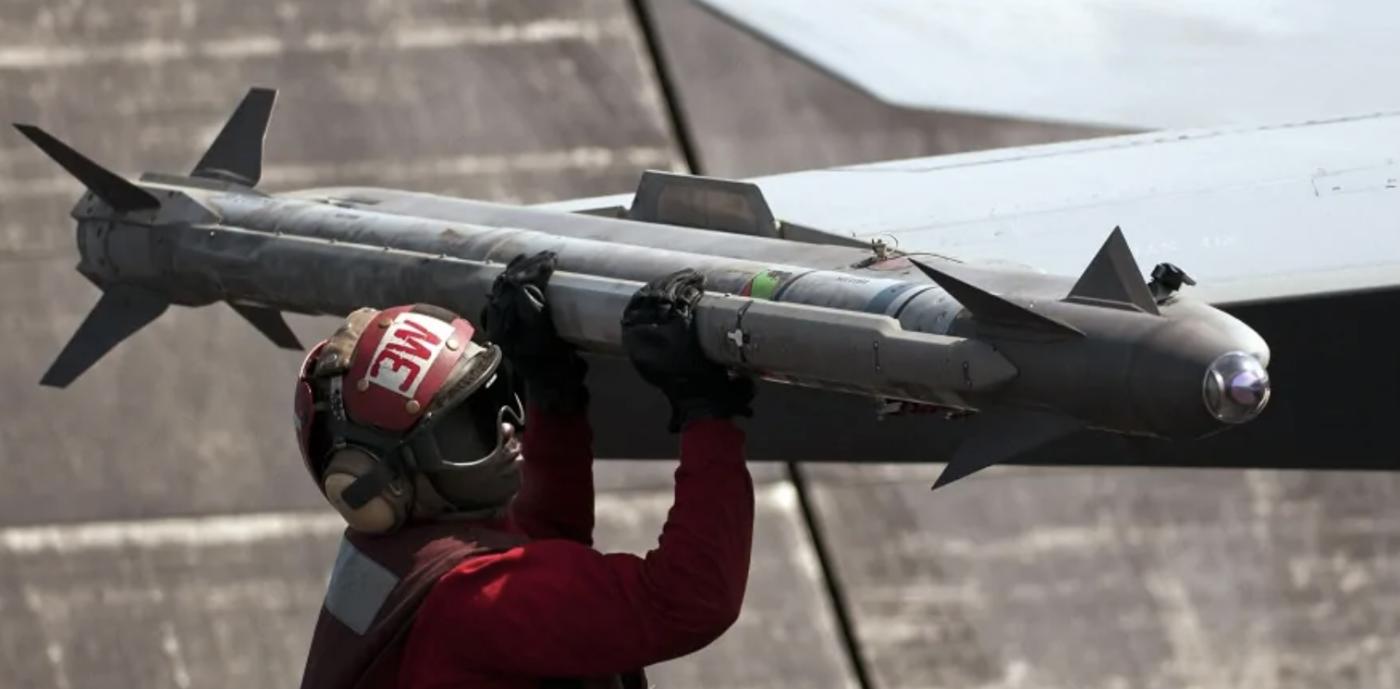
One of the most remarkable aspects of the Sidewinder was its mechanical simplicity. Instead of relying on complex electronic stabilization systems, the missile used rollerons, small metal discs mounted on the trailing edges of the fins that spun in the airflow and acted as gyroscopes to stabilize the missile in flight. This clever solution improved accuracy while keeping the missile cheap, rugged, and easy to maintain. The infrared seeker in the nose was cooled using compressed gas to increase sensitivity, and the internal electronics were deliberately kept simple and robust to survive the stresses of carrier operations and high-speed flight.
Production of the AIM-9 Sidewinder has been immense by missile standards. Since the 1950s, more than 200,000 missiles of all variants have been produced. Manufacturing has taken place not only in the United States but also under license in several allied countries. Over time, the Sidewinder evolved through many versions, from the early AIM-9B to modern models such as the AIM-9X. Each new generation improved performance in areas such as seeker sensitivity, resistance to flares and other countermeasures, maneuverability, and engagement range. Later versions introduced all-aspect capability, allowing the missile to attack targets from the front or side rather than only from behind.
The Sidewinder’s first combat use occurred in 1958 during the Second Taiwan Strait Crisis, when Taiwanese F-86 Sabre fighters fired AIM-9B missiles at Chinese MiG-17 aircraft. One missile failed to explode and became lodged in a MiG, giving Chinese and Soviet engineers the opportunity to examine it in detail. This incident directly influenced the development of similar infrared-guided missiles in the Soviet Union. During the Vietnam War, the Sidewinder saw extensive use by US Navy and Air Force aircraft. Early versions suffered from reliability problems in combat conditions, including sensitivity to weather and background heat, but these issues led to rapid improvements in later models.
Over the decades, the AIM-9 Sidewinder has been adopted by more than 50 countries and integrated onto hundreds of aircraft types. It has been carried by fighters ranging from early Cold War jets to modern multirole aircraft, and it has scored confirmed air-to-air kills in conflicts including Vietnam, the Arab–Israeli wars, the Falklands War, the Gulf War, and later regional conflicts. Its relatively low cost compared to radar-guided missiles, combined with its effectiveness at short range, has ensured its continued importance for close-in air combat.
A particularly interesting feature of the Sidewinder’s history is how little its basic external design has changed since the 1950s. While the internal electronics, seeker technology, and propulsion have advanced dramatically, the missile’s overall shape and size have remained largely the same. This has allowed newer versions to be used on older aircraft with minimal modification, saving time and money for operators. The Sidewinder has also influenced missile design philosophy worldwide, proving that reliability, simplicity, and incremental improvement can produce a weapon system with extraordinary longevity.
Today, the Sidewinder remains in production in its most advanced forms. Modern variants feature imaging infrared seekers capable of distinguishing targets from decoys, extreme agility allowing high off-boresight engagements, and compatibility with helmet-mounted sight systems that let pilots lock onto targets simply by looking at them. Few weapons in military history have matched the AIM-9 Sidewinder’s combination of widespread use, long service life, and continued relevance, making it a classic example of enduring engineering success.