6th May
Firebase Henderson sat on a remote hill in Quảng Trị Province and in early May 1970 it was held by American troops of the 101st Airborne Division along with artillery units, engineers, and South Vietnamese soldiers. In the early morning of 6 May 1970, the base was hit by one of the most intense and chaotic assaults of the war, carried out by North Vietnamese Army sapper forces who specialised in breaching fortified positions at close range.
The attack began shortly after dawn, which in itself was unusual as most sapper assaults took place under cover of darkness. Without much warning, the base was struck by a sudden and coordinated barrage of mortars, rockets, recoilless rifles, and automatic weapons fire. Almost immediately after the bombardment started, North Vietnamese assault teams moved in from several directions, targeting weak points in the defensive wire and bunker system. Instead of staying at a distance, they closed in quickly, slipping through gaps or blowing openings with explosives, and then attacking bunkers at point-blank range.
These sapper troops were highly trained for this kind of fighting. They carried satchel charges and explosives designed to destroy bunkers and defensive positions, and once inside the perimeter the battle became confused and brutal, with fighting at extremely close quarters. Small groups of defenders found themselves isolated as the attackers moved rapidly through the base, hitting one position after another.
One of the most devastating moments came when part of the base’s ammunition storage was hit. Fires broke out and quickly spread, and large stocks of artillery shells began to detonate. The explosions were enormous, shaking the entire hilltop and sending debris across the base. The blasts tore apart defensive positions, killed and wounded soldiers, and made any kind of organised response extremely difficult. The fires and smoke added to the confusion, reducing visibility and cutting off communication between units.
The attackers also used flamethrowers, which helped ignite more fires and added to the chaos. In some areas, entire sections of the perimeter were effectively overrun, with defenders either killed, wounded, or forced to pull back. A reconnaissance unit on part of the line was almost completely wiped out in the early stages of the assault, showing just how quickly the situation deteriorated once the perimeter was breached.
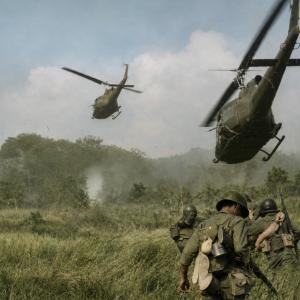
Despite the shock and destruction, the defenders did not collapse completely. American and South Vietnamese troops fought back where they could, often calling in artillery strikes and helicopter gunship support dangerously close to their own positions. Medevac helicopters flew into the middle of the battle to evacuate wounded soldiers while fighting was still going on, and reinforcements were brought in by air as the situation stabilised.
The most intense fighting took place in the first hour, but sporadic combat and shelling continued for much of the day. Eventually, the North Vietnamese forces withdrew. Although they had managed to penetrate and overrun large parts of the base and cause severe damage, they did not hold it permanently.
Casualty figures vary depending on the account, but it is generally accepted that around 27 American soldiers and a small number of South Vietnamese troops were killed, with many more wounded. North Vietnamese losses were also significant, with several dozen killed during the assault. What is consistent across all accounts is the scale of the destruction and the intensity of the fighting, making it one of the deadliest engagements for the units involved during that period.
The success of the attack, even if only temporary, came down to several factors. The timing caught the defenders at a vulnerable moment, the sapper tactics allowed the attackers to bypass strongpoints and strike directly at weak areas, and the catastrophic ammunition explosions created chaos that no defensive plan could easily overcome. Once the base was burning and communication had broken down, it became extremely difficult for the defenders to coordinate an effective response.
For those who were there, the battle became known as one of the most terrifying experiences of the war. Survivors later described a scene of constant explosions, fires burning across the hilltop, wounded men trapped in shattered bunkers, and desperate attempts to hold positions or rescue comrades under fire. It showed clearly how even a heavily defended firebase could be thrown into complete disorder in a matter of minutes when surprise, close-range assault, and sheer destructive force all came together at once.