
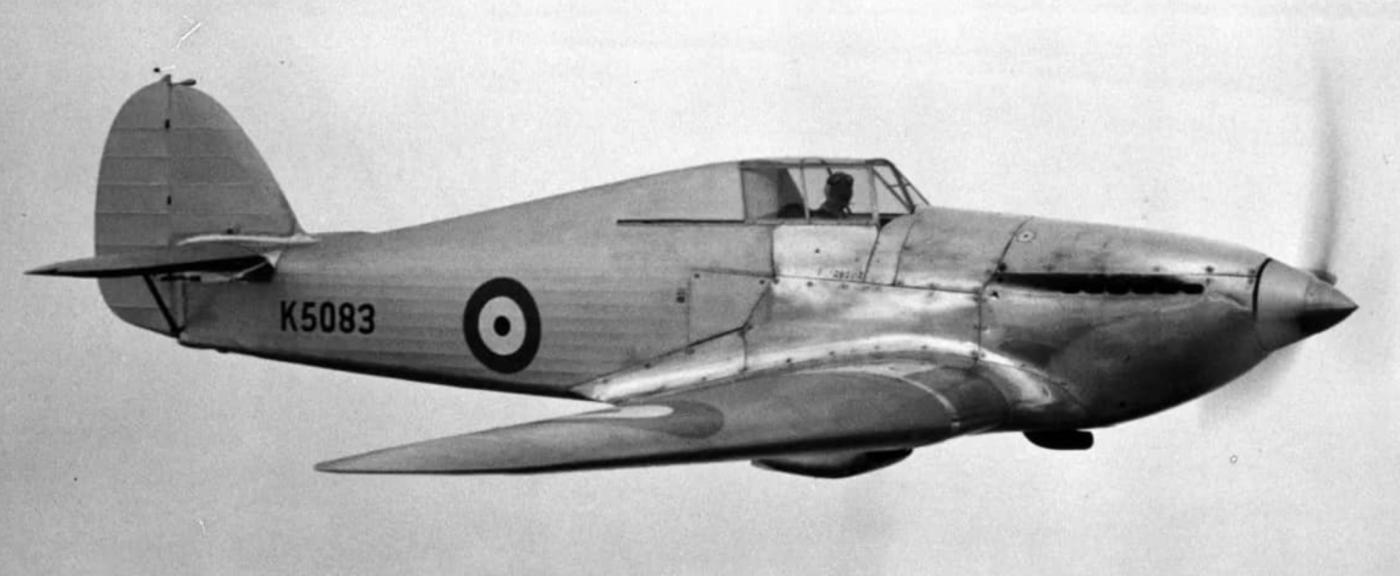
Hawker Hurricanes first Flight
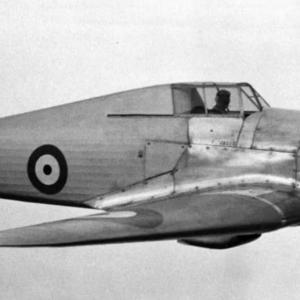
the first flight of the hawker hurricane on 6 november 1935 was a moment where british aviation quietly crossed a threshold into the modern era. the prototype, designated K5083, lifted from brooklands aerodrome with company test pilot george bulman at the controls. in that modest few minutes in the air, hawker aircraft and sir sydney cam had not only proved a new fighter design, they had built the foundation of the machine that would break the back of the luftwaffe five years later.
the hurricane was conceived in cam’s typical manner. he was famously a practical designer, rejecting untested ideas for elegant but buildable structures. instead of the stressed-skin techniques being explored elsewhere, the hurricane used a familiar hawker structure: a steel tube fuselage frame, braced and then covered with doped fabric in the rear portion, with metal panels forward around the engine and cockpit. its wings were initially fabric covered too, though they later became metal skinned as the type matured. this conservative approach was vital. hawker could build it quickly. factories knew the materials. fitters understood how to repair it. and ground crews could patch combat damage in hours not days.
the heart of it was the new Rolls-Royce Merlin, a liquid cooled V12 that would go on to be one of the defining engines of the second world war. the prototype flew with an early form of that engine, and its pairing with cam’s clean but conventional airframe delivered performance that may not have matched the pure numbers of the later spitfire, but gave pilots a strong stable gun platform and a machine that could fly from the rough forward airstrips that reality would demand. the hurricane was maneuverable, it was predictable, and pilots transitioning from biplanes found it forgiving as a trainer into the monoplane world. the first flight confirmed cam had found the right balance.
the test flight from brooklands was the validation that allowed the air ministry to commit to it with confidence. production was rapid and on an enormous scale because the design did not strain the british manufacturing base in the way more futuristic stressed-skin aircraft would. by the time war came, the hurricane could be built in numbers and maintained across the dispersed airfields of fighter command. when the battle of britain arrived, the hurricane was available in quantity and it was the hurricane, not the spitfire, that bore the majority of combat.
around sixty percent of all luftwaffe losses in the battle of britain were inflicted by hurricane squadrons. that statistic is not accidental. the hurricane was not the most glamorous machine. it was not the fastest. but it was the right aircraft at exactly the right time. the airframe could take punishment. armourers could re-arm it in minutes. maintenance teams could patch bullet holes with fabric and dope. its gun platform stability allowed its eight .303 browning machine guns to deliver concentrated fire. the result was a weapon system that simply worked.
that first quiet hop over brooklands in 1935 is therefore one of those small turning points history almost overlooks. the hurricane’s debut flight was not a flamboyant display. it was the confirmation of a design philosophy that prioritised ruggedness, manufacturability and pilot handling above pure theoretical performance. because of that, britain had fighters in the field in 1940 in the numbers required to actually win the battle. the hawker hurricane will always be remembered as tough and reliable, a machine whose first flight lit the fuse on a chain of decisions that helped save a nation.