Easter Rising Ireland Troubles
The Easter Rising began on 24 April 1916 in Dublin, at a time when Ireland was still part of the United Kingdom. It was organised by a coalition of Irish republican groups, including the Irish Volunteers, the Irish Citizen Army, and members of the secret revolutionary organisation known as the Irish Republican Brotherhood. Their aim was to end British rule in Ireland and establish an independent Irish Republic.
The Rising was carefully planned but carried out by a relatively small number of participants, numbering around 1,200 insurgents. On Easter Monday, they seized key locations across Dublin, including the General Post Office, which became their headquarters. From there, Patrick Pearse proclaimed the establishment of the Irish Republic, reading aloud the Proclamation of Independence. Other prominent leaders included James Connolly, Thomas Clarke, and Joseph Plunkett.
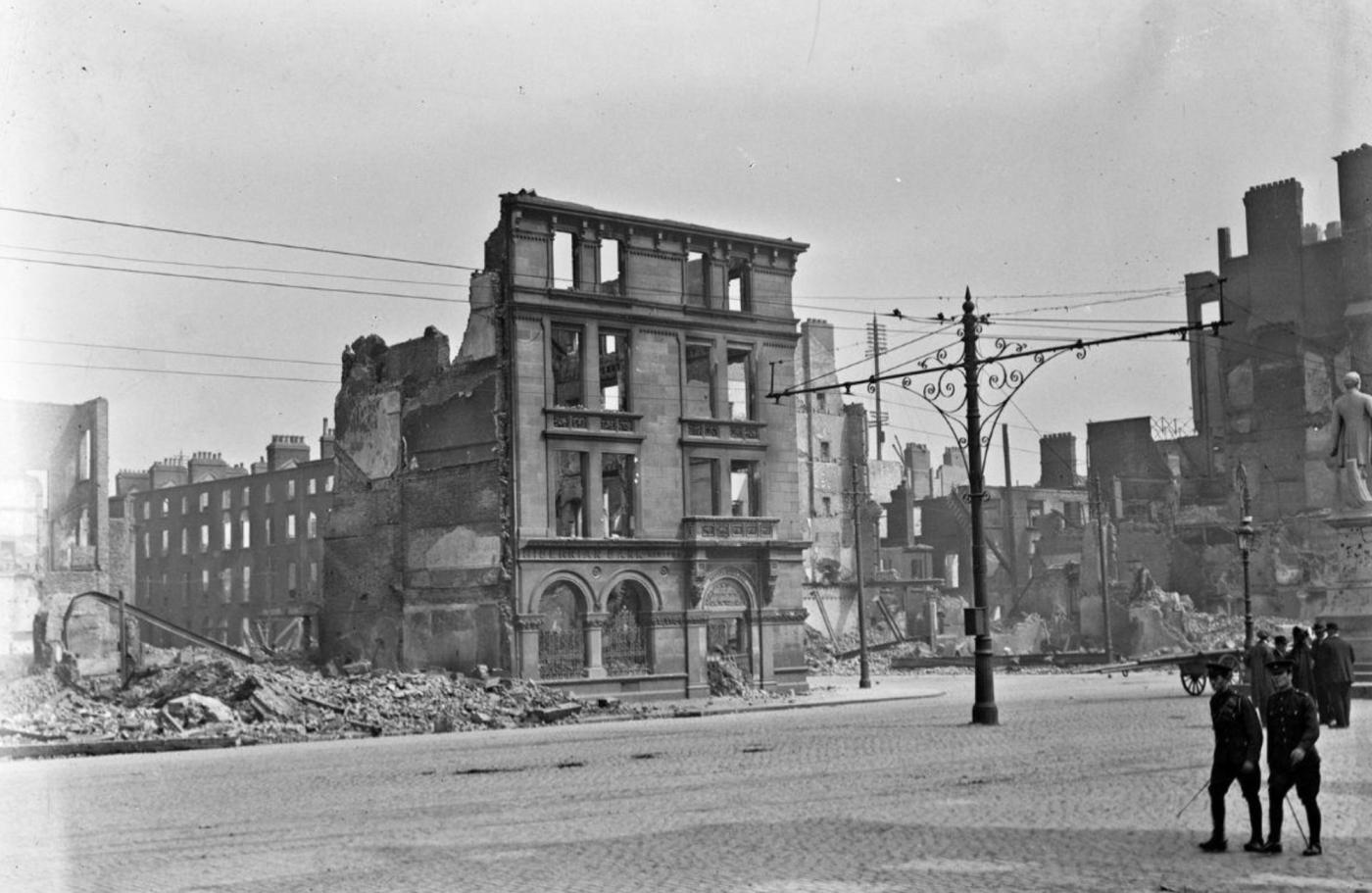
Despite the symbolic importance of their actions, the rebels faced overwhelming odds. The British authorities responded quickly, deploying thousands of troops along with artillery and gunboats. Much of central Dublin became a battleground, and heavy shelling caused widespread destruction, particularly along O’Connell Street. Civilians were caught in the crossfire, and by the end of the week, hundreds had been killed and many more wounded.
The Rising lasted for six days before the rebel leaders agreed to surrender on 29 April 1916. Initially, public opinion in Ireland was not strongly in favour of the rebellion, partly due to the damage and loss of life it caused. However, the British response in the aftermath dramatically shifted attitudes. Fifteen of the leaders, including Pearse and Connolly, were executed by firing squad, and many others were imprisoned. These actions generated widespread sympathy for the rebels and increased support for Irish independence.
In the years that followed, the impact of the Easter Rising grew significantly. It inspired a new generation of Irish nationalists and led to the rise of political movements such as Sinn Féin. The events of 1916 set the stage for the Irish War of Independence (1919–1921), which ultimately resulted in the creation of the Irish Free State.
Today, the Easter Rising is remembered as a pivotal moment in Irish history. While it was a military failure in the short term, its political and cultural consequences were profound. It marked the beginning of the end of British rule in most of Ireland and remains a powerful symbol of the struggle for national self-determination.