
On this day in military history…
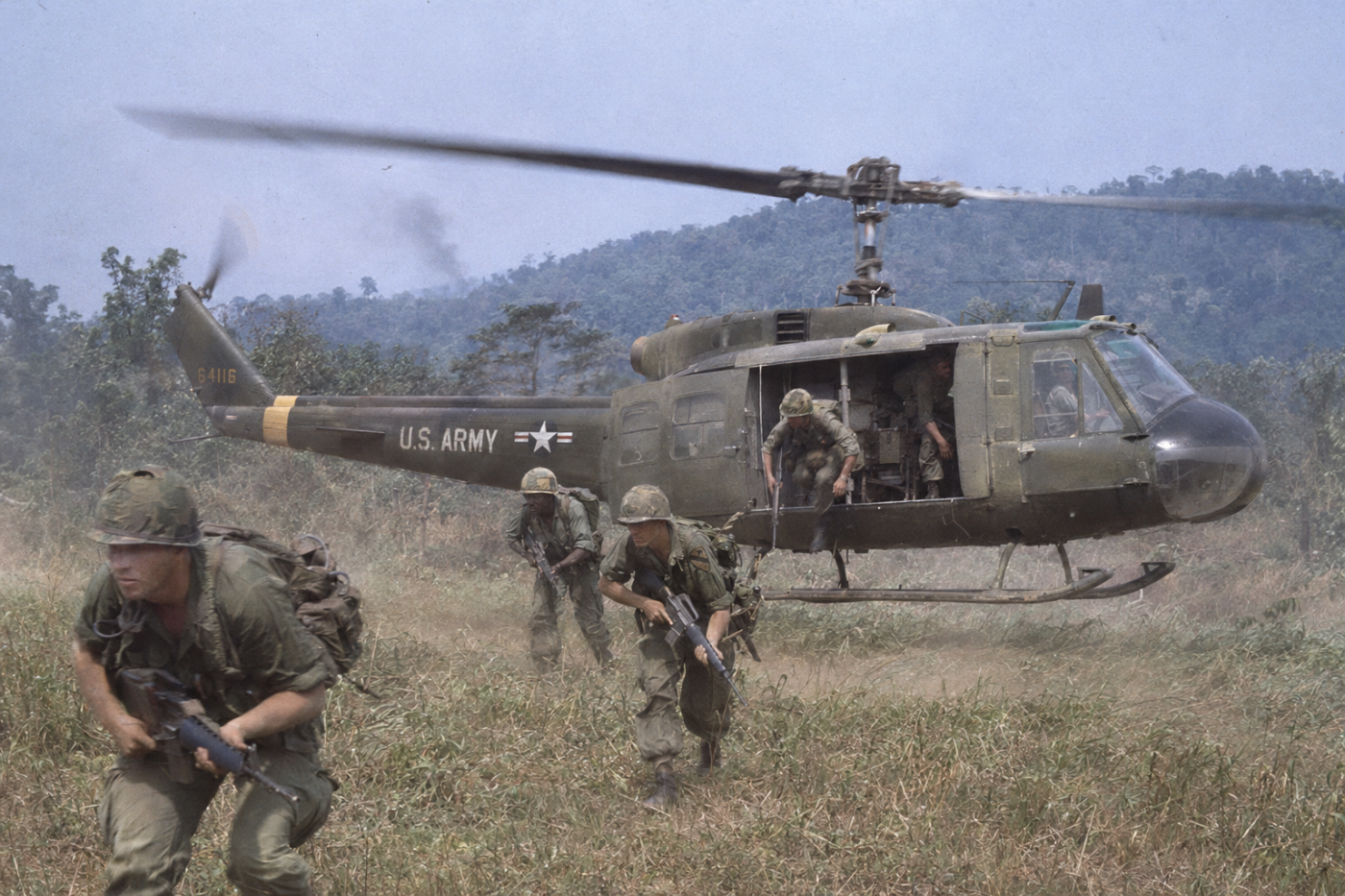
On 14 November 1965, American soldiers stepped from helicopters into a clearing in South Vietnam’s Central Highlands. Around them stood tall grass, scrub and the wooded slopes of the Chu Pong massif, close to the Cambodian border. The clearing was known as Landing Zone X-Ray. Within hours, it would become the centre of a desperate battle against North Vietnamese regular troops.
The men belonged to the 1st Battalion, 7th Cavalry Regiment, commanded by Lieutenant Colonel Harold “Hal” Moore. Their formation, the 1st Cavalry Division (Airmobile), used helicopters to move infantry rapidly across difficult country. Aircraft could carry soldiers into places that would otherwise take hours or days to reach on foot. Once those soldiers landed, however, their survival depended on holding ground and keeping that aerial lifeline open.
Moore’s battalion had been ordered into the Ia Drang Valley to find and engage the enemy following fighting around the Special Forces camp at Plei Me. North Vietnamese units were operating around the Chu Pong massif. The Americans were about to encounter an enemy capable of attacking in strength, absorbing punishment and closing to distances where American artillery and aircraft became difficult to use safely.
The landing zone could accommodate only part of the battalion at a time. As helicopters shuttled back for more troops, the men already on the ground pushed out to establish a defensive perimeter. Contact soon developed into heavy fighting. What had begun as a search mission became a struggle to prevent the landing zone from being overrun.
One platoon, led by Lieutenant Henry Herrick, became separated from the main force. Herrick was killed, along with other leaders, leaving Sergeant Ernie Savage to organise the survivors. Surrounded and carrying wounded comrades, the men formed a small defensive position and called down artillery close to themselves. Through repeated attacks, Savage kept the isolated platoon together until relief could reach it.
Across the battlefield, Moore worked to hold his companies together, direct supporting fire and bring in reinforcements. North Vietnamese soldiers pressed towards the American positions, while artillery and air strikes battered their approaches. The fighting continued through the night and into the following day. Neither darkness nor exhaustion brought safety to the men around X-Ray.
Above them, helicopter crews repeatedly risked their lives to keep the battalion supplied. Major Bruce Crandall and Captain Ed Freeman flew ammunition, water and medical supplies into the clearing and carried wounded soldiers out. Their troop transport helicopters took on evacuation work despite intense enemy fire. Freeman alone was credited with fourteen rescue missions and the evacuation of an estimated thirty seriously wounded men. Both pilots later received the Medal of Honor.
By 16 November, Moore’s exhausted battalion was relieved. Its losses were seventy-nine killed and 121 wounded. The Americans had held X-Ray, but the battle for the valley was not finished. For another battalion of the same regiment, the worst was still to come.
On 17 November, the 2nd Battalion, 7th Cavalry moved on foot towards Landing Zone Albany. North Vietnamese troops struck the column, breaking it into scattered groups. In the tall grass, soldiers fought at close quarters, often unable to see what was happening beyond their immediate positions. The broken American formation made coordinated defence and supporting fire especially difficult.
Reinforcements fought their way in, and the struggle continued into the night. Around 155 American soldiers were killed in the fighting at Albany. Coming immediately after the stand at X-Ray, the losses showed how quickly a force could become vulnerable when caught moving through enemy-held country.
Ia Drang became one of the defining battles of the Vietnam War. X-Ray demonstrated the value of helicopters, supporting fire and determined infantry leadership. Albany exposed the dangers that remained when soldiers marched beyond a defended landing zone. For the men who survived, the battle was remembered through the comrades they had lost, the wounded they had carried and the crews who kept returning through the gunfire.