On this day in military history…
The bombing of the city in April 1941, often referred to as the Belfast Blitz, was one of the most devastating attacks carried out by the German air force, the Luftwaffe, during the Second World War. Although the city had initially escaped the worst of the earlier bombing campaigns that had struck cities in England, its industrial importance made it a key target. It was home to major shipbuilding yards, aircraft factories, and munitions works, all of which contributed significantly to the British war effort. By the spring of 1941, German planners decided it could no longer be ignored.
The most destructive raid took place on the night of Easter Tuesday, 15 April 1941, an event now commonly known as the Belfast Blitz. On that night, approximately 200 Luftwaffe bombers took part in the attack. These aircraft included Heinkel He 111s, Junkers Ju 88s, and Dornier Do 17s, which had flown from bases in northern France and the Low Countries. The scale of the raid was far greater than anything previously experienced there.
During the Easter raid, around 900 tons of bombs were dropped. These included a mixture of high-explosive bombs, incendiary devices, and parachute mines. The high-explosive bombs were designed to destroy buildings and infrastructure, while the incendiaries ignited widespread fires that quickly spread through densely built residential areas. The parachute mines, some of the most destructive weapons used, created massive blast waves that flattened entire streets.
The main targets of the raid reflected its industrial and strategic importance. The Harland and Wolff shipyards, one of the largest shipbuilding facilities in the world, were a primary objective, as they were responsible for constructing and repairing naval vessels. The Short & Harland aircraft factory, which produced Sunderland flying boats used by the Royal Air Force, was another key target. The docks and port facilities, essential for the movement of troops, supplies, and war materials, were also heavily bombed. However, as was common in many wartime bombing campaigns, large numbers of bombs fell on residential districts, causing immense civilian casualties.
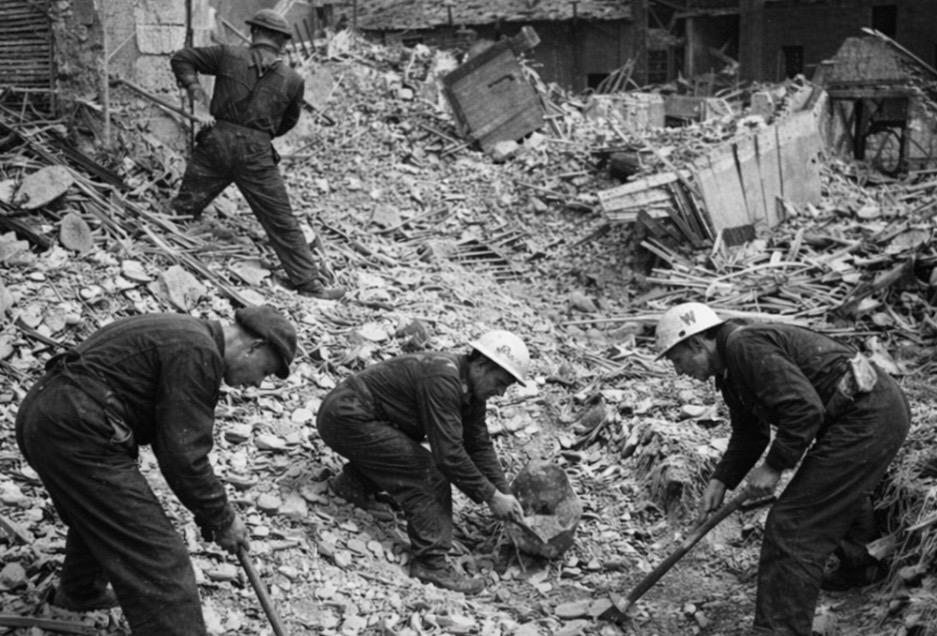
The devastation across the city was catastrophic. Entire neighbourhoods in the north and east were destroyed, with rows of terraced houses reduced to rubble. Fires burned out of control due to inadequate firefighting resources and the sheer number of incendiary devices dropped. Air raid precautions had been insufficient, partly because it had not been heavily targeted earlier in the war, leading to a false sense of security.
The human toll was severe. Around 758 people were killed during the Easter raid alone, with many more injured. Tens of thousands were left homeless, as large sections were obliterated. Morgues and emergency services were overwhelmed, and mass graves had to be used in some cases due to the number of casualties. The psychological impact on the population was profound, as many residents had not expected such an intense attack.
One notable aspect of the aftermath was the assistance provided by neighbouring Ireland. Fire brigades from Dublin crossed the border to help tackle the fires, an act that stood out given Ireland’s neutrality during the war. This cooperation highlighted the scale of the disaster and the urgent need for aid.
The Easter raid was followed by additional attacks later in April and May 1941, but none matched the intensity and destruction of the 15 April bombing.