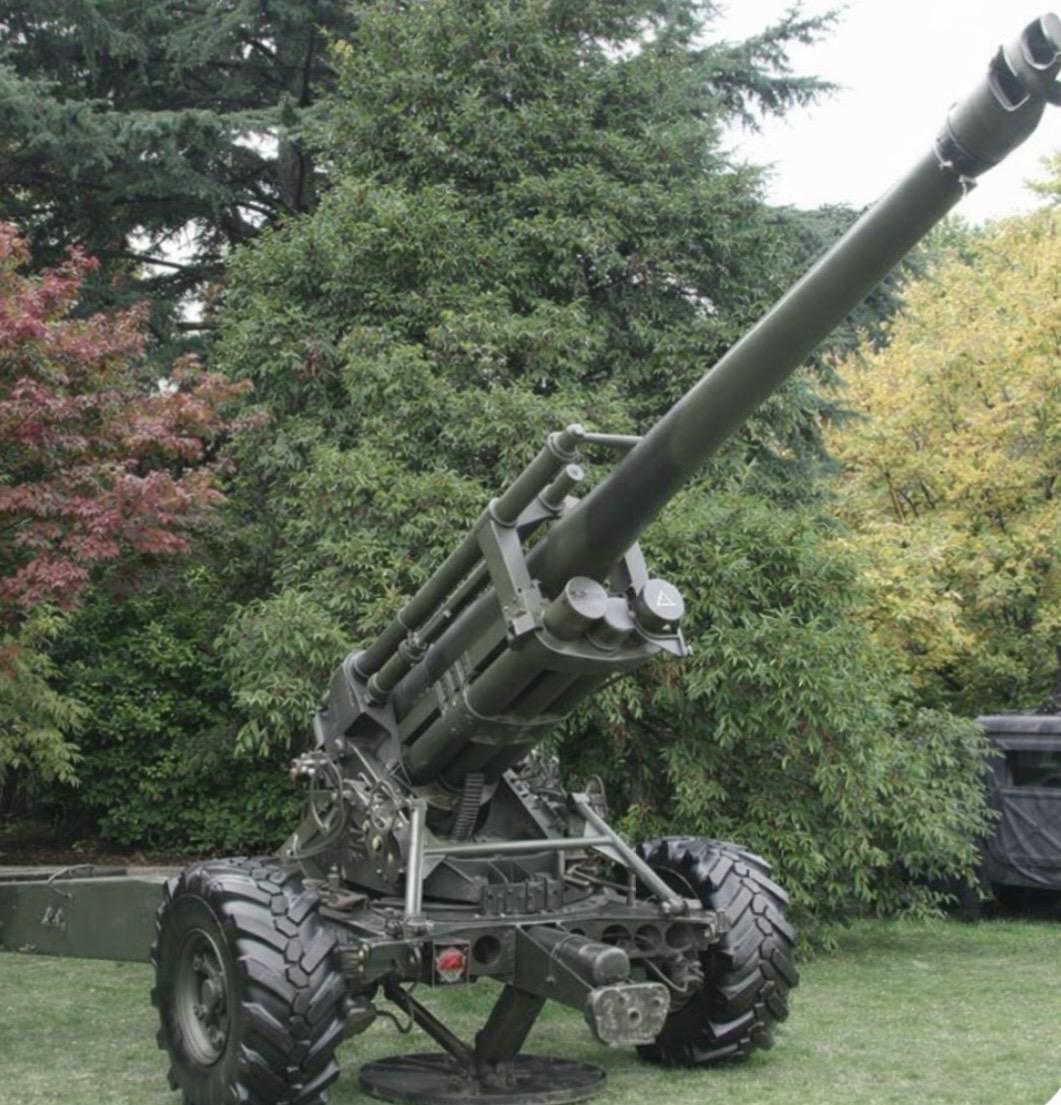
Argentinian 155mm L33 Artillery Gun
The Argentine 155 mm L33 artillery gun, officially known as the Cañón de 155 mm L33 Modelo Argentino or CITER 155 mm L33, is a towed field artillery piece developed in Argentina during the Cold War. It became one of the principal heavy artillery systems of the Argentine Army and is notable for being an indigenous design created to replace older World War II-era artillery that remained in service during the 1960s and early 1970s.
The gun was designed by the Argentine military research organization CITEFA, the Instituto de Investigaciones Científicas y Técnicas de las Fuerzas Armadas. This organization was responsible for a number of domestic weapons projects and aimed to modernize Argentina’s artillery capability. Work on the L33 began during the 1970s as Argentina sought to reduce dependence on imported weapons and to replace the aging American M114 155 mm howitzers that had been supplied after the Second World War.
Manufacturing of the gun was carried out by DGFM, Dirección General de Fabricaciones Militares, the Argentine state-owned arms manufacturer responsible for producing many of the country’s military weapons and ammunition. The artillery system entered service in 1977 and the first production version was known as the Modelo 77. An improved version appeared a few years later called the Modelo 81. In total roughly 117 guns were produced for the Argentine Army.
The design of the L33 was influenced by the barrel used on the French Mk F3 155 mm self-propelled artillery system, which Argentina also operated. Using a similar barrel design allowed Argentina to standardize ammunition and some technical components across its artillery inventory. The gun itself is mounted on a towed split-trail carriage that gives the weapon good stability during firing and allows wide elevation angles for indirect artillery fire.
Technically the weapon is a 155 mm artillery piece with a barrel length of 33 calibres, which gives it the designation L33. The barrel measures slightly over five meters in length and is fitted with a large muzzle brake designed to reduce recoil forces when firing. The breech mechanism uses an interrupted screw type system and the recoil mechanism is hydropneumatic, allowing the gun to absorb recoil energy smoothly and return to firing position after each shot. The gun is normally transported by heavy military trucks or artillery tractors.
A crew of six soldiers was typically required to operate the weapon effectively. Each member had a specific role including aiming the gun, preparing and loading ammunition, setting fuses on the shells, managing propellant charges, and communicating with the fire direction center. Because the system is manually loaded and aimed, the rate of fire was usually about one round per minute during sustained firing.
The L33 fires standard NATO-type 155 mm artillery ammunition. With conventional high explosive shells the effective range is around 20 kilometers. When extended-range ammunition is used the maximum firing range can reach approximately 24 kilometers. The muzzle velocity of the projectile is about 765 meters per second, giving the weapon considerable striking power at long distances.
Several types of shells could be fired depending on battlefield requirements. The most common type was the high explosive fragmentation shell used against enemy troops, vehicles, and field fortifications. The gun could also fire smoke shells to create screening smoke on the battlefield and illumination rounds that produced bright light in the air to reveal enemy movements during night operations. Each projectile typically weighs around 43 kilograms and is loaded separately from the propellant charge.
The carriage design allows the gun to elevate from roughly −10 degrees up to about +67 degrees, enabling both direct fire and high-angle indirect fire. The split trails open behind the gun to stabilize it during firing and also allow some horizontal traverse without repositioning the entire weapon. The system weighs about 8.2 tons, which makes it a heavy artillery piece but also contributes to its stability and accuracy when firing.
One of the most notable uses of the L33 occurred during the Falklands War in 1982 between Argentina and the United Kingdom. Several of these guns were transported by Argentine Air Force C-130 transport aircraft to the Falkland Islands and deployed around the area of Port Stanley. There they were used for indirect bombardment and counter-battery fire against advancing British forces.
During the conflict the guns demonstrated good range and firepower, although their heavy weight and the difficult terrain of the islands made them difficult to reposition quickly once deployed. Despite this limitation they formed an important part of Argentina’s artillery defenses during the campaign and remain one of the best known artillery pieces developed by Argentina’s domestic arms industry.