1st May
On 1 May 1982, during the opening phase of the Falklands War, the Royal Air Force carried out an extraordinary long-range bombing mission against the runway at Port Stanley. The operation, known as “Black Buck 1,” was launched from Ascension Island and became one of the longest bombing raids ever attempted, covering roughly 8,000 miles round trip.
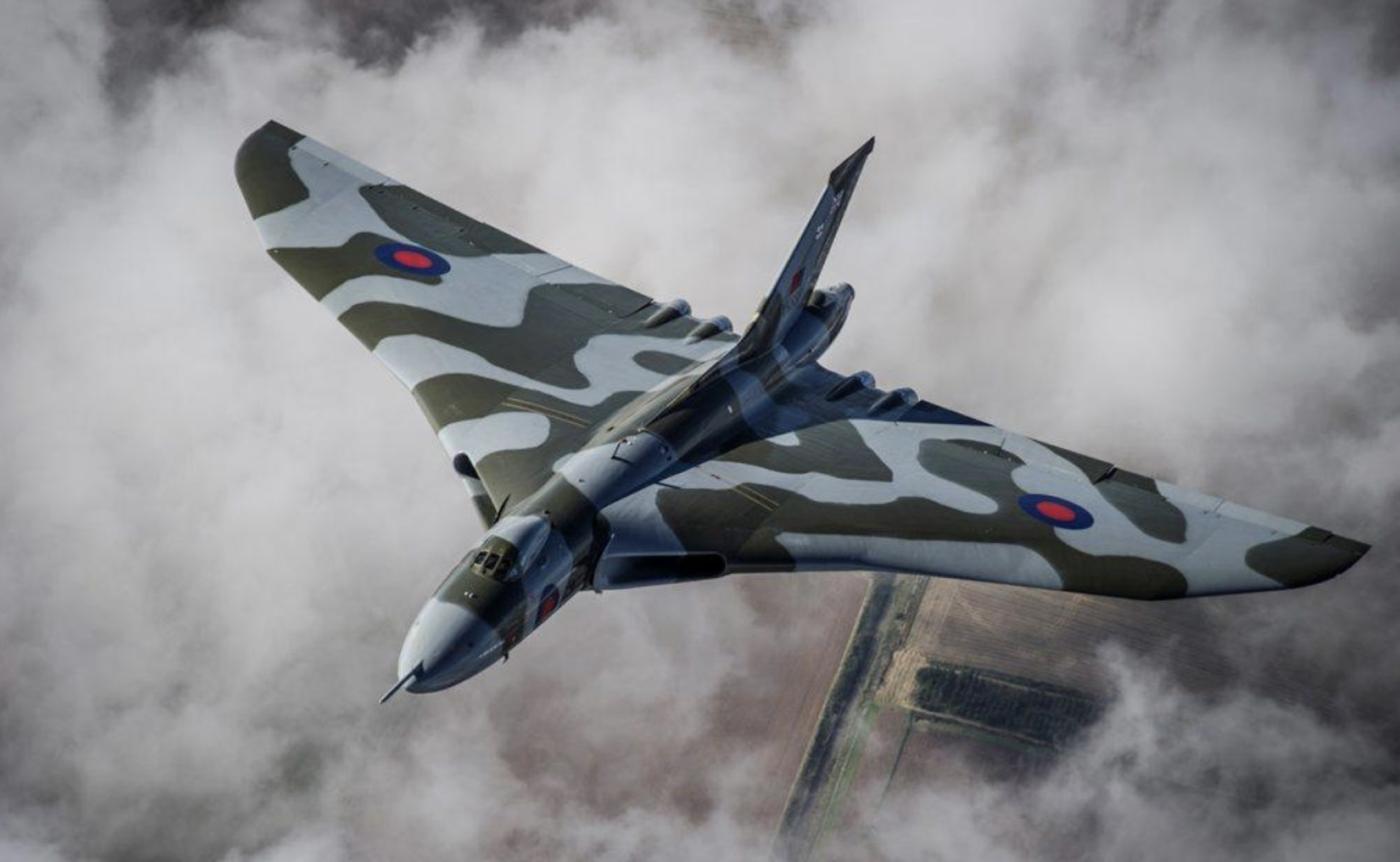
The aircraft that ultimately carried out the attack was a Avro Vulcan B.2, serial number XM607, commanded by Martin Withers with co-pilot Bob Tuxford. However, it had not originally been intended to lead the mission. Another Vulcan, scheduled to be the primary strike aircraft, suffered a last-minute mechanical issue during the outbound phase, forcing it to turn back. This left XM607, originally part of the supporting element, to press on alone and complete the bombing run, placing even greater pressure on its crew.
The Vulcan carried twenty-one 1,000-pound general-purpose bombs. These were arranged to fall in a long pattern across the runway, increasing the likelihood that at least one would strike the target directly. The bomber itself had been designed during the Cold War as a nuclear delivery platform, but for this mission it had been adapted for conventional bombing.
What made the raid truly remarkable was the immense distance involved and the complexity required to make it possible. The Vulcan did not have the range to reach the Falklands unaided, so the RAF devised an intricate refuelling plan using a fleet of Handley Page Victor tanker aircraft. In total, eleven Victors took part, forming a carefully timed chain across the South Atlantic. Some tankers refuelled others, which then refuelled the bomber, ensuring it could continue south and later return safely. At certain points, even the refuelling aircraft themselves needed additional fuel from other tankers, highlighting the precision required for the operation to succeed.
The mission began on the night of 30 April and stretched into the early hours of 1 May. After a series of rendezvous and refuelling operations, the Vulcan approached the Falklands at high altitude before descending for its bombing run. Argentine radar detected the incoming aircraft, and air defences were activated, but the bomber continued its approach. The bombs were released in sequence, and one struck the runway at Port Stanley, creating a crater that made it unsuitable for high-performance fast jet operations, at least temporarily.
The return journey was just as demanding, requiring further refuelling contacts over the Atlantic. The entire operation lasted around 16 hours and pushed both the aircraft and its crew to the limits of endurance.
The significance of the attack went well beyond the physical damage inflicted. Although the runway was only partially disabled, the psychological impact was considerable. The raid demonstrated that Britain could strike targets at extreme range, even from a remote staging point in the mid-Atlantic. This sent a powerful message to Argentina that its mainland bases might also be vulnerable, forcing it to divert aircraft and resources to homeland defence.