
Shinkle Grenade
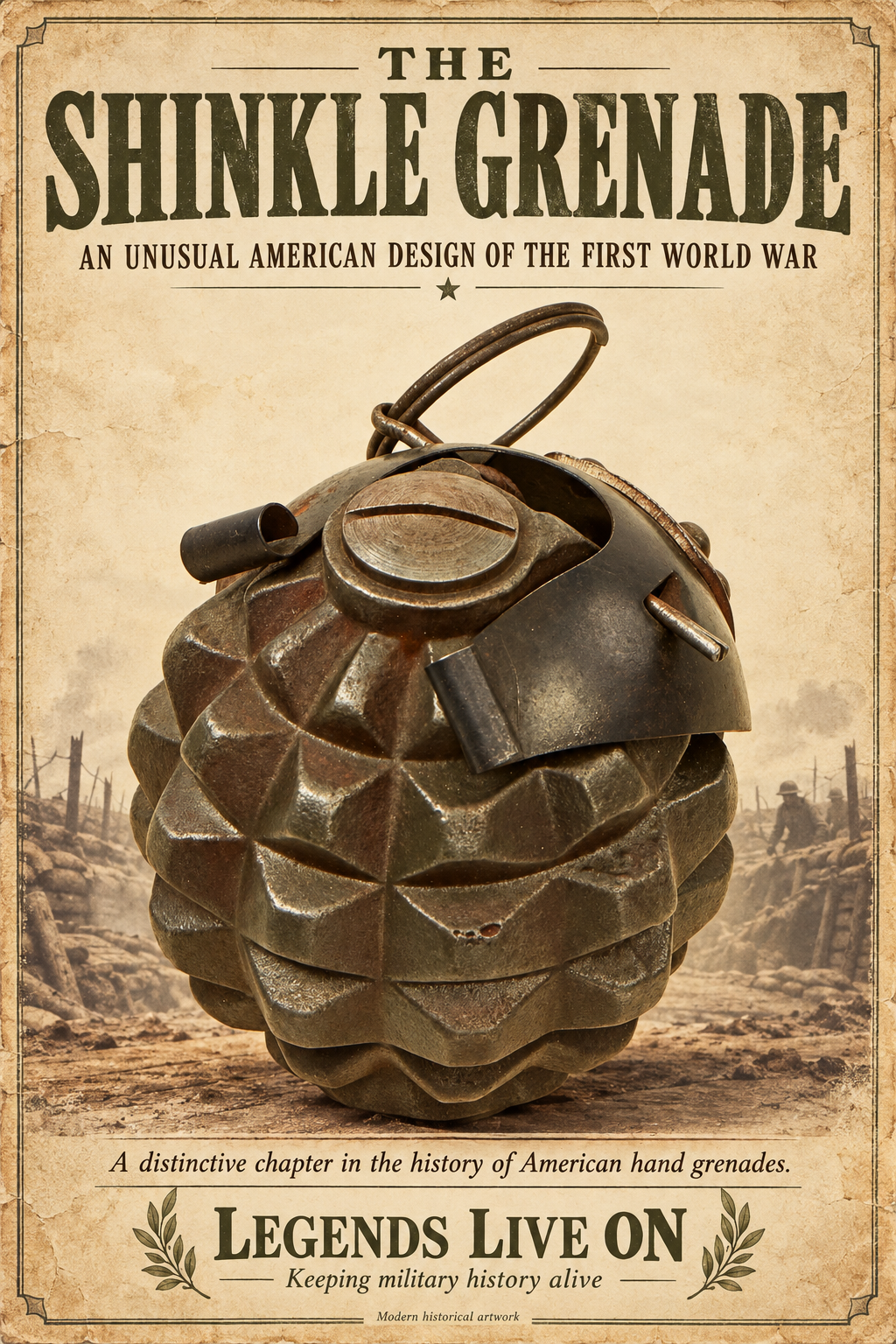
The Shinkle grenade was one of the more unusual American weapons developed during the First World War, an attempt to produce a hand grenade that would explode on impact rather than after a timed delay. Designed by Major Edward Marsh Shinkle of the United States Army at Frankford Arsenal in Philadelphia, it reached the experimental stage during the final period of the conflict. Although it never became a familiar weapon of the American infantryman, its story reveals the difficulties of turning an apparently useful idea into equipment suitable for the trenches. When the United States entered the war in April 1917, European armies had already spent nearly three years developing weapons for close combat on the Western Front. Hand grenades had become essential for attacking dugouts, clearing trenches and reaching men sheltered behind cover. A rifle could only engage an enemy within its line of fire, whereas a grenade could be thrown into a position concealed by a trench wall or earthwork. American troops used a variety of grenade types, and their arrival in Europe added urgency to efforts to develop suitable weapons at home.
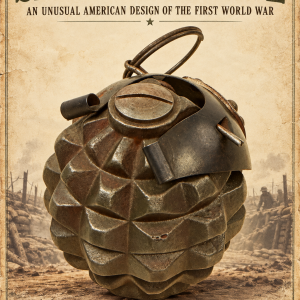
Shinkle’s design had a compact, rounded metal body with a deeply grooved exterior, giving it an appearance quite different from the long-handled German stick grenade. Surviving examples have a distinctive safety lever that curves around the body, together with a safety pin. One surviving example measured approximately two and three-quarter inches across and three and one-quarter inches high. Its squat shape and wraparound lever make it recognisable among the many experimental grenades produced during the war. The central idea was to remove the interval between a grenade landing and its explosion. A timed grenade could give an opponent a brief opportunity to take cover or, in some circumstances, throw it back. An impact design offered the prospect of detonation as soon as it struck its target, but that advantage depended on the grenade encountering a surface capable of reliably activating its fuze.
This was a serious concern on the Western Front. Rain, shellfire and constant movement had turned stretches of the battlefield into soft earth and deep mud. A grenade landing in such conditions might be cushioned rather than subjected to a sharp impact. Commanders of the American Expeditionary Forces initially rejected the impact principle because of these conditions. Work on the Shinkle was halted, and attention shifted towards the American Mark I grenade with its delayed fuze. Interest nevertheless returned during 1918, and the programme resumed. Only 800 Shinkle grenades were reportedly in inventory in August that year, a figure which should not be confused with a confirmed total production run. The Armistice of 11 November ended the fighting before substantial manufacture or widespread issue could take place. The weapon remained an experimental design, with no established record of extensive combat use.
Today, surviving examples are rare reminders of America’s efforts to equip its expanding wartime army. The Shinkle illustrates a problem faced by weapons designers throughout the conflict: a mechanism that promised an advantage under controlled conditions still had to function amid mud, rain and the unpredictability of battle. Its unusual appearance attracts attention, but the more revealing part of its history is the struggle to make an impact grenade dependable on the ground where soldiers actually fought.