General sir Henry Rawlinson
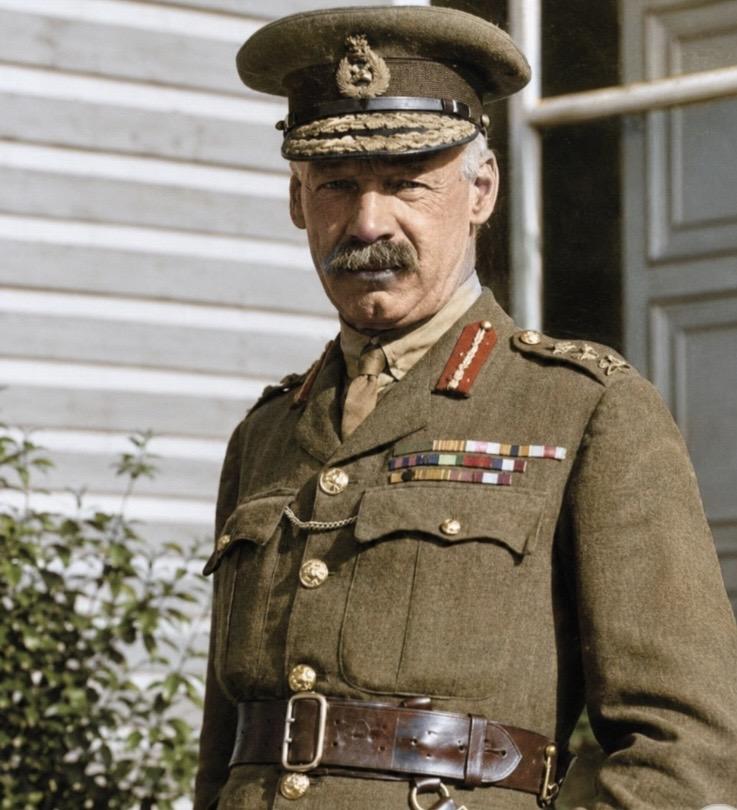
General Sir Henry Seymour Rawlinson was one of the most important British commanders of the First World War, a career soldier whose name became forever linked with the Somme, Amiens and the final breaking of the German Army in 1918. He was not a romantic battlefield figure in the old Victorian mould, nor was he a commander remembered for dramatic speeches or personal showmanship. He was a professional staff-trained general, careful, methodical and often cautious, yet his career stretched across the last days of imperial campaigning and into the huge industrial war of trenches, artillery, tanks, aircraft and mass armies. His reputation has always been complicated, because he commanded the Fourth Army on the first day of the Somme, one of the bloodiest days in British military history, but he also led that same army at Amiens in 1918, one of the most successful British operations of the war.
He was born on 20 February 1864 at Trent Manor in Dorset into a family already deeply connected with soldiering, empire and scholarship. His father, Sir Henry Creswicke Rawlinson, had served as an officer of the East India Company and became famous as a scholar of the ancient Middle East, often being called the father of Assyriology because of his work on cuneiform inscriptions. This meant young Henry grew up in a household where military service, travel, languages, archaeology, politics and the British Empire were all part of the atmosphere. He was educated at Eton and then at the Royal Military College, Sandhurst, the normal path for a young man of his class who was expected to serve as an officer.
In 1884 he was commissioned into the King’s Royal Rifle Corps and began his army life in India. It was a typical early career for a Victorian officer, with service far from home, long periods of garrison duty, hunting, sport, mess life and occasional active campaigning. He served in India and Burma before returning to Britain in 1889, gaining the sort of imperial experience that shaped many senior British officers before the First World War. He was not yet a famous soldier, but he was already marked as capable, well-connected and ambitious. His future rise was helped by his entry into the Staff College at Camberley in 1893, a significant step for any officer who wished to move beyond regimental soldiering and into the higher work of planning, command and organisation.
His abilities began to be noticed during the campaigns of the late Victorian period. He served in the Sudan campaign and was present at Omdurman in 1898, the battle in which Kitchener’s Anglo-Egyptian army destroyed the Mahdist forces and secured British control over the Sudan. This was still the age of imperial warfare, where British officers learned their trade in rapid expeditions, colonial columns and campaigns against enemies with far fewer modern weapons. He impressed senior men, and during the South African War he served in staff appointments and came into contact with some of the leading commanders of the British Army. The Boer War was a hard lesson for Britain, exposing weaknesses in training, tactics, mobility and staff work, and men like him emerged from it with a stronger understanding that modern war was changing.
His rise through the ranks was steady. He became a brigade major while still a relatively young officer, then moved through staff and command appointments, building a reputation as a man who understood organisation and planning. He commanded the Staff College at Camberley, then later commanded brigades and divisions. By the time Europe moved towards war in 1914, he had become one of the senior professional soldiers of the British Army. He was no longer simply a product of imperial wars; he was part of the generation expected to command Britain’s small but highly trained regular army in a European conflict.
When the First World War broke out in August 1914, he was given command of IV Corps in the British Expeditionary Force. Britain’s original army in France and Belgium was tiny compared with the mass conscript armies of Germany and France, but it was experienced, disciplined and highly trained. His corps became involved in the fighting during the early months of the war, as the BEF retreated from Mons, fought on the Marne and Aisne, and then shifted north during the race to the sea. The old mobile war quickly disappeared, replaced by trenches, wire, machine guns and artillery. Like every other senior commander, he had to learn at speed how to fight a kind of war for which no army was fully prepared.
In 1915 he commanded IV Corps during the Battle of Neuve Chapelle. This battle was important because it showed both the possibilities and the problems of British offensive warfare on the Western Front. A heavy, concentrated artillery bombardment could smash a section of the German line and allow infantry to break in, but once the first positions were taken, communications failed, reserves were delayed, German counter-attacks arrived and the chance of a breakthrough vanished. He drew an important lesson from this. He became associated with what was later called “bite and hold” tactics: rather than attempting to break through everything at once, an army should seize a limited objective, prepare it for defence, defeat the enemy counter-attack with artillery and then repeat the process. It was a cautious method, but it suited the realities of trench warfare far better than dreams of cavalry sweeping through an open gap.
This caution would later put him at odds with Field Marshal Sir Douglas Haig. Haig was more willing to believe that a major offensive might rupture the German line and restore open warfare. He, although not lacking ambition, tended to be more sceptical of grand breakthroughs. He understood the destructive power of artillery and the difficulty of moving infantry, guns, ammunition and supplies across shattered ground. This difference between Haig’s larger hopes and his more limited method became one of the central tensions behind the planning of the Somme.
In early 1916 he was appointed to command the newly created Fourth Army. This army was to take a major role in the planned Anglo-French offensive on the Somme. Originally the Somme was meant to be a joint attack, with the French playing a large part, but the German assault on Verdun changed everything. French resources were drawn into that terrible battle, and the British had to carry a greater share of the offensive than first intended. His Fourth Army was large, but many of its soldiers were not old regulars. They were men of the New Armies, volunteers who had joined after 1914 and were now facing one of the strongest defensive systems in the world.
The first day of the Somme, 1 July 1916, became the darkest day in the history of the British Army. The British suffered around 57,000 casualties, including about 19,000 killed, in a single day. In some places the artillery had failed to cut the German wire or destroy the deep dugouts. German machine gunners emerged after the bombardment and cut down advancing waves of infantry. Some units were almost destroyed in minutes. He was not the only man responsible for the disaster, but as commander of Fourth Army his name became inseparable from it. He had favoured a more limited approach, but the final plan carried the weight of Haig’s wider ambitions and the belief that a long bombardment could make the German front collapse.
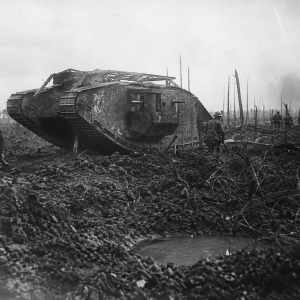
Yet the Somme did not end on that first day. The battle continued for months, grinding down both sides in a brutal struggle of villages, woods, ridges and trenches. He remained in command as the British Army slowly learned lessons in artillery coordination, creeping barrages, infantry tactics and the use of new weapons such as the tank. The Somme has often been remembered as futile slaughter, and no account can ignore the terrible cost, but it also forced the British Army to develop into a more modern fighting force. His Fourth Army was badly bloodied, but it became part of the hard school through which the BEF learned how to conduct large-scale industrial warfare.
After the Somme, his career continued. He was promoted and held further commands, including the Second Army for a period, and in 1918 he returned to command the Fourth Army. By then the war had changed again. The German Spring Offensives of 1918 had driven deep into the Allied lines, but they had failed to win the war. The German Army was exhausted, its best assault troops worn down, and its supply system strained. The Allies, now reinforced by growing American manpower, were ready to strike back.
His finest hour came at the Battle of Amiens on 8 August 1918. This was a carefully prepared surprise attack using infantry, artillery, tanks and aircraft in close cooperation. Unlike the long preliminary bombardments of earlier battles, which warned the enemy an attack was coming, Amiens relied on secrecy and shock. The result was a stunning Allied success. The Fourth Army advanced rapidly, took thousands of prisoners and broke into German positions with a speed rarely seen on the Western Front. General Ludendorff later called 8 August “the black day of the German Army”, because it showed that German morale and defensive strength were beginning to crack.
His Fourth Army went on to play a major role in the Hundred Days Offensive, the series of Allied blows that drove the Germans back from August to November 1918. His army fought in the advance from Amiens and was involved in the breaking of the Hindenburg Line, the great German defensive system that had once seemed almost impossible to overcome. In these final operations he showed the qualities that had made him valuable: patience, organisation, careful preparation and the ability to coordinate large forces in difficult conditions. If the Somme had marked him with failure and controversy, Amiens and the final advance gave him a share in victory.
After the armistice, he was raised to the peerage as Baron Rawlinson of Trent in 1919. His post-war service did not end with the Western Front. He was sent to command Allied forces during the North Russia intervention, part of the confused Allied involvement in the Russian Civil War. It was an awkward and unpopular campaign, fought in harsh conditions and with uncertain political purpose. He handled the withdrawal of British forces, helping to bring an end to a difficult episode that few in Britain wished to prolong.
In 1920 he became Commander-in-Chief, India, one of the most prestigious military appointments in the British Empire. India remained central to British imperial power, and the commander-in-chief there was responsible for a vast military system spread across the subcontinent and the North-West Frontier. It was a role that suited his background, for he had begun his career in India and understood the imperial army world from which he had first emerged. He held the post until his death in 1925.
He died suddenly in Delhi on 28 March 1925. He was only 61. His body was returned to Britain and he was buried at Trent in Dorset, the place with which his family name was closely connected. His life had carried him from the world of Victorian imperial campaigns to the mechanised battlefield of the First World War and then back into the high command of the empire. He had seen war change from cavalry, rifles and colonial columns into a vast system of artillery, machine guns, tanks, aircraft, logistics and mass casualties.
Sir Henry Rawlinson remains a difficult figure to judge. To some, he is remembered above all as the commander of the Fourth Army on the first day of the Somme, and that shadow can never be removed. To others, he was one of the more realistic British generals, a man who understood the value of limited objectives and who later helped deliver one of the most effective victories of the war at Amiens. He was not a flawless commander, and like many senior generals of his generation he learned through terrible cost. Yet he was also not the simple caricature of a careless First World War general. His career shows the painful transformation of the British Army itself: from a small imperial force trained for distant campaigns into a modern army capable of fighting and winning the largest war Britain had ever known.