Decima Flottiglia MAS
The Decima Flottiglia MAS became one of the most unusual and feared specialist commando units of the Second World War. It belonged to the Regia Marina, the Royal Italian Navy, and was built around a simple but daring idea: that a handful of highly trained men, using miniature assault craft, explosives and underwater breathing equipment, could do damage far beyond their numbers. In a war dominated by battleships, convoys, submarines and aircraft, these Italian naval commandos proved that stealth, courage and invention could sometimes achieve what large fleets could not.
Its roots went back before the war, when Italian naval officers studied ways of reviving the special assault methods first used by Italy in the First World War. Two important figures in this development were Teseo Tesei and Elios Toschi, who helped develop the Siluro a Lenta Corsa, the slow-running torpedo better known by its crews as the “maiale”, or pig, because it was difficult and awkward to handle underwater. The idea was brutally simple but extremely dangerous. Two men would ride the torpedo towards an enemy harbour, pass through defences, detach an explosive charge beneath a ship, set the timer and then try to escape. It demanded cold nerves, exceptional fitness and the ability to work in darkness, cold water and almost complete silence.
The organisation that became famous as the Decima Flottiglia MAS was formed from earlier Italian naval assault units. In 1938 the command for assault craft was created under the cover name of the 1st MAS Flotilla, and in 1940, after reorganisation under Commander Vittorio Moccagatta, it became known as the X Flottiglia MAS, or Decima MAS. The “X” meant tenth, but the Roman numeral also gave the unit a sharp, almost legendary identity. Its men were not ordinary sailors. They were selected from across the navy and trained for underwater attack, explosive work, stealth movement, endurance and the handling of experimental weapons. Only a small number passed the selection, and in its early specialist form the assault branch was tiny, with one early special unit numbering around thirty men.
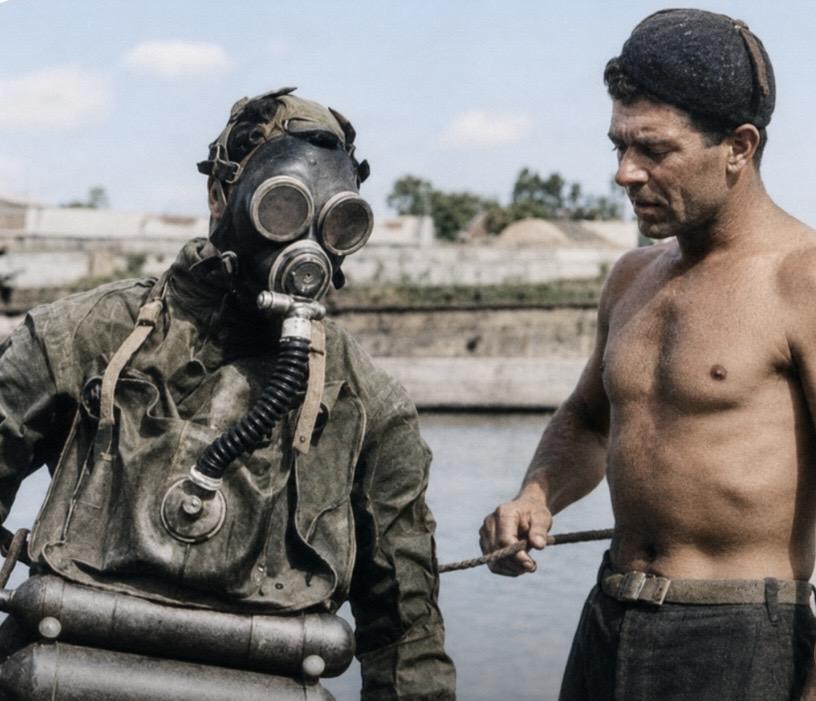
The training bases of the Decima MAS were closely linked to La Spezia and the Italian naval testing areas around San Bartolomeo, while the frogman school was created at San Leopoldo, near the Naval Academy at Livorno, from 1 September 1940. There, officers, petty officers and ratings learned to use oxygen rebreathers, attack swimming methods and underwater equipment. The unit also used secret forward bases, the most famous being the Italian tanker Olterra at Algeciras, in neutral Spain, which was secretly converted into a hidden base for attacks against Gibraltar. From the outside she looked like an ordinary interned ship, but inside she became a workshop and launching point for underwater operations against Allied shipping.
The best-known commander connected with the Decima MAS was Junio Valerio Borghese, an aristocratic Italian naval officer who had commanded the submarine Scirè. Borghese became closely associated with the human torpedo operations because Scirè was modified to carry the slow-running torpedoes close to enemy harbours. He was not the only important leader, as Moccagatta had played a major role before being killed during the failed attack on Malta in July 1941, but Borghese became the most famous face of the unit and later took command of the Decima MAS in May 1943.
The men of the Decima MAS carried out some of the most remarkable harbour attacks of the war. Their greatest success came at Alexandria in December 1941, when Italian crews riding human torpedoes penetrated the harbour and placed charges beneath the British battleships HMS Queen Elizabeth and HMS Valiant. The explosions badly damaged both ships and also damaged other vessels in the harbour. For a time, the British Mediterranean Fleet had suffered a severe blow, not from a battle squadron or air raid, but from six men who had entered the base beneath the surface of the water.
Gibraltar was another major target. The Decima MAS attacked shipping there repeatedly, first using submarines and later using the disguised base ship Olterra. Italian swimmers and torpedo crews operated in an extremely difficult environment, with British security improving as the threat became better understood. Even so, the Italians achieved several successes against merchant shipping, proving that a neutral harbour nearby could be turned into a secret weapon. At Algeciras, the men worked hidden from view, maintaining their craft and slipping out through concealed openings to attack ships anchored across the bay.
The unit was not limited only to the famous two-man torpedoes. It also used explosive motorboats, limpet mines, assault swimmers and other special craft. Some attacks failed badly, including the disastrous raid on Malta in July 1941, where Teseo Tesei, Vittorio Moccagatta and others were killed. These losses showed how dangerous the work was. The men were often operating with fragile equipment, limited oxygen, strong currents, harbour nets, searchlights, patrol boats and the constant risk of capture. Their weapons could be ingenious, but they were also temperamental and unforgiving.
By 1943 the Decima MAS had created a reputation far larger than its numbers. The official Italian naval account states that from 10 June 1940 to 8 September 1943, Italian naval assault craft sank or seriously damaged 72,190 tons of warships and 130,572 tons of merchant shipping. Among the ships listed were the battleships Queen Elizabeth and Valiant, the heavy cruiser York, the destroyers Jervis and Eridge, and more than twenty merchant vessels, tankers and steamers. For a specialist force built around small groups of men, this was an extraordinary record.
There were also individual operations of unusual character. Luigi Ferraro, an army artillery officer who joined the Decima MAS and was an expert swimmer, carried out solo attacks in Turkish ports such as Alexandretta and Mersin in 1943, using limpet mines against Allied merchant ships. These operations showed the flexibility of the unit. It was not just a naval assault flotilla in the conventional sense, but a laboratory of special warfare, where submarines, swimmers, divers, explosive charges and deception all came together.
The men who served in the assault branch were highly decorated. The Italian Navy records that the wartime assault men of the navy received 29 Gold Medals for Military Valour, 104 Silver Medals and 33 Bronze Medals, with the standard of the X Flottiglia MAS itself later receiving a Gold Medal for Military Valour. These awards reflected the extreme danger of their work, although the later history of the unit would become far more controversial because of what happened after Italy’s armistice in September 1943.
The armistice of 8 September 1943 split the Italian armed forces and also split the legacy of the Decima MAS. Some of its men stayed loyal to the Kingdom of Italy in the south and continued the specialist assault tradition under the name Mariassalto, working alongside the Allies. Others, including Borghese, stayed with the German-backed Italian Social Republic in the north and continued to use the name X Flottiglia MAS. From this point the story changed. The old naval commando identity remained, but the RSI version of the unit expanded into a much larger force, including land units used in the bitter fighting and repression of the Italian civil war period. Because of that, the name Decima MAS carries both the memory of daring naval operations and the darker political associations of the final Fascist period.
After the war, the original specialist skills did not disappear. The Italian Navy kept alive the technical lessons of underwater assault, clearance diving and special maritime operations. Post-war activity began again under the cover of harbour clearance and mine disposal, and surviving equipment was moved to Varignano near La Spezia. From there the tradition eventually fed into Italy’s modern naval special forces, today associated with COMSUBIN and the Teseo Tesei grouping, named after one of the pioneers of the human torpedo.
The Decima Flottiglia MAS remains one of the most fascinating commando units of the Second World War because it was so small, secretive and technically inventive. Its men were not massed infantry or conventional sailors. They were specialists who trained to enter the enemy’s strongest harbours by night, often beneath the water, carrying explosives to the very heart of a fleet. Their story includes courage, brilliant invention, terrible losses, political controversy and a complicated post-war legacy. At their best, before the armistice, they showed how a few determined men using unconventional methods could alter the balance of naval power in the Mediterranean. At their worst, after Italy split in 1943, the same name became tied to the violence and division of a collapsing Fascist state. That mixture is what makes the Decima MAS so important to understand: not simply as a daring commando unit, but as a unit whose history followed Italy itself from innovation and battlefield audacity into defeat, division and a difficult legacy after the war.