On this day in military history…
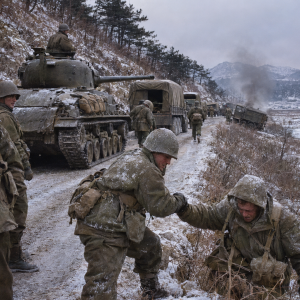
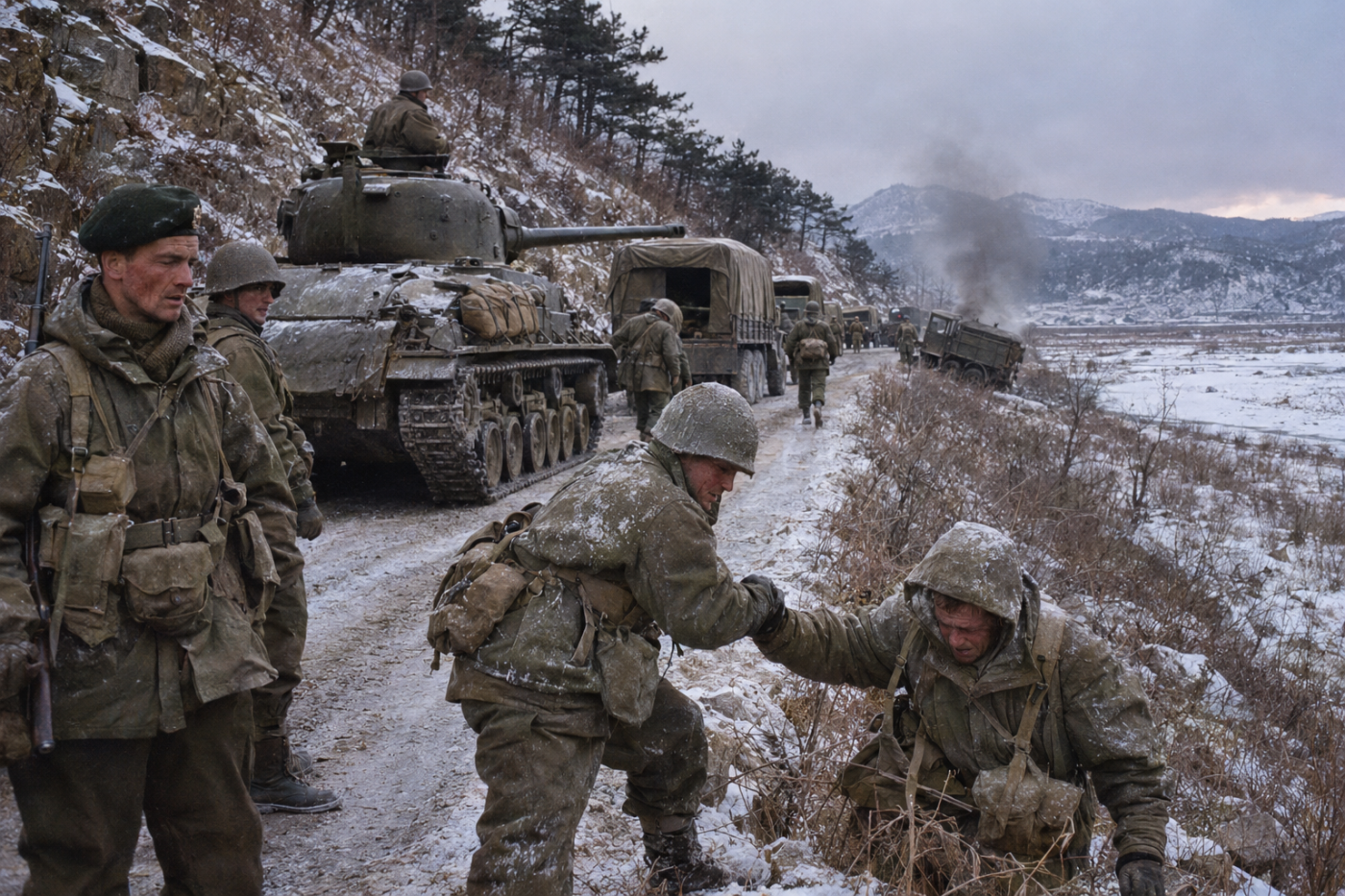
On the morning of 29 November 1950, Lieutenant-Colonel Douglas Drysdale led a British and American relief column out of Koto-ri in the mountains of North Korea. Its destination, Hagaru-ri, lay only about ten miles away at the southern end of the Chosin Reservoir. The column had tanks, trucks and about 900 men. By the following morning, fewer than half had reached the garrison.
Two nights earlier, Chinese forces had launched a major offensive against United Nations troops around the reservoir. American units were scattered on both sides of Chosin, and the roads that linked them were coming under attack. Hagaru-ri mattered because the roads from both sides of the reservoir met there. Its defenders were also building an airstrip that would soon allow wounded men to be flown out. If the village fell, troops farther north would lose their main route south.
Colonel Lewis “Chesty” Puller, commander of the 1st U.S. Marine Regiment, assembled the relief force at Koto-ri and put Drysdale in command. Alongside his own 41 Independent Commando, Royal Marines, were George Company of the 3rd Battalion, 1st U.S. Marines, Baker Company of the U.S. Army’s 31st Infantry Regiment, and American tank crews, drivers and support troops. The units had little time to get to know one another before setting out.
The Royal Marines helped clear some of the high ground early in the advance, but progress slowed as Chinese fire intensified. The road ran through a valley between steep hills and the frozen Changjin River. Mortar and machine-gun fire struck the vehicles, and burning and disabled trucks broke the convoy into separate groups. With poor communications along the column, men in one section often had no way of knowing what had happened to those ahead. The stretch became known as Hell Fire Valley.
Drysdale was badly wounded in the arm, but made it into Hagaru-ri after dark. Captain Carl Sitter and much of George Company reached the perimeter as well. Other men fought their way back to Koto-ri, while some of those cut off in the valley were taken prisoner. Corporal Ernest Cruse of 41 Commando was wounded but led six Royal Marines and an American through enemy-held ground to Hagaru-ri. He was awarded the Military Medal.
About 400 men reached Hagaru-ri and around 300 returned to Koto-ri. An estimated 162 were killed or listed as missing, and 159 were wounded. The men who got through gave the garrison badly needed reinforcements. George Company was back in action on East Hill the next morning. When the withdrawal from Hagaru-ri began on 6 December, 41 Commando helped guard the rear as the column fought its way south along the same road.
The ten-mile journey cost Task Force Drysdale dearly. For the men defending Hagaru-ri, the arrival of those British and American troops helped keep open the route that the forces farther north would need to get out.