Pusan Perimeter Battle
The Battle of the Pusan Perimeter – Korea’s Desperate Last Line, 1950
By the beginning of August 1950, barely six weeks after the Korean War had begun, United Nations forces in South Korea were facing the very real possibility of complete defeat. The North Korean People’s Army had swept southwards with remarkable speed after crossing the 38th Parallel on 25 June, capturing Seoul and forcing South Korean and American troops into a succession of hurried withdrawals. By early August almost the entire Korean peninsula north and west of the port of Pusan had fallen into North Korean hands. Behind the exhausted defenders lay the sea, and there was nowhere meaningful left to retreat.
What followed became known as the Battle of the Pusan Perimeter, one of the most important and desperate defensive campaigns of the Korean War. Between early August and mid-September 1950, American, South Korean and other United Nations forces fought to hold a shrinking bridgehead in the south-east corner of Korea while reinforcements, tanks, artillery, ammunition and supplies poured through the vital port of Pusan. Had the perimeter collapsed, the United Nations might have been driven completely from the Korean peninsula.
The crisis had developed with extraordinary speed. North Korea invaded South Korea on 25 June 1950 with a well-prepared army supported by Soviet-built T-34 tanks, artillery and experienced officers. The Republic of Korea Army was not adequately equipped to stop a major armoured invasion and possessed few effective anti-tank weapons. Seoul fell on 28 June and President Harry S. Truman authorised American military intervention under the developing United Nations command.
The first American ground troops sent into Korea were themselves poorly prepared for the type of fighting they encountered. Task Force Smith, an advance element of the U.S. 24th Infantry Division, met North Korean forces near Osan on 5 July. Its defeat demonstrated that simply placing American troops in front of the North Korean advance would not stop it. The North Koreans continued south through Taejon and towards the vital communications routes leading to Pusan.
Major General William F. Dean, commander of the U.S. 24th Infantry Division, disappeared during the confused fighting around Taejon in July and was eventually captured. The retreat continued as United Nations commanders attempted to gain time for stronger forces to arrive from Japan and the United States.
Responsibility for the ground campaign rested largely with Lieutenant General Walton H. Walker, commander of the U.S. Eighth Army. Walker understood that each withdrawal shortened his supply lines but also surrendered territory which could never be recovered if the army was pushed into the sea. By the beginning of August he decided that the retreat had gone far enough. The defensive area formed around Pusan was roughly rectangular, extending approximately 100 miles from north to south and around 50 miles from east to west in places. Much of its western boundary followed the Naktong River, which became one of the defining geographical features of the battle. Mountains, valleys, rice paddies, rivers and narrow roads divided the battlefield into numerous separate fighting areas.
Pusan itself was the key to everything. The port remained in United Nations hands and provided the logistical lifeline through which men, tanks, artillery, fuel, food and ammunition could enter Korea. Railway and road connections then carried those supplies forward towards the perimeter. As long as Pusan remained open, Walker could replace losses and steadily build his forces. If North Korean troops reached the port, the UN position in Korea would become almost impossible to maintain. Walker made his intentions unmistakable. The period of continually giving ground was over and the Eighth Army would defend the perimeter and hold Pusan.
Facing the United Nations defenders was a North Korean army which had achieved spectacular victories but was beginning to suffer from the consequences of its own advance. Its supply lines stretched hundreds of miles back towards North Korea. United Nations aircraft dominated the skies during daylight, attacking vehicles, bridges, railway lines and troop concentrations. The sea routes around Korea were controlled by UN naval forces. Replacing tanks, ammunition and trained soldiers therefore became increasingly difficult for the North Koreans.
Nevertheless, the North Korean command understood that it still possessed an opportunity to destroy the UN armies before the enormous industrial power of the United States could be fully brought to bear. Its commanders therefore repeatedly attempted to break the perimeter. By August the United Nations forces defending the area numbered approximately 92,000 men compared with around 70,000 North Korean troops immediately opposing them, although numbers alone did not reflect the enormous difficulties facing Walker. His forces were spread across difficult terrain, many American units had suffered heavy casualties during the retreat, and South Korean formations had also been badly battered.
Four principal approaches threatened Pusan. North Korean troops could attack through the Masan corridor in the south-west, cross the Naktong and drive towards Miryang, attack towards the important city of Taegu or advance down the east coast through the Kyongju and P’ohang area. During August they attempted to exploit all of them.
One of the first major attempts by Walker to regain the initiative came in the south-west. Intelligence suggested that the North Koreans were concentrating forces around Chinju and threatening an advance towards Masan and ultimately Pusan. Walker formed Task Force Kean, named after Major General William B. Kean of the U.S. 25th Infantry Division. The force included elements of the 25th Infantry Division, the 5th Regimental Combat Team and the newly arrived 1st Provisional Marine Brigade. On 7 August it began moving westwards towards Chinju.
Almost immediately the Americans collided with the North Korean 6th Division, which was launching an offensive of its own. The result was a confused series of attacks, counter-attacks and engagements across difficult mountainous terrain. Neither side achieved the decisive breakthrough it wanted, but the operation demonstrated something important: American forces were no longer simply retreating.
Some of the most savage fighting occurred around a great bend in the Naktong River west of Yongsan which became known to American soldiers as the Naktong Bulge. During the night of 5–6 August, elements of the North Korean 4th Division began crossing the river. Many crossed without boats, carrying weapons and equipment above their heads while wading or swimming through the water, while others used makeshift rafts and ferries.
Once across, the North Koreans established bridgeheads and began infiltrating through the hills. Their objective was Yongsan, approximately ten miles east of the crossing area. Beyond Yongsan lay roads towards Miryang and eventually Pusan, and a major breakthrough here could split the American position.
The U.S. 24th Infantry Division was responsible for much of this sector. Fighting quickly became confused and extremely violent. North Korean troops were skilled at infiltration and frequently moved through valleys and gaps between American positions during darkness. American units sometimes discovered enemy troops behind them at dawn. Hills changed hands repeatedly, while soldiers fought in suffocating summer heat, often without enough water, as artillery and mortar fire swept the slopes.
Task Force Hill was assembled to contain the penetration, drawing together infantry from both the 24th and newly arriving 2nd Infantry Divisions. The situation nevertheless deteriorated, and by 11 August North Korean troops had penetrated dangerously close to Yongsan. Walker reacted in the manner that became characteristic of his defence of the perimeter. Rather than maintain large reserves in one location, he rapidly moved units towards whichever sector was in the greatest danger.
The U.S. 27th Infantry Regiment and elements of the 2nd Infantry Division were committed, followed by the 1st Provisional Marine Brigade. The Marines became Walker’s highly valuable mobile reserve, repeatedly appearing at crisis points along the perimeter. Supported by tanks, artillery and aircraft, the Americans counter-attacked.
The fighting around the Naktong Bulge became extremely costly. North Korean troops who had crossed the river frequently found themselves isolated from heavy equipment and supplies. UN aircraft attacked movement on the western side of the river while artillery hammered suspected crossing points and concentrations. Gradually the bridgehead was squeezed, and by the middle of August the first major North Korean attempt to break through the Naktong sector had been defeated.
Elsewhere the situation remained dangerous. Taegu, one of the largest cities remaining in United Nations hands, became another major North Korean objective. It was an important communications centre and temporarily served as the headquarters of the South Korean government.
North Korean forces attempted to approach the city from several directions. Some of the most famous fighting occurred north of Taegu along a narrow valley which American troops nicknamed the “Bowling Alley”. At night North Korean T-34 tanks moved down the road with infantry following them, while American tanks, anti-tank weapons and artillery attempted to stop them. Tracer fire, exploding tanks and artillery illuminated the valley. The fighting lasted for several days in August. The North Koreans repeatedly attempted to force their way through, but American and South Korean forces held.
Along the eastern side of the perimeter South Korean troops were engaged in equally desperate fighting around P’ohang-dong and the approaches towards Kyongju. North Korean forces briefly captured important positions and threatened the airfield at P’ohang. Aircraft were temporarily evacuated when the situation became too dangerous, but South Korean troops supported by American forces counter-attacked and restored the position.
The battle was becoming a contest of endurance. For the North Koreans, every unsuccessful assault consumed men, ammunition and equipment which were increasingly difficult to replace. For Walker, every day that Pusan remained open brought additional strength.
The U.S. 2nd Infantry Division arrived, along with additional tank battalions and artillery units. The 1st Provisional Marine Brigade provided powerful infantry supported by armour and Marine aviation. The 5th Regimental Combat Team arrived from Hawaii. South Korean divisions were reorganised after their earlier defeats. British forces also began arriving. The 27th British Infantry Brigade was dispatched from Hong Kong and would soon join the fighting as part of the expanding United Nations force.
Air power increasingly favoured the defenders. American Air Force, Marine and naval aircraft attacked North Korean supply routes, artillery positions, tanks and troop concentrations. Close air support could be called onto enemy positions immediately threatening the perimeter. The geographical advantage enjoyed by the defenders also steadily increased. The United Nations armies were concentrated around Pusan with short supply routes, while North Korean supplies had to travel down an increasingly vulnerable network of roads and railways stretching the length of Korea.
Yet the North Koreans were far from defeated. At the end of August they prepared their greatest attempt to destroy the Pusan Perimeter. Shortly before midnight on 31 August 1950, the North Korean People’s Army launched a massive coordinated offensive across much of the perimeter. Rather than concentrating on a single point, attacks struck from the southern approaches near Haman, across the Naktong River and towards Taegu, while further attacks developed in the north and east.
The scale of the offensive produced immediate crises. In the Naktong Bulge sector thousands of North Korean soldiers crossed the river and smashed into positions held by the U.S. 2nd Infantry Division. Some American units were overrun or forced back, and Yongsan again became critical. If Yongsan fell and the North Koreans continued eastwards, they could threaten Miryang and the communications routes to Pusan.
Walker again committed the Marines. On 3 September American and Marine forces began powerful counter-attacks around Yongsan. Marine infantry advanced alongside M26 Pershing tanks while artillery and aircraft struck North Korean positions ahead of them. The fighting was brutal and often conducted at extremely close range. The North Koreans had constructed defensive positions in hills and rice paddies and fought hard to maintain their bridgehead.
Rain turned the ground into mud. Wounded men were carried from the battlefield while ammunition and supplies were brought forward along roads frequently under enemy fire. By 5 September the Marines and the 2nd Infantry Division had forced the North Koreans backwards towards the Naktong.
Similar battles were occurring elsewhere. Around Haman and Battle Mountain in the south, the U.S. 25th Infantry Division endured repeated attacks. Battle Mountain became notorious because possession of its summit changed repeatedly. Artillery and mortar bombardments stripped vegetation from sections of the high ground, leaving soldiers fighting among shattered trees, rocks and trenches.
North of Taegu, North Korean forces also achieved dangerous penetrations. The ancient fortified position at Kasan became the scene of severe fighting. Waegwan changed hands and pressure increased on the approaches to Taegu. At several moments during the first week of September the Pusan Perimeter appeared dangerously close to breaking.
Walker moved headquarters and reserve units wherever required and refused to allow local setbacks to become general withdrawals. Units were instructed to regain lost ground and hold road junctions, bridges and high ground. The North Korean offensive continued, but the attackers were becoming exhausted.
Their earlier advantages were disappearing. T-34 tanks, which had terrified poorly equipped South Korean and American troops in June and July, could now be destroyed by improved American anti-tank weapons and by new tanks arriving in Korea. American M26 Pershings, M46 Pattons and upgraded M4 Sherman tanks could engage the T-34 far more effectively than the light equipment available during the opening weeks of the war.
American artillery was also devastating. Batteries could concentrate enormous quantities of fire onto suspected North Korean assembly areas and crossing points. Perhaps most damaging of all was the constant pressure imposed by UN aircraft. Moving substantial forces or supply convoys during daylight became extremely dangerous for the North Koreans.
The defenders suffered heavily as well. Infantry companies were sometimes reduced to fractions of their normal strength. Officers and NCOs were killed or wounded and replaced by inexperienced men. Soldiers lived for days in primitive foxholes while exposed to shellfire, snipers, rain, heat, insects and disease.
The Korean civilian population was trapped in the middle of the struggle. Hundreds of thousands of refugees moved through the countryside attempting to escape the fighting, presenting enormous humanitarian and security problems. North Korean soldiers sometimes infiltrated through refugee columns, causing nervous UN troops to regard approaching civilians with suspicion.
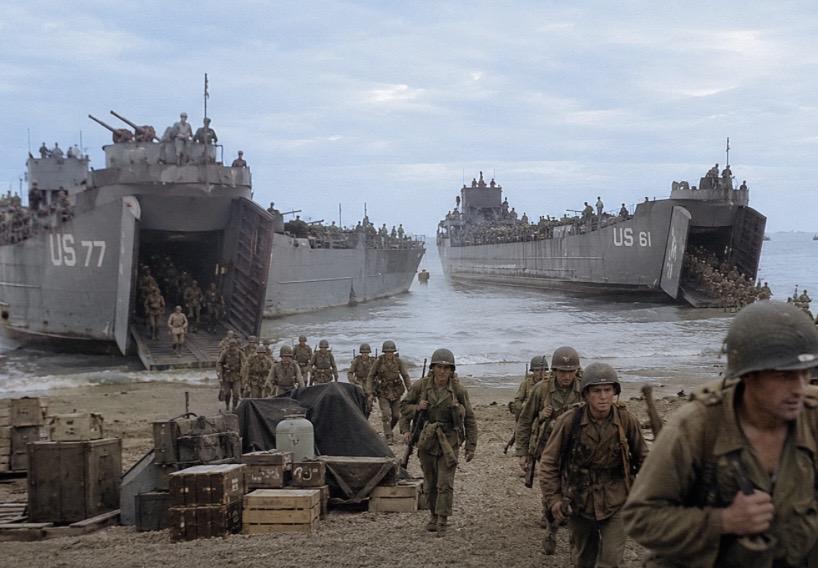
Through all of this, Pusan remained open. Ships arrived almost continuously. Tanks were unloaded from transports, ammunition moved into depots and fresh American soldiers stepped ashore before travelling towards the front. The port became the beating heart of the entire defence.
By early September the balance was changing decisively. North Korean divisions which had begun the invasion as powerful formations were suffering catastrophic losses. Thousands of soldiers had been killed, wounded or captured. Tanks had been destroyed and artillery pieces lost. Replacement troops were frequently less well trained than the veterans they replaced.
The North Koreans had thrown virtually everything available against the perimeter and had still failed to reach Pusan. Unknown to many soldiers fighting desperately along the Naktong, an operation was being prepared hundreds of miles behind the North Korean front which would completely transform the war.
General Douglas MacArthur had insisted on launching an amphibious assault at Inchon, the port serving Seoul on Korea’s west coast. The plan was extraordinarily ambitious. Inchon possessed dangerous tides, narrow approaches and extensive mudflats, and many military planners considered an assault there extremely risky. MacArthur believed precisely those difficulties would make the attack unexpected.
At dawn on 15 September 1950 the Inchon landings began. U.S. Marines captured Wolmi-do and subsequently landed directly around Inchon. The North Korean command suddenly faced a major enemy force deep behind its armies fighting around Pusan.
The threat to North Korean communications was enormous. Seoul lay close to their principal supply routes running south. If UN forces from Inchon could cut those roads while Walker broke out from Pusan, much of the North Korean army could be trapped. On 16 September, Walker’s Eighth Army began its breakout from the Pusan Perimeter.
Initially progress was slower than expected. North Korean units continued resisting fiercely and many American commanders did not yet realise how badly the enemy’s wider position had deteriorated. Then the North Korean front began collapsing.
Units started withdrawing northwards. Some abandoned equipment while others attempted to escape through mountains and along secondary roads. UN aircraft attacked retreating columns. South Korean and American forces pushed through positions which only days earlier had required enormous effort to capture.
The transformation was extraordinary. For almost two months the United Nations armies had been retreating or fighting desperately to survive. Now they were advancing rapidly northwards.
On 26 September elements of the U.S. 1st Cavalry Division advancing from the Pusan area linked with forces from the U.S. 7th Infantry Division south of Suwon. The two great UN operations had joined and the North Korean army south of Seoul was effectively shattered.
Large numbers of North Korean soldiers were captured while others discarded uniforms and weapons and attempted to return north individually through the mountains. Some organised formations escaped, but enormous quantities of equipment were abandoned. By the end of September organised North Korean resistance south of the 38th Parallel had largely collapsed.
The defence of the Pusan Perimeter had achieved its purpose. It had not been a spectacular manoeuvre in the traditional sense. For much of the battle there were no huge territorial advances for the defenders. Instead it had been a brutal struggle for hills, river crossings, villages and roads. In many places the same ground was fought over repeatedly.
Its importance, however, was enormous. Walker’s Eighth Army had bought the one thing the North Koreans could not afford to give it: time. Every week that the perimeter survived brought more American troops, more tanks, more artillery, more aircraft and more ammunition into Korea. Every North Korean assault, meanwhile, weakened an army operating at the end of a long and increasingly vulnerable supply system.
The Pusan Perimeter also demonstrated how rapidly American military power could be mobilised following the disastrous opening weeks of the war. Units which had initially been understrength and inadequately equipped steadily became more effective as experienced commanders adapted to the battlefield and modern equipment arrived.
South Korean troops played an equally vital role. ROK divisions defended much of the northern and eastern perimeter, often under intense pressure, and their survival ensured that South Korea retained an army capable of participating in the subsequent advance northwards.
General Walton Walker’s leadership was central to the defence. He repeatedly shifted troops between threatened sectors and resisted the temptation to abandon the perimeter when local positions collapsed. His ability to maintain a mobile reserve meant that North Korean breakthroughs could be attacked before they became decisive.
The 1st Provisional Marine Brigade became particularly famous for its role as a fire brigade, being rushed repeatedly towards threatened sectors and playing a major role in the fighting around the Naktong. For the ordinary soldiers on the ground, however, the campaign was remembered less as an exercise in strategy than as weeks of exhaustion, fear and close-quarter fighting.
The names Naktong, Yongsan, Haman, Battle Mountain, Taegu and the Bowling Alley entered the history of the Korean War because thousands of soldiers fought and died preventing the final corner of South Korea from being overrun.
The battle also demonstrated the importance of logistics in modern warfare. The North Koreans had begun the war with the initiative, experienced troops and powerful armoured formations. Yet by September their supply system was unable to sustain the enormous losses demanded by continuous offensive operations.
The United Nations possessed the opposite advantage. Its armies had initially been pushed back, but behind them stood the port of Pusan and beyond that the immense manufacturing and transportation resources of the United States and its allies. As long as the ships continued arriving, Walker’s army could become stronger. The North Koreans were fighting against time, and they lost that battle.
The Battle of the Pusan Perimeter therefore became one of the decisive turning points of the Korean War. Without the defence of Pusan there could have been no breakout by the Eighth Army and no secure southern force to combine with MacArthur’s Inchon landing. Had Walker’s line broken in August or early September, the entire war might have developed very differently.
Instead the perimeter held. By the middle of September 1950, the North Korean army which had appeared almost unstoppable only weeks earlier had exhausted itself against the final UN defensive line. The Inchon landing then struck behind it, Walker’s army surged northwards from Pusan and the invaders were forced into a rapid retreat.
For the soldiers who had endured the desperate summer battles of 1950, the achievement was simple but immense. They had been pushed almost to the sea, surrounded by mountains, rivers and an aggressive enemy which believed victory was within reach. They refused to give up the last foothold. Pusan remained in United Nations hands, and because it did, South Korea survived.