
Lt General Hew Pike
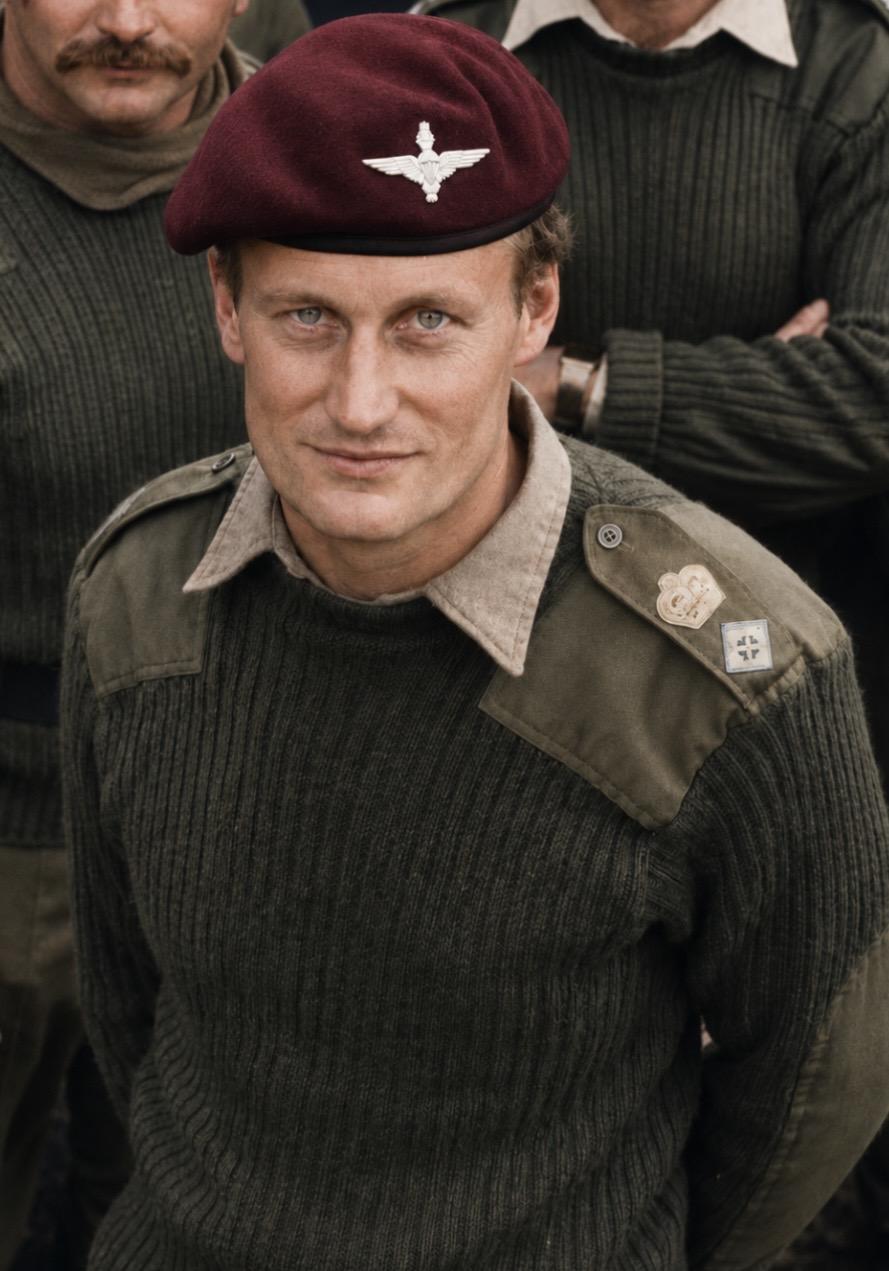
Lieutenant Colonel Hew Pike is best remembered by many for his command of 3rd Battalion, The Parachute Regiment during the Falklands War, but his career was far broader than one campaign. He rose from a young officer in the airborne forces to become Lieutenant General Sir Hew Pike KCB DSO MBE, one of the most respected senior soldiers of his generation. His life in uniform linked the old post-war British Army, colonial emergencies, Northern Ireland, the Cold War, the Falklands, Bosnia and the difficult years after the Good Friday Agreement.
Hew William Royston Pike was born on 24 April 1943 into a distinguished military family. His father was Lieutenant General Sir William Pike, a senior Royal Artillery officer who had served in the Second World War and the Korean War and later became Vice Chief of the Imperial General Staff. Military service was therefore not simply a career choice in the family; it was part of the atmosphere in which he grew up. This background gave him an early understanding of soldiering, discipline and duty, but his own career would develop its own distinctive airborne character.
He was educated at Winchester College before entering the Royal Military Academy Sandhurst. Interestingly, he was originally expected to join the Brigade of Gurkhas, but during his final term at Sandhurst he changed course and applied to join The Parachute Regiment. It was a decision that shaped his entire career. The Parachute Regiment was then, as now, one of the British Army’s most demanding infantry regiments, built around high standards of fitness, aggression, initiative and leadership. He was commissioned into the regiment in December 1962.
His early years were spent learning the trade of an infantry officer in demanding locations. From 1963 until early 1966 he served with 3 PARA, first as a platoon commander in A Company and later as Intelligence Officer. This period included service in Bahrain in 1964–65 and operations in the Radfan, a rugged and difficult area of what was then the Aden Protectorate. The Radfan campaign exposed young officers to hard soldiering in mountainous terrain, heat and political complexity. It was an early test both for him and for the battalion.
Another unusual episode came during 3 PARA’s tour in British Guiana in 1965–66. He led a memorable patrol, largely by boat, along the Wenamu River close to the Venezuelan border. The patrol inserted by Grumman flying boat onto a long-disused landing pool on the Cuyuni River. It was the sort of operation that showed the variety of service in the post-imperial British Army: one year a young officer might be in the Gulf, another in the jungle or on river patrol, and another in an urban security role.
After this first spell with 3 PARA, he served as aide-de-camp to General Sir Kenneth Darling, then Colonel Commandant of The Parachute Regiment. This took him first to Headquarters Strategic Command at Wilton and then to Headquarters Allied Forces Northern Europe in Oslo. The posting gave him valuable exposure to senior command, staff work and NATO structures, all of which would matter later as his career moved beyond battalion soldiering.
He returned to regimental duty in September 1967, joining 1 PARA for the final months of its service in Aden. He served initially in Sheikh Othman and later on the defensive perimeter securing Khormaksar Airfield before the withdrawal of British forces in November 1967. Aden was a dangerous and politically charged posting, and for a young captain it provided a sharp education in counter-insurgency, urban tension and the pressures placed on soldiers operating among a hostile or uncertain civilian population.
From 1968 to 1970 he served as Adjutant of 1 PARA. During this period the battalion deployed to Belfast for the first time, serving on the Shankill and Falls Roads during the winter of 1969–70. This was the beginning of the British Army’s long involvement in Northern Ireland under Operation Banner. For him, Northern Ireland would become a repeated and important thread in his career. He saw the province first as a relatively junior officer, later as a battalion commander and eventually as one of the most senior commanders in the British Army.
His next appointments helped broaden him as an officer. He served at the School of Infantry and with 16 Independent Company in 44 Parachute Brigade, part of the Territorial Army structure. He then attended the Army Staff College at Camberley, an important step for officers marked out for higher command. Staff College was designed to develop officers who could think beyond the immediate battlefield and understand planning, logistics, command systems and wider military organisation.
By the mid-1970s he was a major and was appointed Brigade Major of 16 Parachute Brigade. This was a significant job for a relatively young officer. The brigade was going through major organisational change and was eventually disbanded in 1977 as part of wider restructuring. He was closely involved in the work that helped shape the new arrangements, including the move towards 6th Field Force. His planning ability and staff work were recognised with the award of the MBE in the 1978 New Year Honours. This was an important marker in his rise: he was no longer just a capable field officer, but someone trusted with complex organisational change.
In 1978 he returned once more to 3 PARA, this time as Officer Commanding A Company. He commanded the company in Osnabrück, then in West Germany, and again in Belfast. This was another stage in his apprenticeship for battalion command. Company command in The Parachute Regiment was a hard test. It demanded personal authority, tactical judgement and the ability to lead tough, independently minded soldiers in both conventional and internal-security operations. His repeated service with 3 PARA gave him a deep knowledge of the battalion’s culture and personalities.
After a six-month exchange posting in the United States, he returned to 3 PARA as Commanding Officer in 1980. By then he had been promoted lieutenant colonel. Command of a parachute battalion was one of the most prestigious infantry commands in the British Army, and 3 PARA was a battalion with a formidable reputation. Before the Falklands, he led the battalion through an arduous winter tour in Northern Ireland on the North Armagh and County Fermanagh border. His command during this period brought him a Mention in Despatches, showing that his leadership had already been recognised before the South Atlantic campaign.
The event that brought him to wider public prominence was the Falklands War of 1982. When Argentina invaded the Falkland Islands in April 1982, 3 PARA was deployed as part of the British Task Force and attached to 3 Commando Brigade. The battalion landed at San Carlos in May and was then required to move across the harsh terrain of East Falkland. The loss of much helicopter lift meant that the infantry had to march long distances carrying heavy loads in cold, wet conditions. 3 PARA became one of the units associated with the hard advance towards the mountains guarding Port Stanley.
His reputation was sealed during the battle for Mount Longdon on the night of 11–12 June 1982. Mount Longdon was a key Argentine defensive position and the fighting there was among the fiercest of the campaign. The battle was fought at night, at close quarters, over broken and rocky ground, against well-sited enemy positions. His battalion took heavy casualties, but captured the objective. The DSO citation praised his “cool example and inspiring leadership” and noted the skill with which he commanded the battalion during the attack and its aftermath. The award reflected not only the capture of the mountain but the endurance, discipline and fighting spirit of the men under his command.
Although the Falklands made him a well-known figure, it did not define the whole of his career. He relinquished command of 3 PARA in 1983 and moved into senior staff and command appointments. He served with Headquarters 1 British Corps and later at the School of Infantry. In 1985 he was promoted colonel, and in 1987 became a brigadier. From 1987 to 1989 he commanded 22 Armoured Brigade in North Germany, a Cold War appointment far removed from the light-infantry world of parachute soldiering. This showed his ability to move beyond the airborne role and command armoured forces in the British Army of the Rhine.
After attending the Royal College of Defence Studies, he reached general officer rank. In 1992 he became General Officer Commanding 3rd Division, based at Bulford. He later became Commandant of the Royal Military Academy Sandhurst in 1994. This was a particularly fitting appointment for an officer who had begun his own commissioned life there more than thirty years earlier. As Commandant, he was responsible for the training and formation of future Army officers, helping to shape the standards and values of the next generation.
In 1995 he rose again, becoming a lieutenant general and serving as Deputy Commander-in-Chief Land Command and Inspector General of the Territorial Army. He was appointed Knight Commander of the Order of the Bath in the 1997 New Year Honours, becoming Sir Hew. His career had now taken him from platoon command in the airborne forces to the highest levels of the British Army.
His later service also had an international dimension. In 1997–98 he served in Bosnia as Deputy Commander Operations of the NATO Stabilisation Force. This was a complex peace-support environment, very different from the battles of the Falklands or the security operations of Northern Ireland. An interesting detail from this period is that he carried out what proved to be his last parachute jump with a Polish parachute battalion at Tuzla in northern Bosnia, a final airborne flourish in a career rooted in The Parachute Regiment.
His final major Army appointment brought him back to Northern Ireland. From 1998 he served as General Officer Commanding and Director of Operations in Northern Ireland, during the sensitive period after the signing of the Good Friday Agreement. This was a time of immense political importance, with the Army required to manage security responsibilities while the peace process developed. His long experience of Northern Ireland, stretching back to his early service in Belfast, gave him unusual perspective in the role.
He retired from the Army in 2001 after nearly forty years of service. His record of appointments was remarkable: platoon commander, intelligence officer, adjutant, company commander, brigade major, battalion commander, brigade commander, divisional commander, Commandant of Sandhurst, senior Land Command officer, NATO operational commander in Bosnia and senior commander in Northern Ireland. Few officers of his generation experienced such a wide range of military responsibilities.
In retirement, he remained connected to military history, remembrance and public discussion of soldiering. He compiled From the Front Line: Family Letters and Diaries, 1900 to the Falklands and Afghanistan, a book drawing together the experiences of several generations of his family in war. The book includes accounts from the South African War, the World Wars, Korea, Aden, the Falklands and Afghanistan. It is especially interesting because it places his own Falklands experience alongside that of his son Will Pike, who served with 3 PARA in Helmand Province, Afghanistan, in 2006. This created a striking father-and-son link across two very different wars, both involving the same battalion.
He has also been notable for his thoughtful reflections on military service. In later interviews he spoke with the authority of a senior commander but also with the seriousness of someone who understood the cost of war. He disliked simplistic heroic language, even though many regarded him as one of the notable battalion commanders of the Falklands campaign. His comments on modern conflict showed concern not only for battlefield courage, but for political purpose, proper resourcing and the moral burden placed on soldiers.
Another interesting post-retirement role was his appointment as Lieutenant of the Tower of London, a ceremonial position with deep military tradition. It was a fitting later honour for a soldier whose career had combined regimental service, command, national responsibility and public duty.
His importance lies not simply in the fact that he commanded 3 PARA at Mount Longdon, though that remains the episode for which he is most widely remembered. His career illustrates the making of a senior British Army officer in the second half of the twentieth century. He learned his profession in Bahrain, Radfan, British Guiana, Aden and Belfast; proved himself in company and battalion command; achieved prominence in the Falklands; then rose through the senior ranks to command brigades, a division, Sandhurst and major operational appointments.
He was a soldier formed by The Parachute Regiment but not confined by it. The qualities associated with airborne service — initiative, endurance, directness and personal example — followed him into every stage of his career. From a young officer who changed his mind at Sandhurst and chose the Paras over the Gurkhas, to a knighted lieutenant general with a DSO, MBE and KCB, Sir Hew Pike’s career stands as one of the most distinguished in the modern history of The Parachute Regiment.