
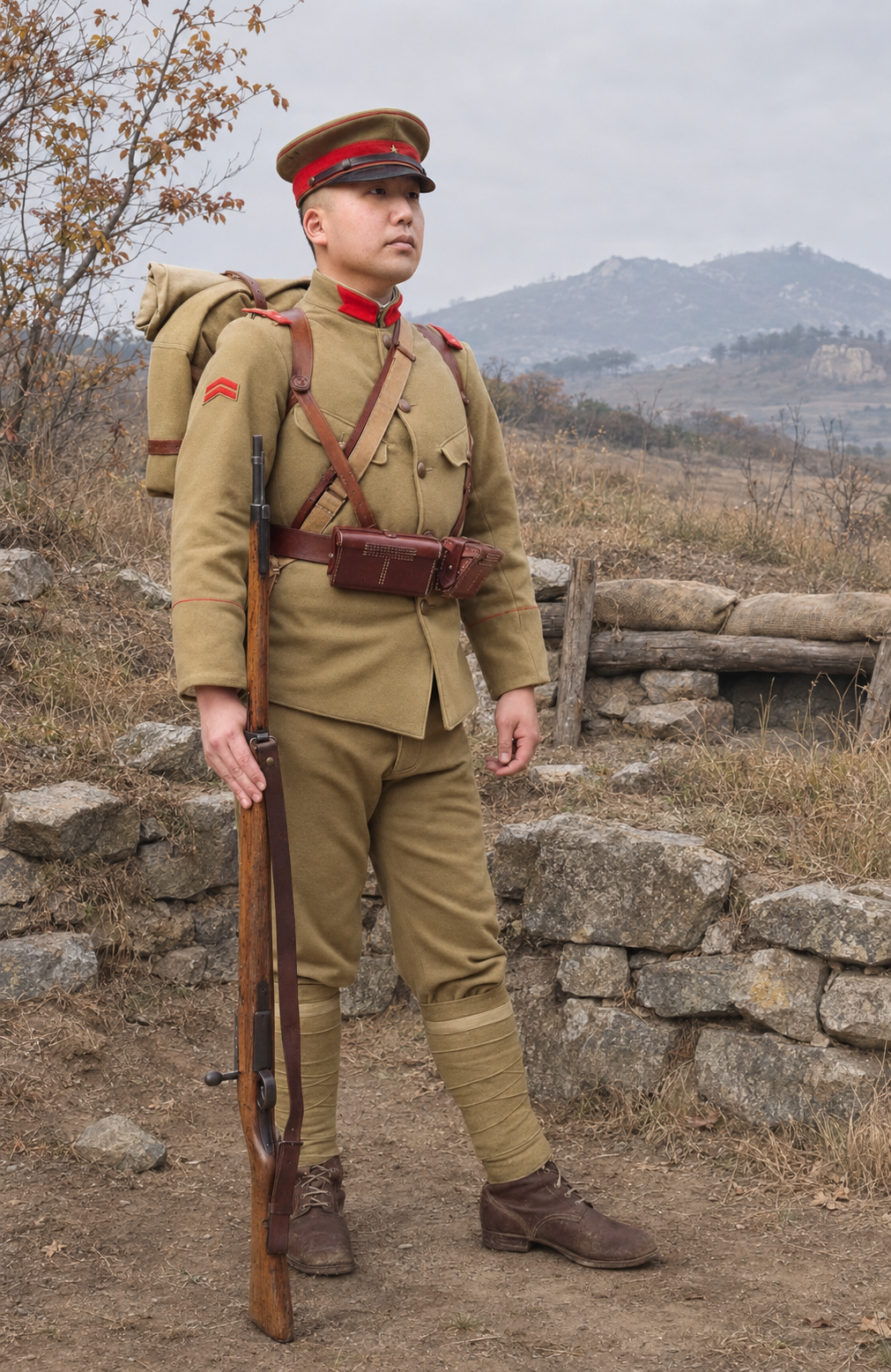
Japanese WW1 Uniform
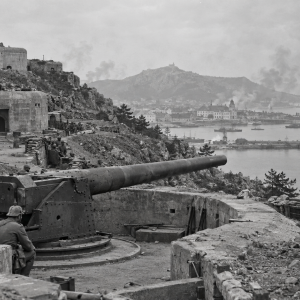
When Japan declared war on Germany on 23 August 1914, its infantry went into the field in khaki. Within days, Japanese troops landed near the German naval base at Tsingtao, now Qingdao, on China’s Shandong coast. The German garrison surrendered on 7 November. The siege was an early wartime test for a uniform developed in the years after the Russo-Japanese War.
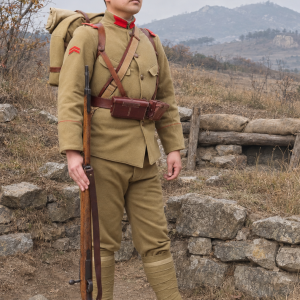
The Type 45 took its name from the 45th year of Emperor Meiji’s reign, 1912, when the new dress regulations were issued. It was in wear by 1913. The tunic had a standing collar and five dull-finished buttons. The scarlet swallowtail patches on the collar identified the wearer as infantry, while the shoulder pieces carried his rank. A five-pointed copper star sat above the peak of the cap.
Winter uniforms were made from woollen cloth, while the lighter summer version used cotton. Soldiers wound cloth puttees around their lower legs, securing the trouser cuffs above their leather ankle boots. The leather waist belt carried three ammunition pouches, two at the front and one behind. The infantryman also carried an Arisaka rifle and bayonet.
The state-run Senju Woollen Mill in Tokyo was a key supplier of woollen cloth for army uniforms. It opened in 1879 and came under the Army Ministry in 1888. The Army Clothing Depot in Honjo, Tokyo, oversaw the manufacture and supply of finished garments, with branches in Osaka and Hiroshima. The records establish who made the cloth and who ran the clothing supply system, while each factory’s share of Type 45 production remains uncertain.