On this day in military history…
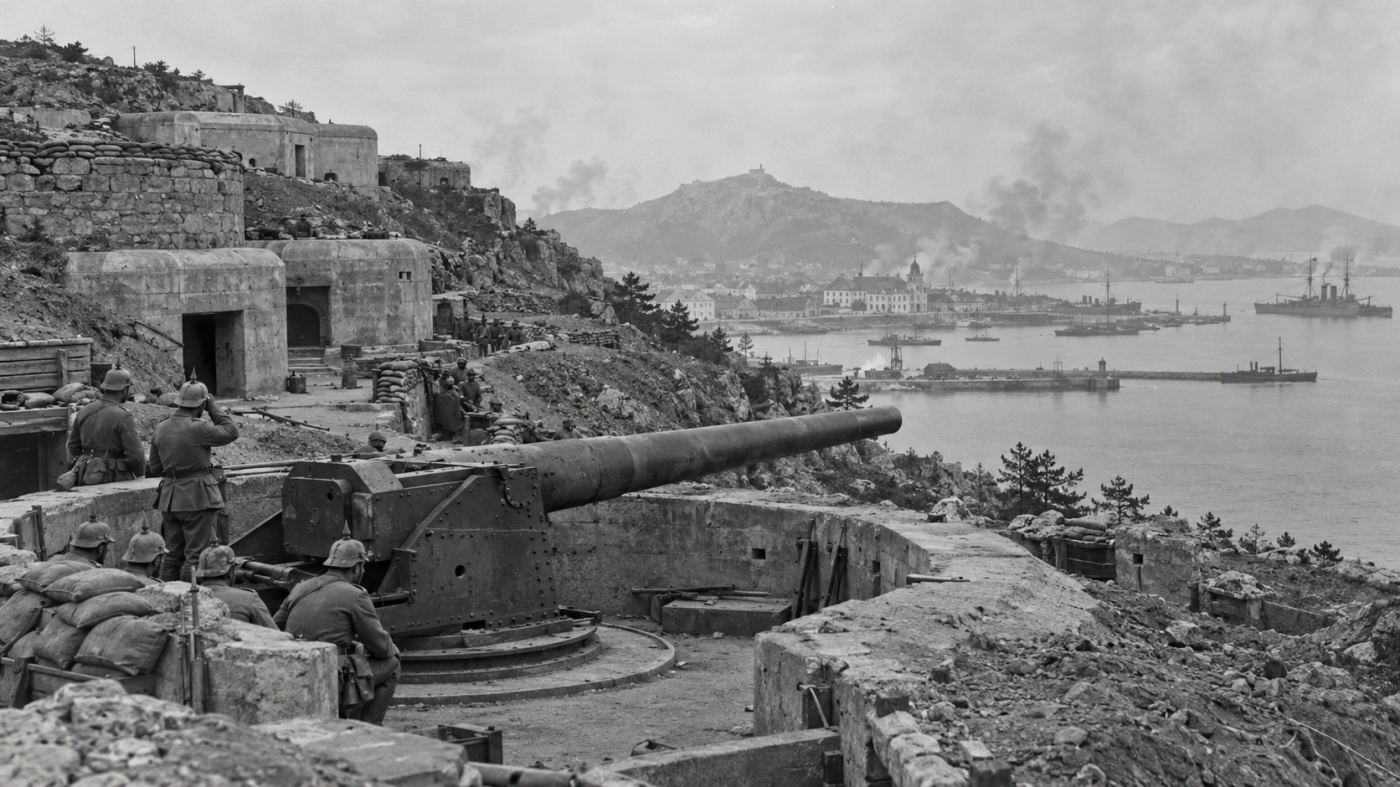
On 7 November 1914, the German naval fortress of Tsingtao in China surrendered after weeks of siege. Thousands of miles from the battlefields of France and Belgium, British and Indian soldiers had fought alongside Japanese troops against the Kaiser’s forces. It was an extraordinary episode in the opening months of the First World War, bringing together armies more often remembered today as enemies in a later conflict.
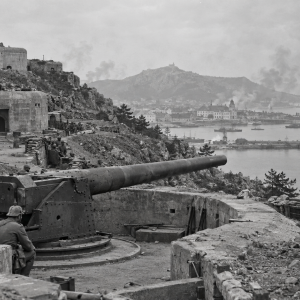
Tsingtao, now known as Qingdao, was Germany’s principal foothold in China. Its harbour and fortified approaches gave the Germans a valuable military base in East Asia. When war broke out in Europe, this distant outpost became a target. Britain had been allied with Japan since 1902, while the Japanese government saw an opportunity to expand its influence on the Chinese mainland.
On 15 August 1914, Japan demanded that Germany withdraw its warships from Chinese and Japanese waters and surrender Tsingtao. The Germans refused, and Japan declared war eight days later. A naval blockade followed, cutting the port off from the sea while preparations began for an attack on land. China’s objections did not prevent foreign armies from fighting over territory on its soil.
The defenders were commanded by the German governor, Alfred Meyer-Waldeck. His force included naval infantry, naval artillerymen and reservists who had travelled from other parts of East Asia to join the garrison. Some German civilians volunteered for service, helping reinforce an isolated stronghold facing overwhelming odds. Trenches, fortified hills and gun positions offered protection, but there was little prospect of a relieving army reaching them.
Japan supplied the main attacking force, with Britain contributing a smaller contingent under Major-General Nathaniel Barnardiston. Its principal units were the 2nd Battalion, South Wales Borderers, and men of the 36th Sikhs. For these soldiers, service in China suddenly became an active campaign against German troops. Britain’s involvement also reflected concern about how far its Japanese ally might extend its power in the region.
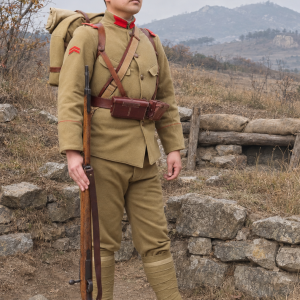
Under General Kamio Mitsuomi, the Japanese conducted a methodical siege. Heavy artillery battered the defences while infantry gradually pushed their trenches forward. Night operations helped bring the attackers closer to the German positions. Kamio drew on Japanese experience from the Russo-Japanese War, using preparation and concentrated firepower to reduce the stronghold.
Above the siege lines, aircraft were already demonstrating their military value. Japanese seaplanes associated with the carrier Wakamiya carried out reconnaissance and bombing missions against targets around Tsingtao, including ships and shore installations. These early operations were a remarkable development in naval aviation, decades before aircraft carriers became dominant weapons in the Pacific.
The decisive assault came during the night of 6–7 November. Japanese troops broke into the main defensive positions, capturing important strongpoints and leaving the exhausted garrison with little hope of continuing successfully. On the morning of 7 November, the Germans surrendered. Their resistance had delayed the attackers, but could not overcome the weight of forces assembled against them.
Japanese occupation followed, and Tsingtao did not return to Chinese control until 1922. For the South Wales Borderers, the fighting in China was only the beginning of a much longer war. The 2nd Battalion subsequently served at Gallipoli and then on the Western Front, exchanging a distant Asian siege for some of the conflict’s most punishing battlefields.
Today, Tsingtao remains overshadowed by the great battles in Europe. Yet its capture illustrates how quickly the First World War reached across the globe. British, Indian and Japanese troops fought together on Chinese soil against a German garrison, while heavy siege guns and pioneering naval aircraft helped decide the outcome. It was a small campaign within an immense war, but an unmistakable reminder of its worldwide reach.