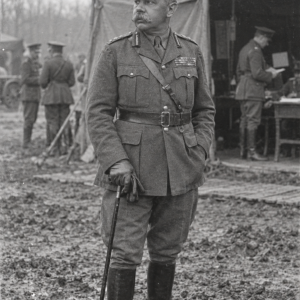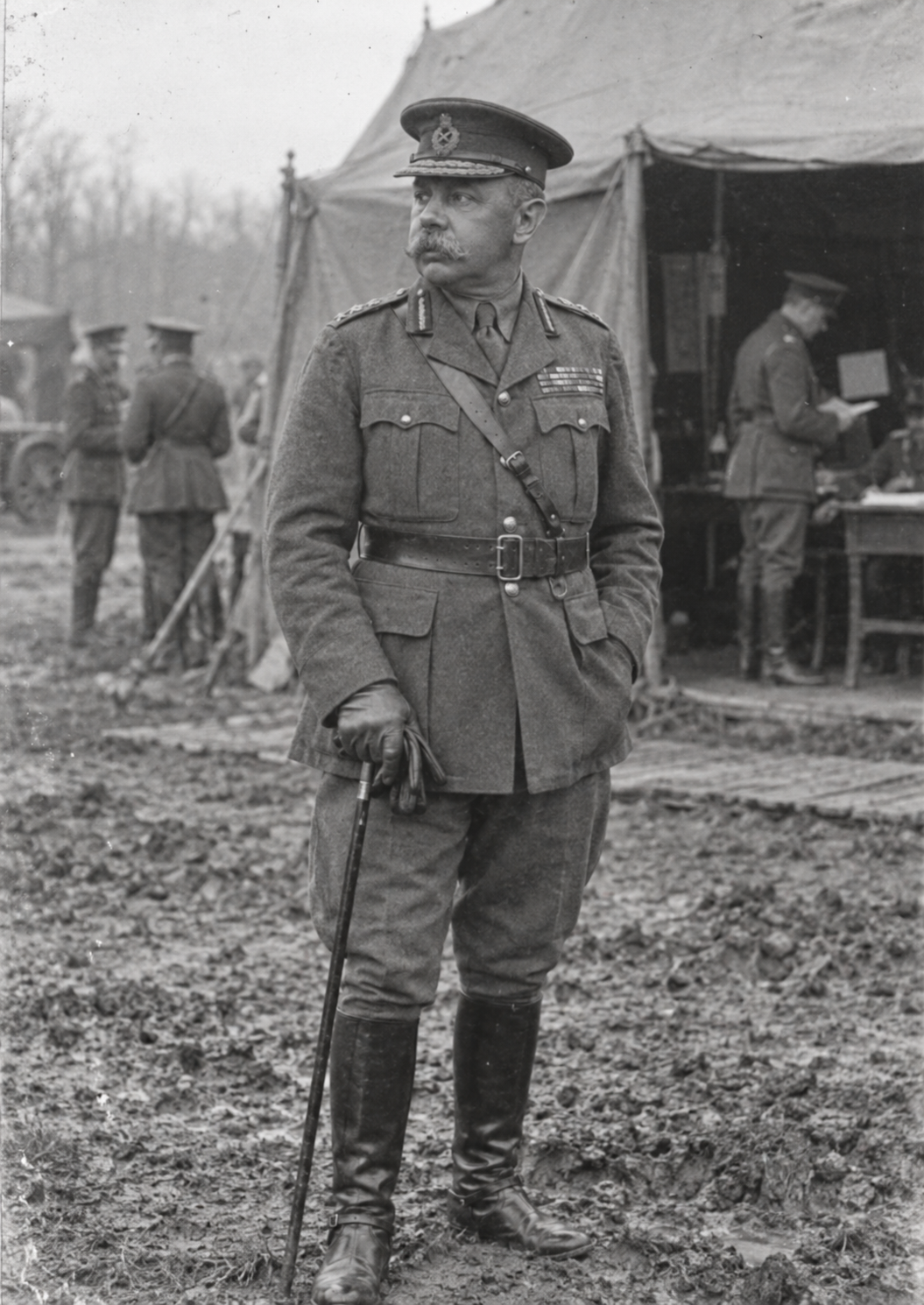
General Sir Herbert Plumer
Field Marshal Herbert Charles Onslow Plumer emerged from the First World War as one of the British Army’s most respected senior commanders. Short, stocky and possessing a large white moustache, he did not resemble the popular image of a dashing battlefield general. His quiet manner concealed a determined and methodical soldier whose careful planning produced some of Britain’s most important victories on the Western Front.
Plumer was born in Kensington, London, on 13 March 1857. After being educated at Eton, he entered the British Army in 1876 and received a commission in the 65th Regiment of Foot, later incorporated into the York and Lancaster Regiment. His early career took him to India and the Sudan, where he saw action against Mahdist forces and learned the importance of preparation, discipline and reliable supply arrangements. His reputation grew during the Second Boer War in South Africa, where he raised and commanded a mounted force in Rhodesia and operated across enormous distances under difficult conditions. His column approached the besieged town of Mafeking from the north and kept Boer forces occupied before joining the final relief operation in May 1900. Although not every action was successful, Plumer proved capable of remaining calm under pressure and managing troops during a demanding and unpredictable campaign.
By the outbreak of the First World War in August 1914, Plumer was an experienced senior officer. In February 1915 he was sent to France to command V Corps, arriving shortly before the Second Battle of Ypres. The situation was desperate, with the Germans employing poison gas on a large scale and tearing a dangerous gap in the Allied line. Plumer’s corps endured relentless fighting while helping prevent the enemy from breaking through towards the Channel ports. His steady performance brought promotion, and in May 1915 he replaced General Sir Horace Smith-Dorrien as commander of the British Second Army.
For much of the next two years, Plumer was responsible for the Ypres Salient, one of the most dangerous and miserable sectors of the Western Front. German positions overlooked the British lines from the surrounding ridges, while the soldiers below lived under almost constant observation and shellfire. Plumer became familiar with every feature of the battlefield and recognised that no major advance from Ypres could succeed until the Germans had been driven from the Messines–Wytschaete Ridge. He did not believe determination alone could overcome machine guns, artillery and fortified positions. Instead, he favoured limited objectives supported by overwhelming firepower. His method became known as “bite and hold”: infantry would seize a manageable section of enemy ground, consolidate it and then destroy the expected German counterattacks with artillery before another carefully prepared advance began.
This approach reached its finest expression at the Battle of Messines in June 1917. For many months British, Canadian and Australian tunnelling companies had dug galleries beneath the German lines and packed them with explosives. Plumer’s staff coordinated these mines with an enormous artillery programme, aerial observation, infantry rehearsals and detailed arrangements for moving supplies across the captured ground. At 3.10 a.m. on 7 June, nineteen enormous mines exploded beneath the German positions. The ridge erupted in a succession of colossal blasts, after which British, Australian, New Zealand and Irish troops advanced behind a precisely timed creeping barrage. The principal objectives were captured, German counterattacks were defeated and the strategically important ridge was secured. Although the victory came at a heavy cost, Messines became one of the best-planned and most successful British offensives of the war. Plumer is often credited with telling his staff: “Gentlemen, we may not make history tomorrow, but we shall certainly change the geography.” Whether those exact words were spoken remains uncertain, but they perfectly reflected the explosions that permanently reshaped the battlefield.
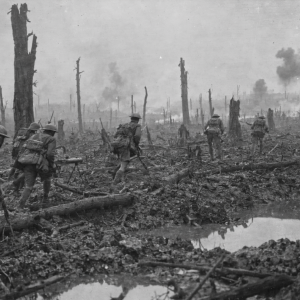
Later that year, Plumer’s Second Army took a leading part in the Third Battle of Ypres. After earlier attacks had become bogged down, he employed a succession of controlled advances at the Menin Road Ridge, Polygon Wood and Broodseinde. These operations captured important ground and inflicted severe losses on the German defenders. Despite these successes, the offensive continued towards Passchendaele as the autumn weather deteriorated. Rain, shellfire and the destruction of the drainage system transformed the ground into deep mud. Plumer remained a loyal subordinate and carried out the orders given to him, but his reputation rests largely upon the controlled operations in which objectives, artillery support and available resources were kept in balance.
Following the Italian defeat at Caporetto in late 1917, Plumer was sent to command British forces in Italy. His presence helped stabilise the Allied position before he returned to the Western Front in 1918. During the final months of the war, his Second Army participated in the Allied advance through Flanders, helping drive the German Army back until the Armistice came into effect on 11 November. Plumer’s relationship with his soldiers distinguished him from several other senior commanders. Affectionately known as “Daddy Plumer,” he regularly visited units and showed genuine concern for the welfare of the men under his command. He understood that success depended not only upon plans drawn at headquarters but also upon exhausted infantrymen being given achievable objectives and sufficient support. He could not eliminate the terrible losses of industrial warfare, but he tried to avoid wasting lives through hurried or poorly prepared attacks.
After the war, Plumer commanded the British Army of the Rhine and was promoted to field marshal in July 1919. He was created Baron Plumer of Messines and later Viscount Plumer in recognition of his military and public service. He subsequently served as Governor of Malta from 1919 until 1924 and as High Commissioner for Palestine between 1925 and 1928. On 24 July 1927, he returned to Ypres to unveil the Menin Gate Memorial to the Missing, which carried the names of tens of thousands of British and Commonwealth soldiers who had died in the Salient and possessed no known grave. It was a deeply significant duty for the former commander whose men had fought and died across that devastated landscape.
Herbert Plumer died in London on 16 July 1932 at the age of seventy-five and was buried in Westminster Abbey, an honour granted to relatively few British military commanders. His legacy remains closely connected with Messines, but his wider importance lies in his approach to command. In a war remembered for costly failures, Sir Herbert Plumer demonstrated that detailed preparation, limited objectives and respect for the ordinary soldier could produce success on even the most unforgiving battlefield.