On this day in military history…
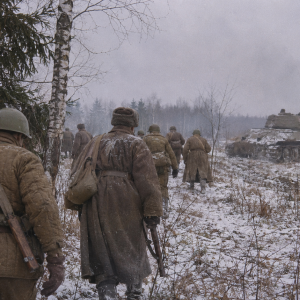
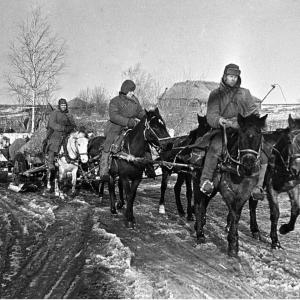
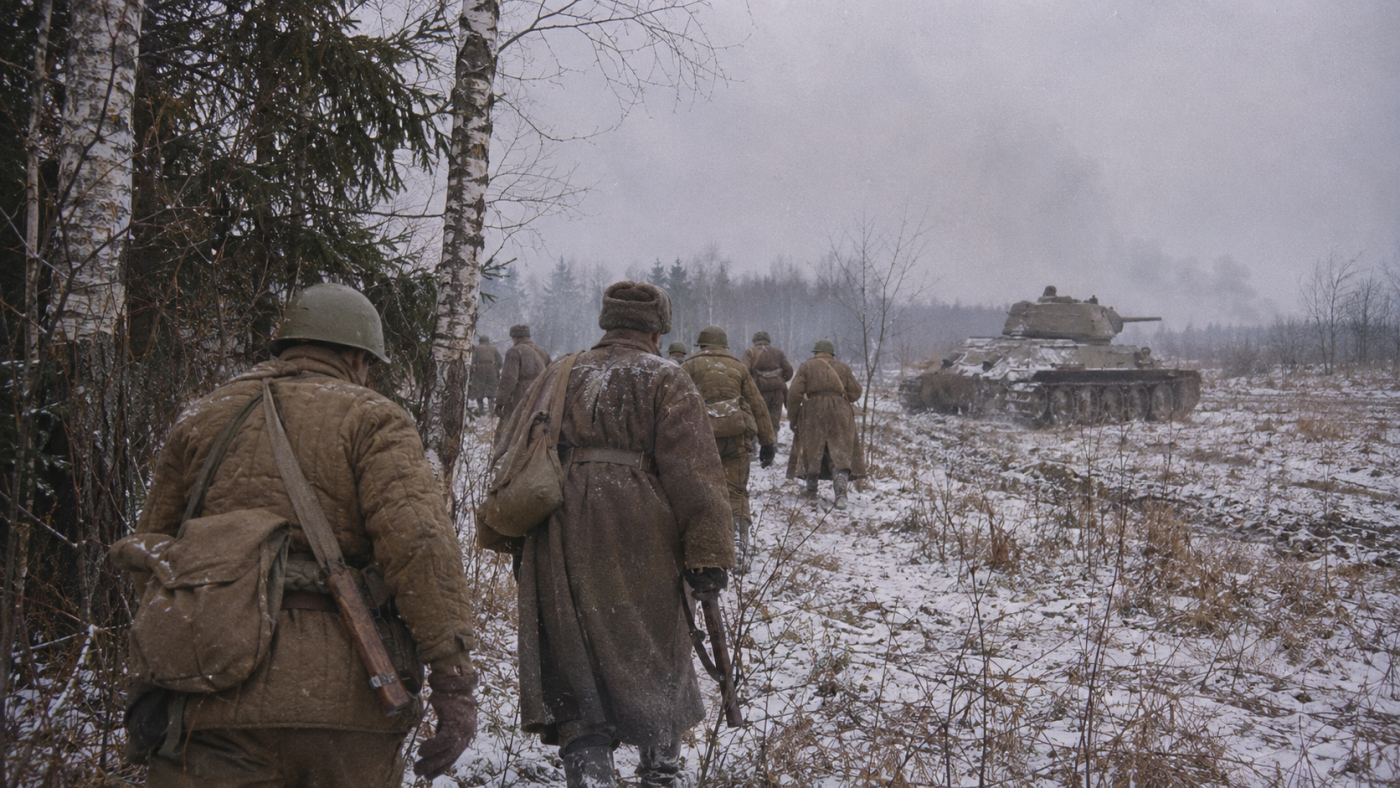
On 25 November 1942, Soviet artillery opened fire on German positions around Rzhev, west of Moscow. Operation Mars had been scheduled for 28 October, but autumn rain had turned roads to mud and delayed the freeze the Red Army needed to move its tanks, guns and supplies. By the time the offensive went ahead, snow and poor visibility made it difficult for artillery observers to see where their shells were falling and limited the support Soviet aircraft could provide.
Rzhev stood near the tip of a deep bulge in the German front that had survived the Soviet counter-offensive of the previous winter. General Walter Model’s Ninth Army had fortified villages and river crossings across the area. General Georgy Zhukov coordinated attacks by the Soviet Western and Kalinin Fronts, aiming to break in from several sides, cut the roads and railways that supplied Model’s army and link up behind it. Sychyovka, a railway town south of Rzhev, was one of the main objectives.
On the eastern side, the Soviet 20th Army forced crossings over the Vazuza River, but getting tanks and supplies across fast enough to build on the advance proved difficult. German troops still held villages overlooking the approaches, and the attack stalled short of Sychyovka. Farther west, the 22nd Army pushed nearly nine miles up the wooded Luchesa valley before being stopped short of the road between Olenino and Bely. The Soviets had opened gaps in Model’s lines, but the roads they needed to join up and sustain their advance were still in German hands.
The deepest breakthrough came south of Bely, where the Soviet 41st Army opened a gap for General Mikhail Solomatin’s 1st Mechanised Corps. Its tanks and infantry pushed deep into the German rear, but Bely itself held out. Model brought in armoured reserves and, on 7 December, German forces counter-attacked. Within days they had cut the narrow corridor behind Solomatin’s men. With supplies running low, survivors fought their way back to Soviet lines on the night of 15–16 December, leaving much of their heavy equipment behind.
The Red Army renewed its attack along the Vazuza on 11 December, but suffered further heavy losses. By 20 December the offensive had run its course and the German Ninth Army still held the salient. One widely cited tally puts Soviet losses at about 216,000 men, including around 70,000 killed, missing or captured. Other estimates are higher. The Germans finally gave up Rzhev in March 1943 as part of Operation Büffel, a planned withdrawal that shortened their front.
Six days before Mars began, the Red Army had launched Operation Uranus at Stalingrad. By 23 November, two days before the first attacks at Rzhev, Soviet forces had already closed the ring around the German Sixth Army. At Rzhev, Zhukov’s forces never managed to join up behind the Ninth Army. The two offensives began within a week of each other, yet by mid-December it was Soviet troops fighting to escape encirclement south of Bely.