On this day in military history…
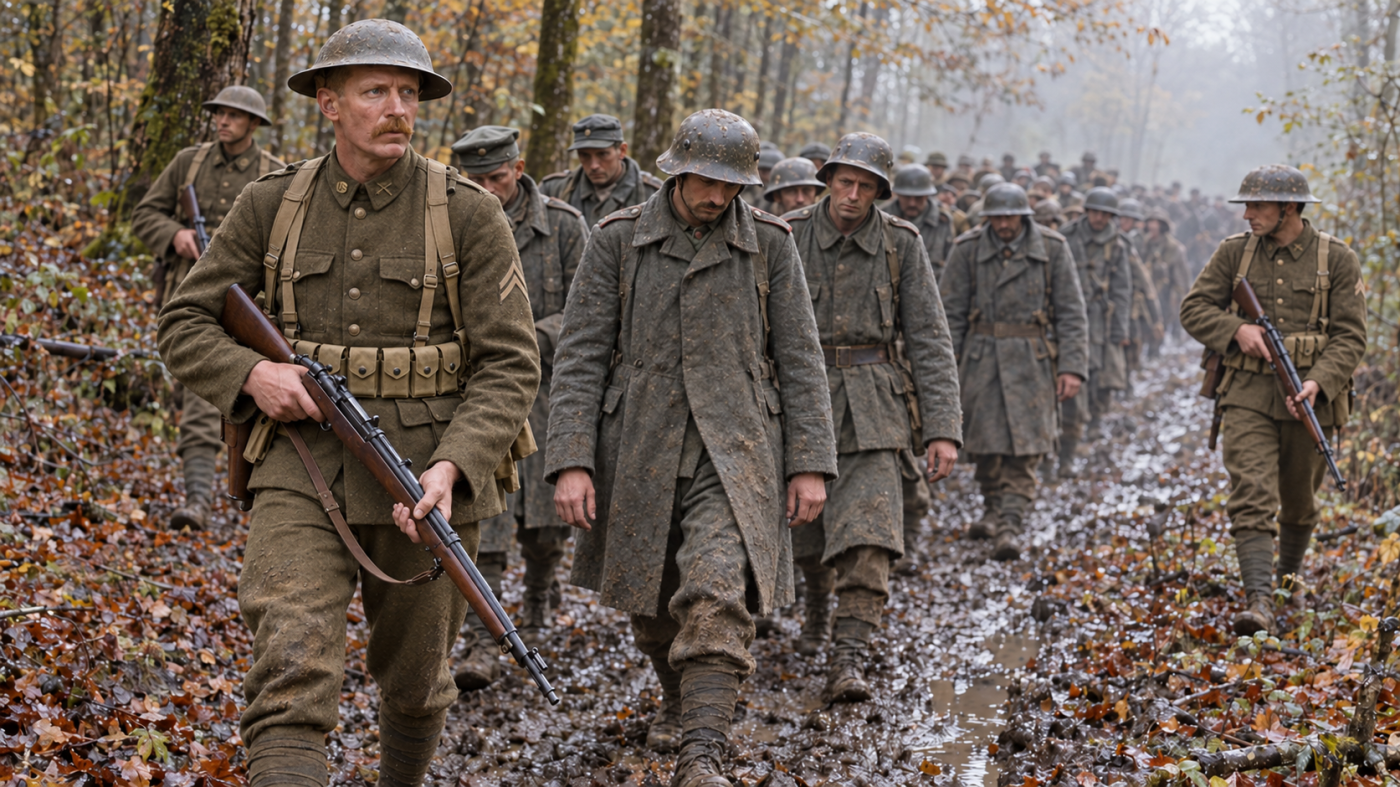
On 8 October 1918, in the wooded hills near Châtel-Chéhéry in France, an American corporal who had struggled with the idea of taking another man’s life carried out one of the most remarkable actions of the First World War. With his patrol devastated by German machine-gun fire, Alvin Cullum York fought back with extraordinary accuracy and composure, helped force the enemy to surrender and led seven surviving comrades back to the American lines with 132 prisoners. His achievement earned him the Medal of Honor and made the reluctant soldier from Tennessee a national hero.
Born on 13 December 1887 at Pall Mall, Tennessee, York grew up in a poor family with eleven children. His education was limited, but hunting in the surrounding mountains taught him patience, observation and exceptional marksmanship. Shooting helped put food on the family table, and these skills would later prove decisive thousands of miles from home. Following a religious conversion, he abandoned the drinking and fighting of his younger years and embraced beliefs that left him deeply troubled by war. Called into the United States Army in 1917, he found himself torn between his faith and his duty. At Camp Gordon in Georgia, discussions with his officers, including Major Edward Buxton, helped him consider whether military service could be reconciled with his beliefs. After prayer and reflection, he accepted that he could serve, although killing remained something he dreaded. Assigned to Company G, 328th Infantry Regiment, 82nd Division, he went to France in 1918.
By October, the division was fighting in the Meuse–Argonne Offensive. On the morning of 8 October, German machine guns halted the American advance near Châtel-Chéhéry. A patrol of seventeen men, led by Sergeant Bernard Early and including Corporal York, was sent around the enemy’s flank to silence the positions. Moving through the woods, they penetrated behind the German line and surprised a group of soldiers, taking prisoners before machine gunners on the hillside turned their weapons towards them. Six Americans were killed and three wounded, including Early. Within moments, York was the senior unwounded non-commissioned officer, with seven other men still able to fight. Some guarded the prisoners while he engaged the German positions above them, turning the patrol’s sudden success into a desperate struggle to survive.
Drawing on his experience as a hunter, York fired carefully at the machine gunners as they exposed themselves. Despite the fire directed towards him, he maintained his composure and repeatedly called on the Germans to surrender. In his later account, he described using his .45 automatic pistol to stop a group advancing towards him with fixed bayonets. His shooting and determination broke the resistance of men who greatly outnumbered the surviving Americans, and a German officer eventually offered to surrender his men. Getting the prisoners back remained dangerous: the patrol was still behind enemy lines, with wounded comrades to bring out and further German positions blocking the route. York organised the captives into a column and used the officer to secure the surrender of additional troops encountered along the way. When they reached American forces, the prisoners numbered 132.
Although the action became famous as York’s personal triumph, his surviving comrades played an essential part in guarding the captives and bringing them back. His distinction lay in assuming command during a crisis and delivering the effective fire that helped turn near-disaster into an extraordinary success. The prisoners and captured weapons also represented a significant blow to the German positions holding up the advance. Promoted to sergeant, he received the Distinguished Service Cross, followed by the Medal of Honor, presented in France in April 1919. France also honoured him with the Croix de Guerre and the Legion of Honour.
Returning home, York married Gracie Williams and used his fame to support education in rural Tennessee. His life reached a wider audience through the 1941 film Sergeant York, starring Gary Cooper, but his work establishing the York Agricultural Institute reflected the future he wanted to build after the war. He died on 2 September 1964, aged seventy-six, and was buried at Pall Mall. His achievement on 8 October 1918 remains a remarkable example of courage and leadership under fire: a man deeply reluctant to kill took responsibility when his comrades fell, fought to protect those still alive and brought an overwhelming number of enemy soldiers into captivity.