On this day in military history…
On the night of 3–4 October 1942, a small British raiding party crossed the Channel to Sark. The island, like the rest of the Channel Islands, had been under German occupation since 1940. Their mission, codenamed Operation Basalt, was to gather information about conditions on Sark and bring back a German soldier for questioning. They had only a few hours ashore before daylight would make escape far more dangerous.
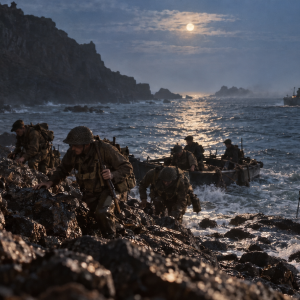
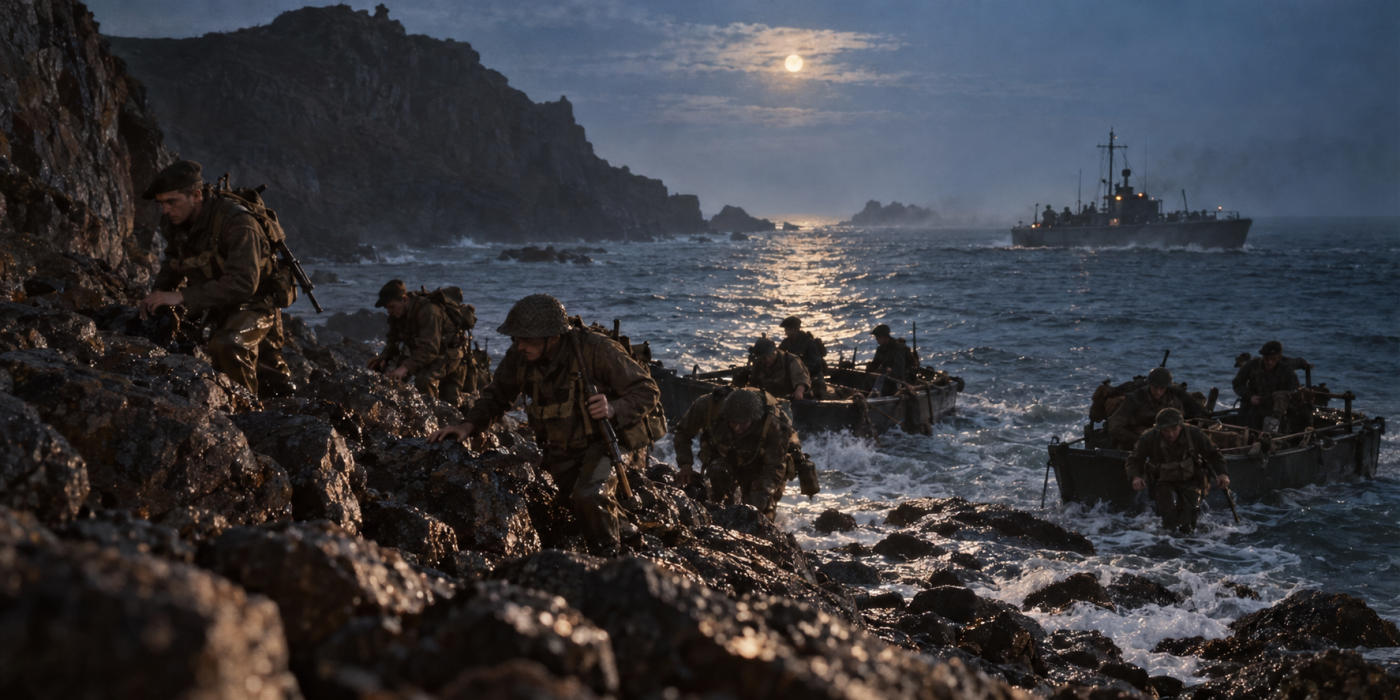
The twelve-man party was led by Major Geoffrey Appleyard of the Small Scale Raiding Force, also known as No. 62 Commando. It included men from No. 12 Commando and the Danish volunteer Anders Lassen. They set out from Portland in Dorset aboard motor torpedo boat MTB 344, commanded by Royal Navy officer Lieutenant Frederick Bourne. The fast boat carried them across the Channel, while smaller collapsible boats took the raiders from the MTB to Sark’s rocky shore.
They landed below the Hog’s Back, a headland above Dixcart Bay, and climbed the cliff in darkness. Bourne had orders to leave at a set time whether or not the men had returned. The commandos therefore had to move quickly across unfamiliar ground, find German soldiers, secure a prisoner and retrace their route to the landing point. An earlier attempt to carry out the raid in September had been abandoned when currents delayed the boat’s arrival until it was too late to land safely.
Moving inland, the party entered an empty house and took newspapers that offered information about life under occupation, including reports of islanders being sent away. At another house they encountered Frances Pittard, a Sark resident who realised the intruders were British. She told them about conditions on the island and directed them towards German soldiers staying at the Dixcart Hotel. Her help gave the raiders the chance to fulfil their mission, but exposed her to reprisals after they left.
At the hotel, the commandos entered an annexe where five German soldiers were sleeping. They overpowered the men, tied their hands and began taking them back towards the coast. Outside, the situation changed rapidly. Some of the prisoners shouted and resisted, threatening to alert other troops nearby. In the confused struggle, two German prisoners were killed, two escaped and the raiders withdrew with the one man they could still take with them. Accounts of every moment of the fighting differ, but the danger was clear: once the alarm spread, the small party could be cut off from its boat.
The commandos hurried back across the island with their prisoner. Bourne had stayed beyond the time at which he had been ordered to leave, giving them the chance to get away. They reached MTB 344 and returned to Portland that morning, bringing back the captured soldier, the newspapers and information gathered from Pittard. All the raiders made it back.
Several of the men involved went on to receive major awards, although those honours should not be mistaken for medals given solely for the Sark raid. In December 1942 Appleyard was awarded the Distinguished Service Order, while Lieutenant Patrick Pudgeon received the Military Cross. Lassen also received the Military Cross for his service in a series of raids that included Basalt. He later earned two Bars to the award and was posthumously awarded the Victoria Cross for his actions in Italy in April 1945. Appleyard was killed in 1943 while serving on operations connected with the invasion of Sicily.
For Sark, the raid did not end when the boat disappeared over the horizon. The German authorities tightened the island’s defences, and Frances Pittard was later deported to Germany for helping the commandos. News that bound German prisoners had been killed also became part of a wider dispute over the treatment of captured men. On 18 October, Hitler issued his Commando Order, directing that Allied commandos captured on raids be killed even if they wore uniform. Men taken prisoner during later operations were murdered under that order.
Operation Basalt had achieved its immediate aims, yet its cost and consequences extended well beyond a single night. It had required a fast crossing from Portland, a difficult landing beneath Sark’s cliffs and a hurried escape with a prisoner before dawn. It also left an occupied island facing tighter security and reprisals. What began as a brief reconnaissance and prisoner-taking raid became one of the most consequential British commando operations of the war.