On this day in military history…
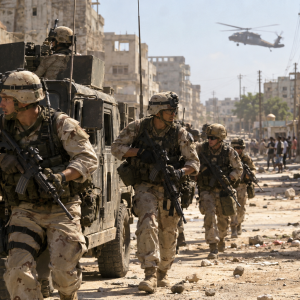
On 3 October 1993, an American raid in Mogadishu, Somalia, became a desperate overnight battle to rescue soldiers trapped among the city’s streets and buildings. The operation was expected to take about an hour. By the following morning, two Black Hawk helicopters had been shot down, dozens of Americans had been wounded, and a relief force had fought its way through the city to bring the survivors out.
Somalia had been torn apart by civil war since the fall of President Mohamed Siad Barre in 1991. Rival armed groups fought for territory as famine spread, and the delivery of food and medical aid became increasingly dangerous. American troops first arrived as part of an international effort to protect relief supplies. By 1993, the United Nations mission had taken on a broader role, and its forces were in conflict with the militia of Mohamed Farrah Aidid. After Aidid’s men killed 24 Pakistani peacekeepers in June, the hunt for him and his senior associates intensified.
The United States sent Task Force Ranger to Mogadishu that August. It brought together Rangers, Delta Force soldiers, helicopter crews of the 160th Special Operations Aviation Regiment and other specialist personnel. On the afternoon of 3 October, intelligence indicated that two of Aidid’s senior associates were meeting in a building near the Olympic Hotel and the Bakaara Market. The plan was to fly an assault force into the area, seize the men and withdraw by road before the militia could mount an organised response.
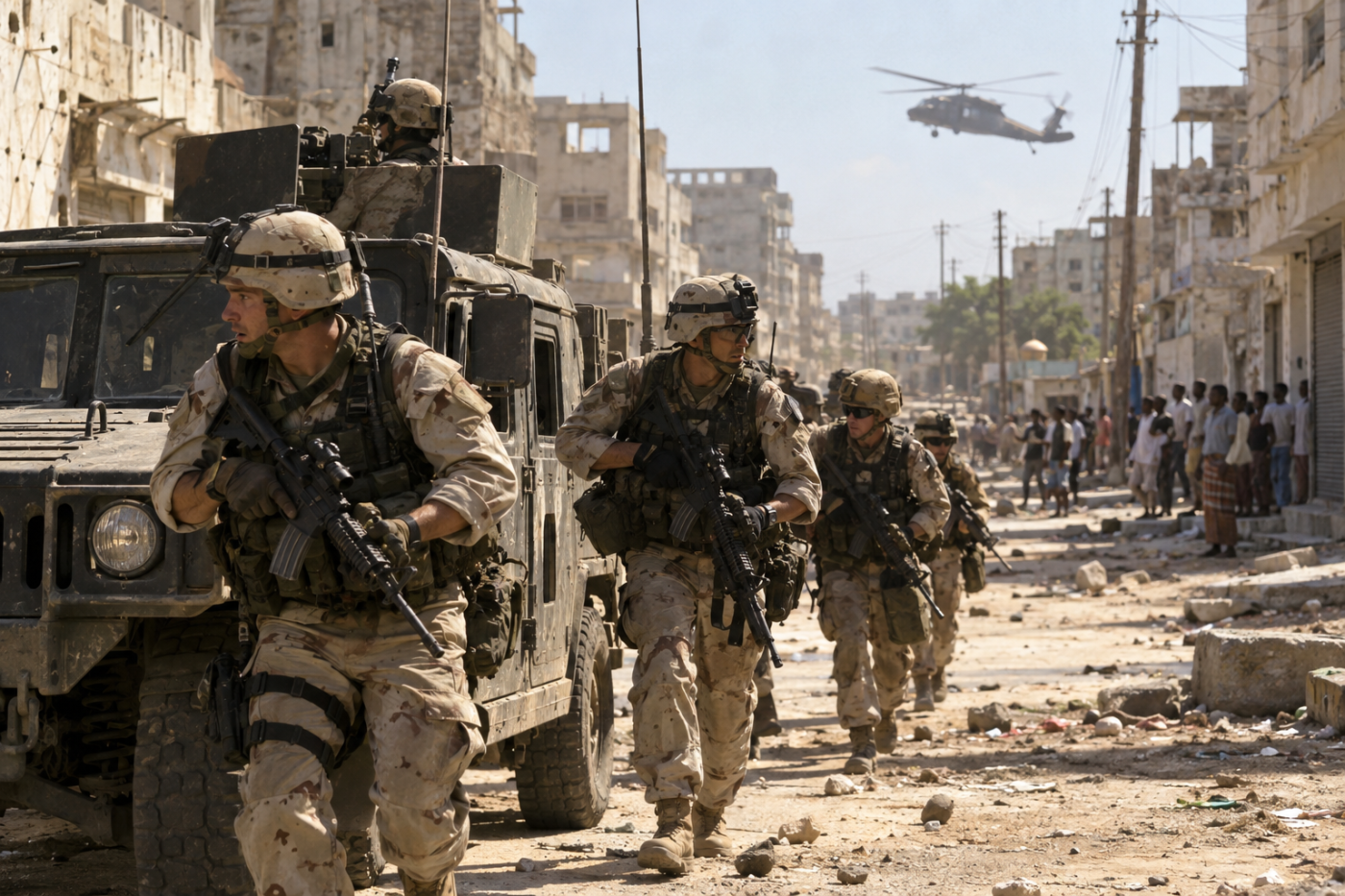
The helicopters arrived in the afternoon. Rangers descended on ropes to secure the surrounding streets while the assault team entered the building. The target was captured, along with a number of other men. Almost at once, however, the operation began to unravel. One Ranger was badly injured in a fall from a helicopter, and vehicles had to be sent back to the American base with him. Militia fighters gathered quickly, while gunfire, burning barricades and blocked roads made movement through the neighbourhood increasingly difficult.
Then a rocket-propelled grenade struck a Black Hawk known by its call sign, Super Six One. The helicopter crashed a short distance from the target building, killing its pilots and turning the raid into a rescue mission. American soldiers ran towards the wreckage, and a rescue team was lowered from another aircraft. They reached the site as militia fighters closed in, but securing the helicopter meant holding a position deep inside hostile territory. The ground convoy carrying the captured men tried to reach them. Under heavy fire and forced to negotiate streets filled with obstacles, it repeatedly failed to find a clear route.
A second Black Hawk, Super Six Four, was then shot down elsewhere in the city. Its pilot, Michael Durant, survived the crash with serious injuries. From the air, Master Sergeant Gary Gordon and Sergeant First Class Randall Shughart saw that armed men were converging on the wreckage. They repeatedly asked to be put down beside it. Once on the ground, the two snipers fought to protect Durant, but both were killed when the position was overrun. Durant was taken prisoner and held for eleven days before his release. Gordon and Shughart were awarded the Medal of Honor posthumously.
Around the first crash site, the remaining Americans spent the night defending separate positions. They treated the wounded, shared ammunition and held off attacks while helicopters flew overhead to support them. The soldiers had gone in prepared for a short daylight operation. As darkness fell, they faced a long fight with limited supplies and no immediate way out. The crews above them continued to return to the battle after refuelling and rearming, but aircraft alone could not evacuate the men on the ground.
A relief force was assembled from American troops and Malaysian and Pakistani United Nations contingents. Malaysian armoured personnel carriers and Pakistani tanks provided the protection needed to push through the barricades and gunfire. Even then, the journey to the trapped soldiers took hours. The force reached the first crash site in the early hours of 4 October and worked to recover the men there, including the body of the helicopter’s pilot. By dawn, the survivors were finally moving out. Some had to cover part of the route on foot because the vehicles were filled with casualties. The withdrawal became known as the “Mogadishu Mile”. A Malaysian soldier, Corporal Mat Aznan Awang, was among those killed during the rescue effort.
Eighteen American servicemen died in the battle and many more were wounded. Somali fighters and civilians also suffered heavy losses, although estimates of the number killed vary widely. Images of dead American soldiers being dragged through Mogadishu shocked the United States. The battle accelerated the decision to withdraw American forces from Somalia; the last US troops left in March 1994. For those who fought through the night, it remained a story of comrades trying to reach one another, hold their positions and bring the wounded home.