On this day in military history…
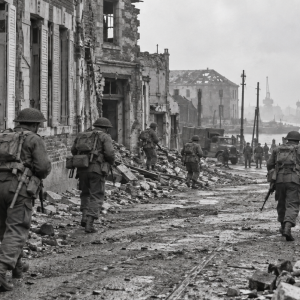
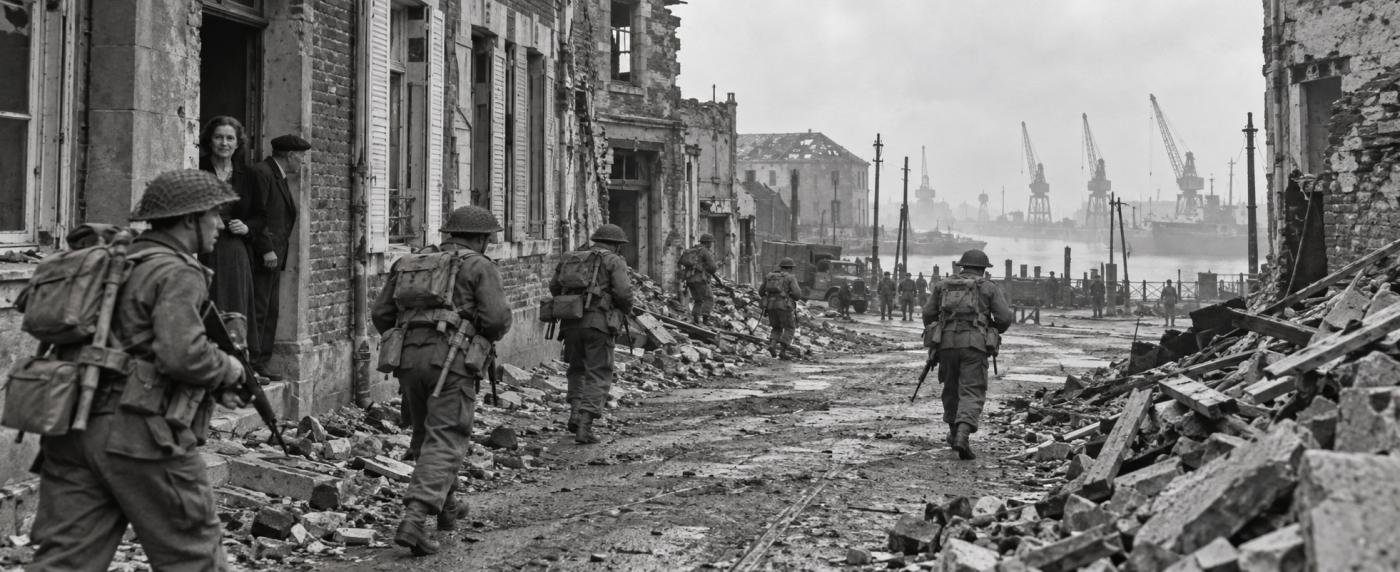
On 30 September 1944, Canadian troops entered Calais and brought an end to more than four years of German occupation. The liberation of the Channel port followed days of fighting through flooded ground, minefields, concrete gun positions and old forts. Much of the German garrison gave up that evening, although the last positions were cleared on 1 October. Calais had been in German hands since May 1940. Its position across the Channel from Dover made it valuable both as a port and as part of the fortified coast from which German guns could fire towards Britain. By September 1944, the Allied advance through France had left Calais behind the front line, but its garrison still held the town and surrounding batteries. The Allies urgently needed ports closer to their advancing armies, and the task of taking Calais fell to Major-General Daniel Spry’s 3rd Canadian Infantry Division.
The assault, codenamed Operation Undergo, began on 25 September. Supported by bombers, artillery, tanks and specialised armoured vehicles, the Canadians attacked the town and its coastal defences. The 8th Canadian Infantry Brigade moved against the heavy batteries around Sangatte and Cap Blanc-Nez, while the 7th Brigade fought towards Calais itself. German troops had flooded much of the landward approach, forcing the attackers towards narrow routes covered by fortifications. Canadian infantry crossed some flooded areas by wading, swimming, using canvas boats and hauling themselves along ropes. By 27 September, they had taken Fort Lapin and Fort Nieulay, but civilians remained inside Calais as the fighting drew nearer. A truce was arranged on 29 September to let them leave. Free French officer Roger Mengin helped organise the evacuation and urged residents to take only what they needed, giving thousands a chance to escape before the attack resumed.
At noon on 30 September, the ceasefire ended and Canadian troops advanced from both east and west. German resistance quickly weakened. The Canadian Scottish Regiment moved through the western side of Calais and reached the lighthouse overlooking the port that evening. Some defenders were still in their positions, but many were ready to surrender. Arrangements for the final surrender continued into the early hours of 1 October, when prisoners began leaving the remaining forts. For the people of Calais, liberation brought relief after years of occupation, but it also revealed the damage left behind. Parts of the town had been devastated, and the harbour facilities the Allies had hoped to use needed substantial repair. Mengin, who had helped civilians get out, died after his vehicle was struck by a shell shortly after the fighting. His name remains part of the city’s remembrance of those days.