Coldstream Guards
The Coldstream Guards are one of the most famous regiments in the British Army and are often described as the oldest continuously serving regular regiment in the world, although they themselves famously insist they are “second to none,” a phrase that reflects both pride and a long-standing rivalry with the Grenadier Guards. Their origins go back to the turbulent period of the English Civil War, and unlike many regiments that were raised later under royal authority, the Coldstream Guards began life in opposition to the monarchy.
The regiment was formed in 1650 during the later stages of the English Civil War by General George Monck, a highly capable and politically astute soldier who commanded forces in Scotland under the Parliamentarian government led by Oliver Cromwell. Monck raised his regiment in the town of Coldstream, a small settlement on the River Tweed on the border between Scotland and England. This location gave the regiment its name, although at the time it was simply known as Monck’s Regiment of Foot.
The true defining moment in the regiment’s history came in 1660, at the end of the Commonwealth period. After the death of Cromwell and the collapse of republican rule, Monck marched his regiment south from Coldstream to London in what became one of the most decisive movements in British political history. His disciplined and largely unopposed advance helped facilitate the restoration of the monarchy under Charles II. Unlike many Parliamentarian units that were disbanded or purged after the monarchy returned, Monck’s regiment was retained because of its loyalty, discipline, and the crucial role it had played in restoring the king. This unique origin—fighting for Parliament yet ensuring the return of the Crown—makes the Coldstream Guards distinct among British regiments.
After the Restoration, the regiment became part of the King’s household troops, forming one of the Foot Guards regiments tasked with protecting the sovereign. Over time, it took on the title Coldstream Guards, formalising its connection to the town where it had been raised. Its motto, “Nulli Secundus” or “Second to None,” dates from this period and reflects both its pride and its peculiar position in the order of precedence.
Throughout the centuries, the Coldstream Guards have fought in nearly every major conflict involving Britain. In the late 17th and early 18th centuries, they served in campaigns under John Churchill, 1st Duke of Marlborough during the War of the Spanish Succession, taking part in major battles such as Blenheim and Ramillies. Their reputation for steadiness under fire grew steadily during these wars.
During the Napoleonic Wars, the regiment distinguished itself again, particularly at the Battle of Waterloo in 1815. There, alongside other Guards units, they played a critical role in resisting the attacks of Napoleon Bonaparte’s forces, helping to secure one of the most famous victories in British military history.
In the Victorian era, the Coldstream Guards served in imperial campaigns across the globe, including the Crimean War and various colonial conflicts. Their role was not limited to ceremonial duties, despite their prominent presence in London; they were and remain a fully operational infantry regiment.
The 20th century saw the regiment heavily engaged in both world wars. During the First World War, the Coldstream Guards fought on the Western Front, enduring the horrors of trench warfare in battles such as the Somme and Ypres. They suffered heavy casualties but earned numerous honours for bravery. In the Second World War, they again saw extensive combat, fighting in North Africa, Italy, and Northwest Europe. Their involvement included participation in the Normandy landings campaign following D-Day, where they were part of the push to liberate Western Europe from Nazi occupation.
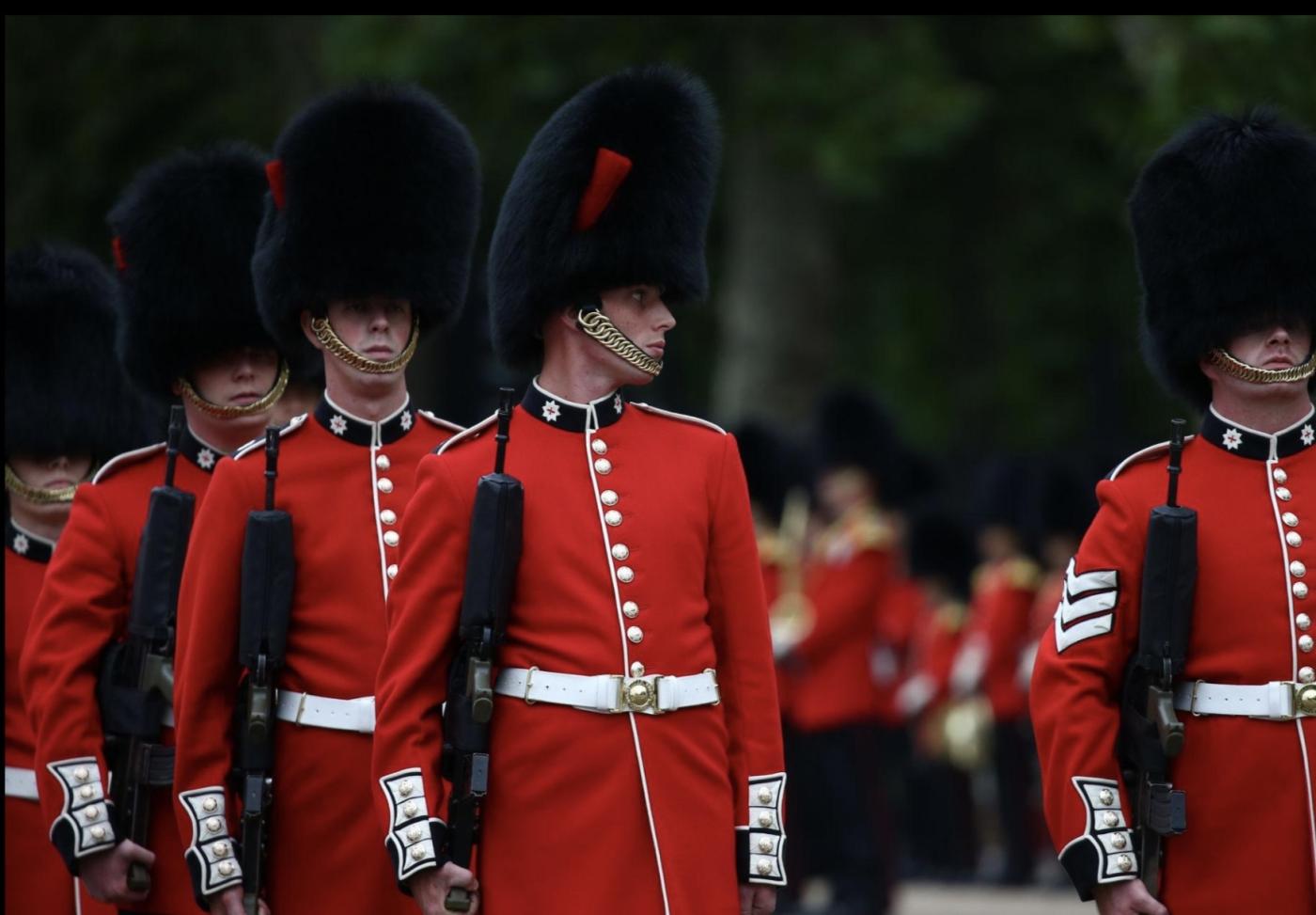
In more recent decades, the Coldstream Guards have continued to serve on active operations. They have been deployed to Northern Ireland during the Troubles, and in the 21st century they have taken part in operations in Iraq and Afghanistan. This modern service underlines the fact that, despite their iconic red tunics and bearskin caps seen during ceremonies such as the Changing of the Guard at Buckingham Palace, they remain a frontline infantry unit.
Ceremonially, the Coldstream Guards are perhaps most visible to the public in London. They are one of the five regiments of Foot Guards responsible for guarding royal residences, and their presence at events such as Trooping the Colour and state occasions makes them a symbol of continuity and tradition in the British Army. Their band is also one of the most renowned military bands in the world.
The regiment has maintained a strong sense of identity throughout its long history. Its refusal to claim seniority, instead insisting on being “second to none,” reflects a unique mixture of tradition, humour, and quiet confidence. From its origins as a regiment raised during civil war in a small border town, through its pivotal role in restoring the monarchy, to its continued service in modern conflicts, the Coldstream Guards stand as one of the most enduring and distinguished units in military history.