Anne Franks Arrest
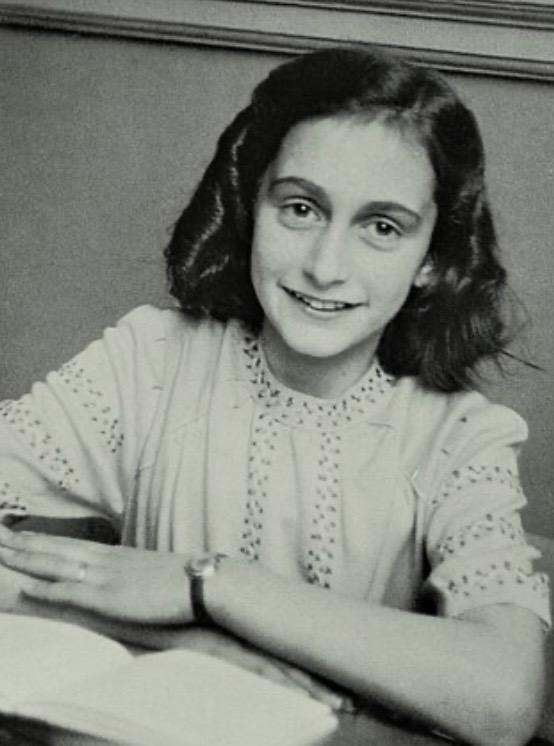
Anne Frank’s name has become one of the most recognisable symbols of the Holocaust, yet when she and her family were arrested in Amsterdam during the summer of 1944 she was simply a fifteen-year-old Jewish girl who had spent more than two years hiding from Nazi persecution. The diary she left behind would eventually allow millions of people around the world to understand the Holocaust through the thoughts, fears and hopes of one young person caught within it.
Anne was born Annelies Marie Frank in Frankfurt, Germany, on 12 June 1929, the younger daughter of Otto and Edith Frank. Her sister Margot was more than three years older. The rise of Adolf Hitler and the Nazi Party transformed life for Jewish families in Germany, and Otto Frank recognised the danger relatively early. In 1933 he moved to the Netherlands, where the family eventually settled in Amsterdam and Otto established his business.
For several years the Netherlands appeared to offer the Franks a degree of safety, but everything changed when German forces invaded the country on 10 May 1940. The Dutch armed forces were overwhelmed within days and the country came under German occupation. Gradually, restrictions were imposed upon the Jewish population. Jews were required to register with the authorities, Jewish children were removed from ordinary schools, businesses were taken over or restricted, and from May 1942 Jews were ordered to wear the yellow Star of David marked with the word “Jood”, meaning Jew.
Otto Frank had already begun making preparations for the possibility that the family might have to disappear. Behind the premises of his business at 263 Prinsengracht in central Amsterdam was an enclosed group of rooms hidden within the rear of the building. This would become known as the Secret Annex.
The immediate trigger for the family going into hiding came in July 1942 when sixteen-year-old Margot Frank received a summons ordering her to report for what was officially described as labour in Germany. The family understood what this might mean and decided not to wait any longer. On the morning of 6 July 1942, Otto, Edith, Margot and Anne left their home and made their way to the hiding place.
They could not openly carry suitcases through the streets without attracting attention, so they wore layers of clothing and carried only what they could manage discreetly. The family entered the concealed rooms behind Otto’s business and effectively disappeared from normal life.
They were later joined by Hermann and Auguste van Pels and their son Peter, followed by dentist Fritz Pfeffer. Eight people were therefore eventually living inside the Secret Annex. Their survival depended upon a small group of trusted helpers including Miep Gies, Johannes Kleiman, Victor Kugler and Bep Voskuijl, who obtained food and other necessities despite the enormous personal risk involved.
The entrance to the hiding place was eventually concealed behind a movable bookcase. During working hours those inside had to remain extremely quiet because employees and visitors were present in the building below. Walking heavily, running water, flushing toilets or speaking loudly could reveal their presence. Curtains remained closed, and life became dominated by silence, fear and uncertainty.
Anne had received a red-and-white checked diary for her thirteenth birthday on 12 June 1942, only weeks before entering hiding. Inside the Annex she continued writing, recording arguments, personalities, wartime developments, her feelings towards her parents, her complicated relationship with her mother, her growing friendship and affection for Peter van Pels, and her hopes for the future.
Her writing became increasingly thoughtful as she grew older. Anne wanted to become a journalist and writer, and after hearing a Dutch government radio broadcast encouraging people to preserve diaries and documents describing life under German occupation, she began revising parts of her diary with the possibility of eventual publication.
For more than two years the hiding place remained undiscovered. Then, on the morning of Friday 4 August 1944, the nightmare the occupants had feared finally arrived.
German and Dutch officers entered the building at 263 Prinsengracht and searched the premises. The operation was led by SS-Oberscharführer Karl Silberbauer of the Sicherheitsdienst, the German Security Service, accompanied by Dutch police officers working with the occupying authorities. The movable bookcase was opened and the Secret Annex was discovered.
The eight people hiding inside were arrested.
Exactly how the Germans discovered the Annex has remained one of the most debated aspects of the Anne Frank story. For decades it was widely assumed that somebody had betrayed the families and informed the authorities. Numerous individuals have been investigated and different theories proposed, but no single betrayal theory has ever been proven beyond doubt. Another possibility is that the authorities entered the building while investigating illegal employment, ration-card offences or other activities and discovered the hiding place during their search. The identity of any possible informer therefore remains uncertain.
The people inside were given little opportunity to collect belongings. Money and valuables were seized. Silberbauer found Otto Frank’s briefcase, in which Anne had kept some of her diary papers. The papers were emptied onto the floor while the briefcase was used to carry confiscated valuables.
After the arrests, Miep Gies and Bep Voskuijl entered the Annex. Papers were scattered across the rooms. Among them were Anne’s notebooks and handwritten pages. Miep gathered them together and placed them in a drawer, intending to return them to Anne after the war. Crucially, she did not read them at the time.
The prisoners were first taken for interrogation and detention in Amsterdam before being transported to the Westerbork transit camp in the north-east of the Netherlands. Because they had been discovered hiding rather than reporting voluntarily, they were treated as punishment cases and assigned hard labour.
Their stay at Westerbork was brief.
On 3 September 1944 Anne Frank, her family and the other occupants of the Annex were placed aboard a transport heading east. It was the last major transport to leave Westerbork for Auschwitz.
Approximately 1,000 Jewish prisoners were packed into freight wagons for the journey. Conditions were appalling. The wagons were overcrowded, sanitation was almost nonexistent and there was little food or water. After several days the train reached the Auschwitz-Birkenau concentration and extermination camp complex in German-occupied Poland.
Upon arrival men and women were separated. Otto Frank was torn away from Edith, Margot and Anne. It was the last time he would ever see his wife and daughters.
Prisoners arriving at Auschwitz were subjected to selection. Those considered incapable of working could be sent directly to the gas chambers. Anne, Margot and their mother survived the initial selection and were imprisoned in Birkenau. They were stripped, disinfected and tattooed with prisoner numbers as their identities were systematically replaced by the camp system.
Conditions inside Auschwitz were devastating. Prisoners lived with hunger, overcrowding, disease, brutal treatment and constant death. Edith attempted to protect her daughters and reportedly saved portions of food for them when she could.
As Soviet forces advanced towards Auschwitz during late 1944, the SS began transferring some prisoners to camps further inside Germany. Anne and Margot were selected for transport. Their mother remained behind.
In late October or early November 1944 the two sisters were transported from Auschwitz to Bergen-Belsen concentration camp in northern Germany. Edith Frank was left at Auschwitz, where she died on 6 January 1945, reportedly from starvation and illness, only weeks before the camp was liberated by Soviet troops.
Bergen-Belsen was overwhelmed as prisoners were transferred there from camps threatened by Allied advances. There was inadequate food, almost no effective sanitation and terrible overcrowding. Disease spread rapidly through the camp.
Anne and Margot became desperately ill. A typhus epidemic swept through Bergen-Belsen during the winter of 1944–45. Survivors later recalled seeing the sisters in an increasingly weakened condition.
Margot is believed to have died first, probably in February 1945. Anne died shortly afterwards. The precise dates of their deaths are unknown, although modern research indicates that both probably died in February 1945 rather than March, as was once commonly believed.
Anne was fifteen years old.
Only weeks later, on 15 April 1945, British troops of the 11th Armoured Division liberated Bergen-Belsen. What they discovered shocked even soldiers accustomed to years of war. Thousands of bodies lay throughout the camp while tens of thousands of surviving prisoners were suffering from starvation and disease.
The other people who had shared the Secret Annex also suffered terrible fates. Hermann van Pels died at Auschwitz. His wife Auguste was transferred between several concentration camps and did not survive the war. Their son Peter van Pels survived Auschwitz but was later sent on a forced evacuation and died at Mauthausen concentration camp in May 1945, only days before the camp was liberated.
Fritz Pfeffer died at Neuengamme concentration camp near Hamburg in December 1944.
Of the eight people who had hidden in the Secret Annex, Otto Frank was the only survivor.
Auschwitz was liberated by the Soviet Red Army on 27 January 1945. Otto had survived the camp and eventually made his way back to Amsterdam after the war, desperately hoping that his wife and daughters might also return.
Gradually the truth emerged. He learned that Edith had died at Auschwitz. For some time he continued hoping that Anne and Margot might have survived. Eventually he received confirmation from survivors of Bergen-Belsen that both daughters were dead.
Miep Gies then gave Otto the papers she had recovered from the Secret Annex after the arrest. She had kept them safe throughout the final months of the occupation.
Otto began reading his daughter’s words.
He later said that the Anne revealed in the diary was, in many ways, different from the daughter he had known. Her private writing showed an emotional depth, intelligence and ambition that deeply affected him. Anne had written about wanting to become a journalist and author and had hoped that her writing might survive her.
Otto decided that her wish should be honoured.
After editing and arranging the surviving material, the diary was published in the Netherlands in 1947 under the title Het Achterhuis, meaning The Secret Annex. Initially only a relatively small number of copies were printed, but interest gradually increased.
Translations followed. The diary appeared in German and French and was published in English as The Diary of a Young Girl. A successful stage adaptation and later a Hollywood film brought Anne’s story to an enormous international audience.
What made the diary so powerful was that Anne did not write with the knowledge that she would become a historical symbol. She wrote about everyday frustrations, family arguments, embarrassment, fear, loneliness, love, war and her hopes for adulthood. Readers encountered the Holocaust not simply through casualty figures but through the personality of a teenage girl whose life and ambitions were suddenly understandable.
The building at 263 Prinsengracht also survived the war, although there were plans at one stage that could have resulted in its demolition. Growing public interest in Anne’s story led to efforts to preserve the site.
The Anne Frank House organisation was established in 1957, and on 3 May 1960 the building opened to the public as a museum.
Visitors today enter the same building where Otto Frank once operated his business and pass through the concealed entrance behind the movable bookcase into the rooms where the eight people lived in hiding. Otto requested that the rooms themselves remain largely empty rather than being filled with reconstructed furniture. The emptiness became part of the memorial, representing the people who never returned.
Photographs, documents and personal objects help explain the lives of the occupants, the Nazi persecution of the Jews and the wider Holocaust. Anne’s original diary and surviving manuscripts have also become some of the most important historical documents connected with the site.
The museum receives visitors from around the world, and the narrow rooms of the Secret Annex remain among the most emotionally powerful Holocaust memorial sites in Europe.
Otto Frank devoted much of the remainder of his life to preserving his daughter’s legacy and answering letters from readers. He died in Switzerland in 1980 at the age of ninety-one.
Anne Frank never knew that her diary had survived. She never knew that it would be translated into dozens of languages or read by millions of people. She never saw the book published, never became the journalist she dreamed of becoming and never returned to the outside world she had watched secretly through covered windows.
Yet the papers scattered across the floor of the Secret Annex after her arrest survived because Miep Gies gathered them rather than allowing them to disappear.
Through those pages, one fifteen-year-old girl became a voice for millions whose voices had been taken from them.
The house in Amsterdam where Anne Frank once had to remain completely silent is now visited by people from every corner of the world, and the diary that might so easily have been destroyed continues to tell her story more than eight decades after she wrote its final pages.
Please see our places to visit for museum details in Netherlands .