Windak Smock
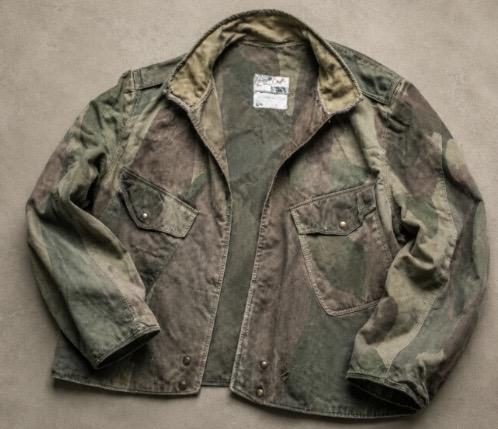
Among the many distinctive items of clothing associated with Britain’s airborne forces during the Second World War, few are as rare or mysterious as the Windak smock. To the casual observer it can appear to be a privately altered Denison, fitted with a full-length zip for an officer who wanted something more practical and better tailored than the standard issue garment. In reality, the Windak was a professionally manufactured, high-quality airborne smock produced in extremely limited numbers under an Air Ministry contract. Most surviving examples are now held in museums or important private collections, making an original one among the most difficult pieces of wartime British airborne clothing to find.
The story of the Windak is closely connected with the rapid creation of Britain’s airborne forces following the evacuation from Dunkirk in 1940. Impressed by the German use of parachute and glider troops, Prime Minister Winston Churchill ordered the formation of a British airborne force. This brought an urgent requirement for specialised clothing that could protect a parachutist, prevent equipment from becoming caught in parachute lines and provide some camouflage once he had landed.
Britain’s earliest parachute smock was heavily influenced by the German Fallschirmjäger jump suit, sometimes known as the Knochensack or “bone sack”. The first British version was a step-in garment with short legs, worn over the soldier’s uniform and equipment. Although it performed its basic purpose, it was awkward to put on and remove and was not particularly suitable for prolonged fighting on the ground.
This early garment was followed by the camouflage airborne smock that became popularly known as the Denison. Introduced during 1942, it was a loose-fitting pullover garment made from heavy cotton twill. Its sand-coloured material carried broad green and brown camouflage strokes, producing the distinctive irregular appearance that would become inseparable from the image of the wartime British paratrooper.
The standard Denison opened only part of the way down the chest and therefore had to be pulled over the head. Four external pockets provided space for ammunition, grenades, maps and other equipment. At the back was a long fabric flap, commonly called the beaver tail, which passed between the wearer’s legs and fastened at the front. This prevented the smock from riding upwards beneath the parachute harness and helped reduce the danger of loose clothing or equipment becoming caught during a jump.
The Denison was a practical garment, but its rough finish and pullover construction were not ideal for everyone. Officers in particular often wanted a smock that was easier to put on, more comfortable to wear and better suited to movement between headquarters, aircraft and the battlefield. Some had their standard Denisons privately altered by unit or civilian tailors, usually by replacing the short chest zip with a full-length fastening. This allowed the smock to be worn like a conventional jacket.
It was against this background that the Windak smock appeared. Exactly who first proposed the garment and why such a small production run was authorised remains uncertain. Surviving evidence shows that a limited number of high-quality camouflage smocks were manufactured by Windak under contract to the Air Ministry. They were not simply standard Denisons cut open and altered afterwards. They were purpose-made garments, constructed from the beginning as a more refined version of the airborne smock.
Windak appears to have been a British manufacturer of quality windproof and outdoor clothing. The company later produced civilian garments for firms including the famous London sporting-goods retailer Lillywhites. This background helps explain the superior materials and workmanship seen in surviving wartime examples. The company possessed experience in producing well-cut outerwear intended to protect the wearer from difficult weather, making it a suitable choice for a specialised Air Ministry contract.
The most immediately noticeable feature of the Windak was its full-length front zip. Unlike a standard wartime Denison, the garment could be opened completely and put on like a jacket. This was far more convenient than pulling a heavy camouflage smock over the head, particularly for an officer wearing battledress, insignia, equipment or a sidearm. It also allowed the garment to be opened for ventilation or removed quickly inside vehicles, aircraft and headquarters.
Its construction was noticeably more sophisticated than that of the mass-produced Denison. Surviving examples are generally made from high-quality windproof gabardine rather than the comparatively coarse heavy twill used for ordinary issue smocks. Some collectors have described the material as having a rayon content or blended composition, giving it a smoother texture and a different drape from the standard garment. The cloth also produced a distinctive appearance as it aged, with the camouflage colours fading in a softer and often lighter manner.
The Windak retained the basic form and purpose of an airborne smock. It carried a camouflage pattern of broad green and brown strokes over a lighter base, together with practical pockets and a tail intended to secure the garment during parachute operations. However, its neater cut, better-quality material and full-length zip made it look more like a specially tailored officer’s field jacket than a standard item drawn from a clothing store.
There were also differences in smaller construction details, although surviving garments are so scarce that variations between individual examples can make precise identification difficult. Pocket shape, fasteners, linings, stitching and camouflage placement must all be examined when assessing a supposed Windak. The camouflage itself was applied to lengths of fabric before the garment was assembled, so the pattern naturally varies from one smock to another.
Because so many wartime Denisons were privately converted with full-length zips, the Windak is frequently misidentified. A modified Denison may have been cut down the front and fitted with a zip removed from another military garment, including the sleeveless parachutist’s oversmock. Such conversions were common enough to appear in wartime photographs and could be carried out to a very high standard. A full-length zip alone is therefore not proof that a garment is a genuine Windak.
An authentic example should show evidence that it was designed and manufactured as a complete front-opening garment rather than altered after production. The arrangement of the front panels, seams, zip, pockets and internal construction should all form part of the original design. The fabric and general quality of manufacture are also important. This is one reason why genuine examples are best assessed by specialists familiar with wartime airborne clothing.
The exact number produced remains debated. A figure of only 154 smocks has been circulated among historians and collectors, which would explain their extraordinary rarity, but surviving official documentation is limited and the number should be treated cautiously unless supported by the original contract or production records. What is certain is that the Air Ministry order was very small compared with the enormous number of standard Denisons manufactured for the expanding airborne forces.
The limited quantity suggests that the Windak was either an experimental garment, a special contract intended for selected personnel or a small-scale attempt to provide a superior pattern for officers. It does not appear to have been issued widely to ordinary parachute battalions. Instead, surviving photographs and known examples indicate that many were worn by senior officers and prominent figures within the airborne establishment.
Lieutenant-General Frederick “Boy” Browning is perhaps the best-known wearer. Browning played a central role in the creation and development of Britain’s airborne forces and was known for taking a close interest in their identity, organisation and appearance. Photographs taken during the war appear to show him wearing a full-front camouflage smock of the Windak type, including during the period of Operation Market Garden.
Other senior airborne commanders associated with the garment include Major-General Richard Gale, commander of the 6th Airborne Division during the Normandy landings, and Brigadier James Hill, who commanded the 3rd Parachute Brigade. A surviving example worn by Charles Strafford is held by the Airborne Assault Museum collection at Duxford. The museum describes Windak smocks as high-quality garments produced in small numbers under an Air Ministry contract and notes that most appear to have been issued to senior airborne officers.
Its association with senior commanders has caused the Windak to be described as an “officer’s Denison”. This is understandable, but the name can be misleading. There was no general issue pattern officially supplied to every airborne officer under that title. Officers wore ordinary Denisons, privately purchased garments, tailored conversions and, in a very small number of cases, purpose-made Windak smocks.
The garment may have been intended to solve several practical problems at once. A senior commander needed to retain the recognisable camouflage clothing of the airborne soldier while also being able to enter and leave aircraft, vehicles, command posts and meetings more easily. A full-length zip made the smock much more convenient. Better windproof material offered improved protection during long periods in exposed positions, while its tailored appearance was more suitable for an officer who might frequently meet commanders from other formations.
There may also have been an experimental purpose behind the contract. Britain’s wartime airborne clothing was continually developing as experience was gained in North Africa, Sicily, Italy, Normandy, Arnhem and the Rhine crossings. Equipment that worked during training did not always prove ideal under operational conditions. Small batches of specialised garments allowed new ideas, materials and construction methods to be tested without interrupting the mass production of standard clothing.
In this respect, the Windak anticipated later developments. The standard wartime Denison remained a pullover garment, but the full-length front zip eventually became a recognised feature of later British parachutist smocks. The 1959 Pattern Denison adopted a full opening front and a more fitted shape, bringing the ordinary issue garment closer to the practical arrangement already seen on the rare wartime Windak.
The Windak should not be confused with the hooded camouflage windproof smock commonly associated with the Special Air Service, Commandos and snipers. The wartime windproof suit was a separate type of loose overgarment, generally worn with matching trousers and fitted with a hood rather than the Denison-style collar and parachute tail. The similarity of the names can cause confusion, but “Windak” refers to the manufacturer connected with this exceptional Air Ministry airborne smock rather than simply describing any military windproof garment.
The garment’s rarity was increased by the harsh conditions in which it was worn. Airborne smocks were working clothing rather than ceremonial uniforms. They were exposed to mud, oil, rain, sweat, tearing, fading and repeated repairs. A senior officer’s garment may have received better care than one worn by a private soldier, but it could still accompany its owner through parachute operations, battlefield inspections and months of campaigning.
After the war, many camouflage smocks continued to be worn until they became unserviceable. Others were modified, passed to foreign forces, used for hunting or outdoor work, or cut up for their distinctive camouflage material. The full-length zip of a Windak could lead later owners to mistake it for a post-war alteration, while damaged labels and faded cloth made identification even more difficult.
As interest in British airborne history grew, surviving Windaks acquired almost legendary status. Collectors realised that the garment was not merely another tailored Denison but a separate, contract-manufactured item connected with some of the most senior figures in the wartime airborne forces. Its combination of exceptionally low production, uncertain origins and photographic links to commanders such as Browning made it one of the most desirable British camouflage garments of the period.
Its value has also attracted reproductions and garments incorrectly offered as originals. Some are honest modern copies made for collectors and historical displays, while others are standard Denisons or reproduction smocks fitted with full-length zips to imitate the rarer pattern. Provenance, detailed construction and expert examination are therefore essential before any supposed example can be accepted as genuine.