Weapons of the Dutch Army in May 1940
When Germany invaded on 10 May 1940, the Koninklijke Landmacht possessed weapons from several generations. Some belonged in a nineteenth-century arsenal; others were sound contemporary designs. Dutch neutrality encouraged reliance on a defensive army, while restricted expenditure through much of the interwar period delayed replacement programmes. Rearmament accelerated in the later 1930s, and mobilisation in August 1939 increased the urgency.
For the ordinary infantryman, the familiar weapon was the Geweer M.95. Adopted in 1895, this Dutch Mannlicher was initially manufactured at Steyr in Austria and subsequently by the Artillerie Inrichtingen at Hembrug. It fired a rimmed 6.5 × 53.5 mm cartridge, was loaded with a five-round clip and required the soldier to operate its bolt between shots. Long and comparatively cumbersome, it nevertheless remained an accurate, serviceable rifle when maintained properly. Its age alone did not place Dutch infantry at a decisive disadvantage: manually operated rifles remained normal equipment in European armies, as shown by the British Lee-Enfield and the German Karabiner 98k, both of which were standard service rifles during the Second World War. Rifles and related carbines were available in substantial numbers.
Sidearms were less uniform. Belgian FN Browning pistols served under the M.25 designation: the No.1 used 7.65 mm ammunition, while the No.2 fired 9 mm Short, or 9 × 17 mm, from an eight-round magazine. Older 9.4 mm M.73 revolvers also remained in service. The Browning had therefore not universally replaced the revolver. These weapons armed officers, certain NCOs and specialist personnel whose duties made a rifle inconvenient. They provided personal protection at close range and contributed little to a unit’s sustained firepower.
That depended heavily on the Lewis M.20 light machine gun. The ordinary rifle squad centred on one of these air-cooled weapons, chambered for Dutch 6.5 mm ammunition. Its conspicuous pan magazine held 97 rounds. This provided considerable fire before reloading, but the gun and its ammunition were burdensome to carry. The 1937 soldier’s handbook credited it with a mechanical firing rate of 450–500 rounds a minute; actual firing had to allow for aiming, bursts and magazine changes. Careful maintenance could produce reliable service, but feeding problems and insufficiently practised crews caused stoppages. Losing the Lewis temporarily meant losing much of the squad’s automatic fire.
For sustained firing, the army relied principally on the Austrian-designed Schwarzlose, designated M.08 and in modified forms M.08/15. Imported weapons were supplemented by Dutch manufacture. Water surrounding the barrel limited overheating, while belt feeding allowed prolonged bursts. Such guns could still make a prepared position dangerous to approach in 1940. Their weight, mounting, cooling water and ammunition made movement considerably harder. A machine gun effective in a defensive emplacement was less convenient when its crew had to change position quickly.
British Vickers M.18 guns and German MG 08-pattern Spandaus, designated M.25, completed this uneven inventory. Purchases of surplus weapons after the First World War had provided relatively economical additions without creating a uniform system. Schwarzlose guns had been converted from 6.5 mm to Dutch 7.9 mm ammunition; Vickers conversions also existed, but unconverted .303-inch, or 7.7 mm, weapons remained. Different mechanisms and ammunition complicated maintenance, training and supply. Many Spandaus served in army anti-aircraft units, where wear and frequent stoppages were more immediate weaknesses than their original design date.
The shortage of weapons able to fire over cover was more serious. The mortier van 8, an approximately 81 mm weapon of French Stokes-Brandt ancestry, was a modern and useful infantry mortar. Bombs dropped into its muzzle could be lobbed into trenches or behind buildings beyond the reach of direct rifle fire. Its maximum range was about 2,200 metres. Yet an ordinary infantry regiment had only six, and total stocks were below 400, with some weapons still awaiting issue. Mortar ammunition also fell below the prescribed reserve. Infantry commanders consequently had limited means of suppressing an enemy position without obtaining help from artillery farther to the rear.
Older guns partly filled this gap. The 6 Veld was actually a 57 mm Krupp piece introduced in 1894. Infantry regiments normally had four for close support, and armour-piercing ammunition gave it a secondary anti-tank role. Its small shell and dated carriage restricted what it could accomplish. More conspicuously antiquated was the 8 Staal, an 84 mm Krupp gun introduced in 1881 and returned to service for local defence. Without a modern recoil mechanism, it jumped backwards when fired and needed to be aimed again. About two rounds a minute, limited traverse and an exposed crew were genuine disadvantages. Nevertheless, an accurately placed shell remained dangerous.
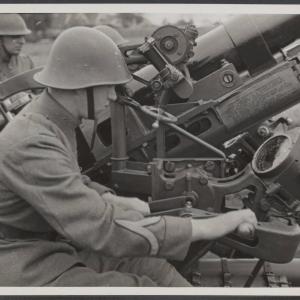
The principal purpose-built anti-tank weapon was considerably more modern. The Austrian 4.7 cm Böhler, known as pantserafweergeschut or simply pag, was a modern 47 mm gun with a low profile and removable wheels. Its crew could move it short distances by hand, while motor transport offered greater mobility between positions. Its quoted penetration of about 30 mm at 500 metres made it effective against many German tanks encountered in 1940, although results depended strongly on range, armour thickness and impact angle. Around 386 of these anti-tank guns were available during the German invasion.
A much smaller contribution came from the 20 mm Solothurn S18-1000, the Dutch geweer tp, or anti-armour rifle. This large, self-loading weapon was manufactured in Switzerland by a company owned by Rheinmetall-Borsig. Of the 340 guns ordered, 125 had been delivered. Limited numbers saw action, but these weapons never supplied the infantry with a widespread additional anti-tank capability.
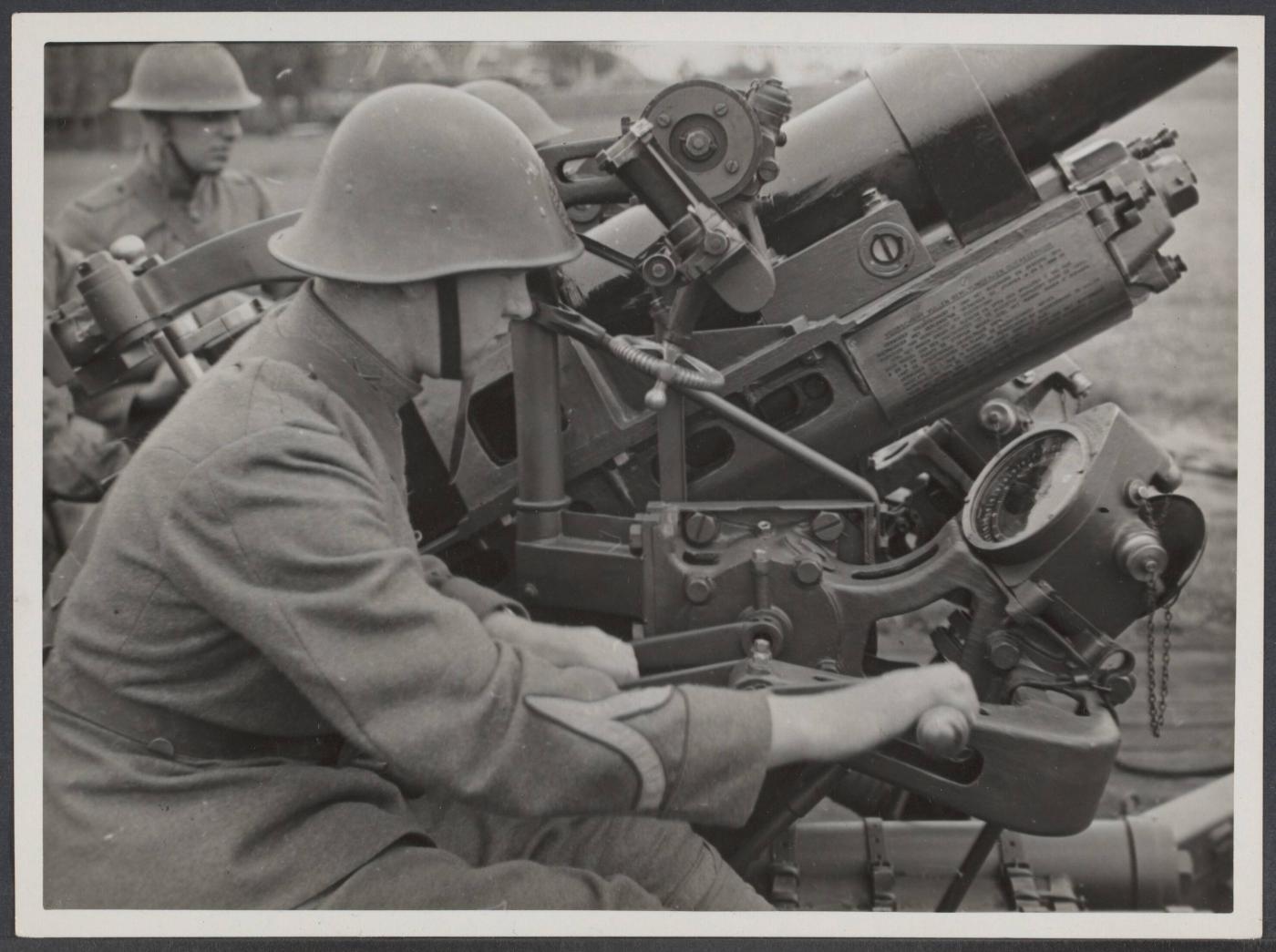
The field artillery showed the same mixture on a larger scale. Its backbone was the 7 Veld, a 75 mm Krupp gun adopted in 1904, with roughly 300 available. It already possessed a recoil system, allowing the barrel to move back without throwing the entire carriage out of position. Interwar alterations and improved ammunition extended its reach to approximately ten kilometres. Though no longer a new design, it remained useful for supporting infantry. Most batteries depended on horses, which complicated rapid changes of position and withdrawal under pressure.
At the modern end stood the 10 Veld, a 105 mm Bofors gun acquired from 1927. Its divided carriage trails allowed a broad arc of fire, and its range exceeded sixteen kilometres. The 52 available pieces had motor traction, including Trado tractors. They provided valuable long-range fire but were too few to transform the artillery as a whole. Alongside them served First World War-era 12 cm and 15 cm howitzers, including the Krupp 15 cm howitzer L/17. These could still deliver effective high-explosive fire. The much older 12 Lang Staal, dating from 1878 and lacking a modern recoil system, imposed more severe limitations.
Even a good gun required observation and communications to place its shells effectively. The fighting on the Grebbeberg exposed this dependence. Telephone links from the forward troops failed, and an artillery liaison officer’s radio was unusable because its battery was exhausted. Supporting batteries sometimes fired but lacked the information needed to engage the most urgent targets. Varied ammunition requirements, uneven distribution and limited mobility added further complications. The useful measure of artillery strength was therefore not simply the number or age of its barrels.
Dutch armament in May 1940 was uneven rather than uniformly antiquated. The rifle remained adequate, several older machine guns could sustain effective defensive fire, and the Böhler and Bofors guns were modern weapons. Other pieces imposed unmistakable limits through slow firing, restricted movement and exposed crews. Above all, shortages of infantry support weapons and limitations in artillery availability left infantry with insufficient readily available support. Combined with weaknesses in training, communications and supply, this made it difficult to turn individual weapons into coordinated firepower when the battlefield changed.
Author: Tom Dankers, Historian - Arnhems Oorlogsmuseum 40-45
Photo: N.V. Vereenigde Fotobureaux, National Archives, Spaarnestad Subjects