Military drug use during the first world war
The intriguing, mind-altering effects of drugs have always been part of human culture. The first signs of drug use date back to 11,000 B.C., when archaeologists found evidence of the earliest man-made alcohol in history. Over the years, many new kinds of drugs, both natural and synthetic, were discovered and used for a plethora of purposes. Besides recreational, ritual, and healing purposes, drugs have also been used for military purposes. For centuries, soldiers have used intoxicating and stimulating substances to reduce fear, endure pain and exhaustion, or increase their fighting ability. However, the First World War marked an important turning point. The unprecedented scale and brutality of industrial warfare, combined with advances in modern medicine and pharmaceutical production, meant that substances such as morphine, cocaine, alcohol, and other stimulants became increasingly available to soldiers. As a result, drug use during the First World War provides an important case for examining how psychoactive substances were used for both medical and military purposes.
Alcohol was one of the most common drugs used by soldiers during the First World War. This was because alcohol served as a multi-purpose resource. The first form of use was medical. Alcohol was used on the battlefield to disinfect the wounds of injured soldiers, while it was also used for anesthetic purposes due to its numbing effects. The second form of use was for social and therapeutic reasons. Due to the trauma caused by years of constant fighting under poor conditions in the trenches, alcohol worked as an agent to suppress the so-called “war fatigue” experienced by soldiers and to keep morale high. Besides suppressing traumatic feelings, it also boosted soldiers’ confidence by making them feel less afraid. This boost in confidence could lead soldiers to take risks they normally would not have dared to take.
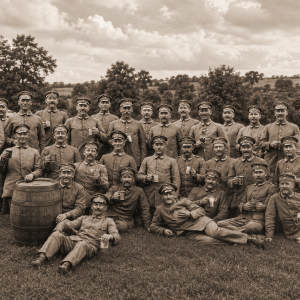
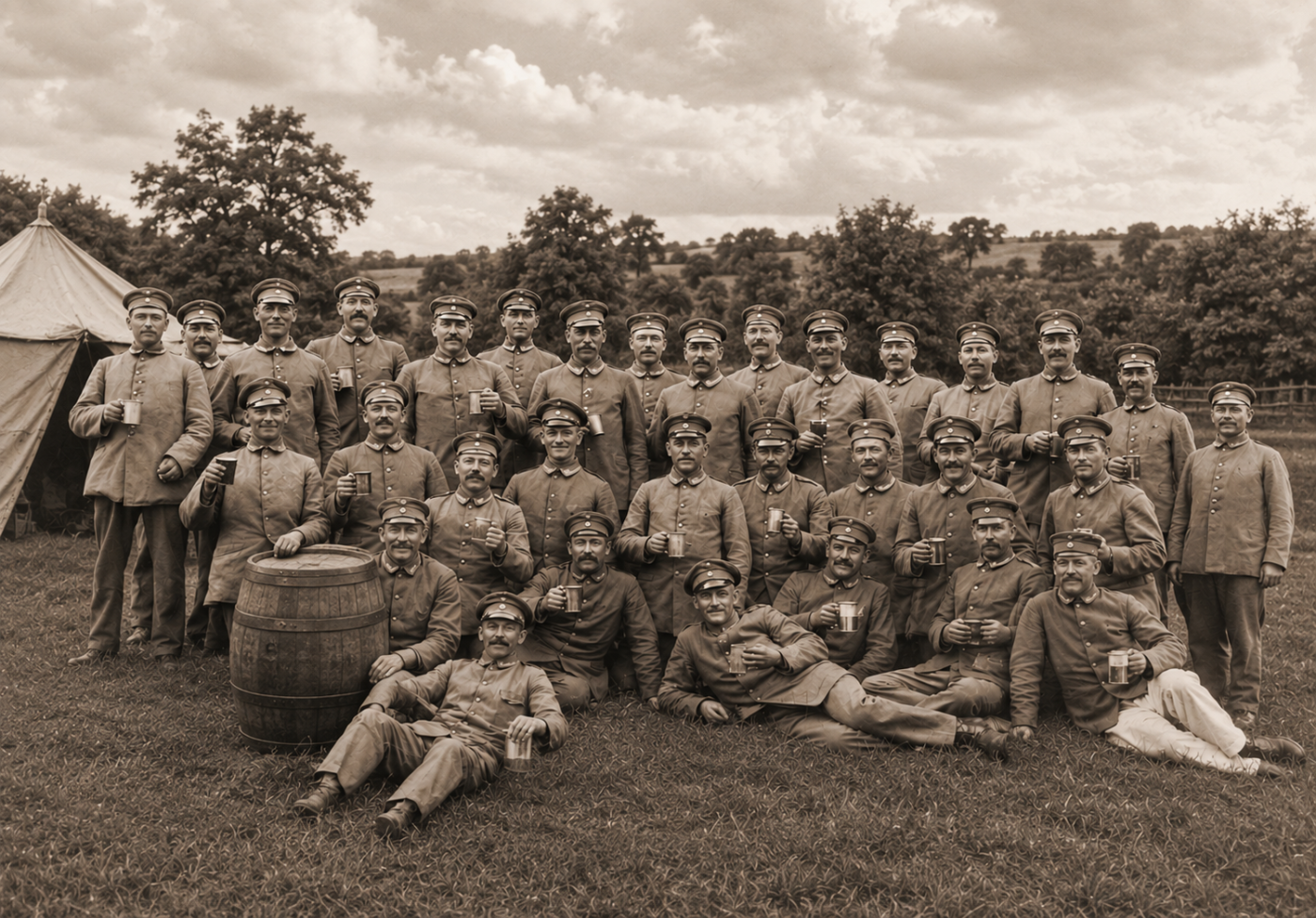
Because of these so-called “benefits,” armies during the First World War commonly supplied their soldiers with rations of alcohol. The types of alcohol varied per country. Russian soldiers commonly consumed vodka, while the British supplied their soldiers mostly with rum. There was an old belief that the moderate intake of rum would provide “Dutch courage,” making soldiers fight better. The term stems from the Anglo-Dutch Wars in the 17th century, when British navy men fueled their courage with a few sips of Dutch gin. The French commonly supplied their troops with Pinard, a low-quality, cheaply made red wine. Before going over the top, French troops were sometimes given rations of brandy. Whereas wine was the staple for the French, the Germans commonly supplied their troops with beer and schnapps. These choices show that all sides used the same main drug, alcohol, but in their own culturally tied forms of beverage.
Outside of the “benefits,” alcohol use also raised concerns within governments about the morale and functioning of troops. An example is the French prohibition of the drink absinthe at the start of the war. Absinthe is a very strong drink containing large amounts of alcohol, ranging from 45% to 92%. The French government blamed its consumption, which totaled thirty-six million liters in 1910, for causing degenerative addiction among the population. This concern became even more significant during the war, as the government feared that excessive alcohol consumption could negatively affect military discipline, efficiency, and the overall strength of the French army. Consequently, the prohibition of absinthe reflected a broader concern about whether alcohol consumption could undermine France's ability to sustain the war effort.
More generally, alcohol consumption could also have several negative consequences for soldiers. While it could temporarily reduce feelings of fear, stress, and exhaustion, excessive consumption could impair judgement, coordination, and reaction time. This was especially dangerous in a military environment, where soldiers were expected to handle weapons, follow orders, and respond quickly under pressure. Heavy and frequent drinking could also contribute to disciplinary problems, accidents, and long-term health issues, including alcohol dependence. Therefore, although alcohol could provide short-term psychological relief, its excessive use could also reduce the effectiveness and reliability of soldiers.
While alcohol was mainly used to reduce fear, stress, and exhaustion, other substances were valued for their stimulating effects. One of the most notable examples during the First World War was cocaine, which was used for both medical and performance-enhancing purposes. Cocaine in its pure form has existed since 1859, when German chemist Albert Niemann succeeded in separating the active agent from coca leaves. Before Niemann, coca leaves had already been used for centuries by the Incas, who chewed the leaves to combat tiredness.
Before the war, cocaine was mostly used for medical purposes. It was widely available in pharmacies and used in multiple forms of medicine. At the time, cocaine was regarded as a harmless drug similar to tobacco, which is why it eventually made its way to the battlefield. At first, it was used as a local anesthetic, but gradually it became more popular and became known as a battle-enhancing stimulant. The German army command even came up with the idea of supplying every soldier with a daily ration of cocaine to decrease appetite and increase fighting spirit. However, the idea was abandoned after it became clear that producing cocaine in such quantities was impossible. The British army also experimented with cocaine as a stimulant. Soldiers were given access to a commercially available product called “Forced March,” produced by the pharmaceutical company Burroughs Wellcome & Co. These tablets contained cocaine and kola nut extract and were advertised as a way to reduce hunger and increase endurance during prolonged physical exertion. Because the tablets had already been used during demanding polar expeditions, the British military considered them useful for helping soldiers endure the physical strain and exhaustion of trench warfare.
At the same time, the war created major opportunities for the Dutch cocaine industry. Before the war, Germany had been one of Europe’s most important producers of cocaine, but the conflict disrupted international trade and restricted German access to coca leaves. German producer Merck, for example, saw its cocaine production fall from nearly 9,000 kilograms in 1913 to only 447 kilograms by 1915. This created space for the Nederlandsche Cocaïne Fabriek (NCF), which had been established in Amsterdam in 1900 and processed coca leaves grown in the Dutch East Indies. Because the Netherlands remained neutral during the war and had access to colonial coca supplies from Java, the NCF was able to expand rapidly. Between 1914 and 1920, its estimated average production reached around 700 kilograms of cocaine per year, with a production capacity of up to 1,500 kilograms annually.
However, the growing use of cocaine among soldiers also began to change the way the drug was perceived. What had previously been regarded as a relatively harmless stimulant, comparable to strong coffee or tobacco, increasingly became associated with addiction and declining military discipline. Reports of soldiers using cocaine to stay awake or cope with exhaustion raised concerns about its effects on military effectiveness. In Britain, these fears grew into a nationwide cocaine scare. Newspapers and politicians portrayed the drug as a serious threat to soldiers, even though later investigations found little evidence that cocaine addiction was actually widespread within the British army. Nevertheless, these concerns contributed to stricter wartime controls on the sale and use of cocaine.
The last of the three major drugs commonly used for military purposes during the First World War was morphine. Morphine originates from opium, which had already been used as a painkiller for thousands of years. However, pure morphine only became available at the beginning of the nineteenth century, when German pharmacist Friedrich Wilhelm Sertürner succeeded in isolating the active substance from opium around 1804. He named the substance morphine after Morpheus, the Greek god of dreams, because of its strong sedative effects. In 1827, the German pharmaceutical company Merck began commercially producing morphine, making the drug increasingly available for medical purposes.
The use of morphine increased even further after the development of the hypodermic syringe during the 1850s. Instead of only consuming opium orally, doctors could now inject a controlled dose of morphine directly into a patient. This made the drug particularly useful for treating severe injuries, and it soon found its way onto battlefields. Morphine was already widely used to treat wounded soldiers during conflicts such as the American Civil War, long before the outbreak of the First World War.
By the time the First World War began, morphine had therefore already established itself as an important military medicine. The enormous number of serious wounds caused by artillery, machine guns, and other modern weapons made powerful painkillers extremely valuable. Morphine could relieve extreme pain and make the transportation and treatment of wounded soldiers more bearable. However, just like cocaine and alcohol, its benefits also came with risks. Repeated use of morphine could lead to tolerance, physical dependence, and addiction. Morphine therefore represents another side of military drug use during the First World War: rather than primarily increasing confidence or endurance, it was mainly used to make the physical consequences of modern warfare more manageable.
In conclusion, the First World War showed how drugs could serve very different military purposes. Alcohol was mainly used to reduce fear, stress, and exhaustion, cocaine was valued for its stimulating effects, while morphine became essential for treating severe battlefield injuries. At the same time, all three substances also brought risks, such as addiction, reduced discipline, and negative effects on military effectiveness. Drug use during the war therefore shows how substances could be both useful tools and serious problems within modern warfare.
Credit: Tom Dankers, Historian - Arnhems Oorlogsmuseum40-45