On this day in military history…
On 20 September 1944, American paratroopers of the 82nd Airborne Division carried out one of the most desperate river assaults of the Second World War. In broad daylight, using fragile canvas boats and with little protection from enemy fire, they crossed the River Waal at Nijmegen as part of the Allied struggle to secure the bridges leading towards Arnhem. The assault came during Operation Market Garden, Field Marshal Bernard Montgomery’s ambitious attempt to open a route into Germany by capturing a chain of bridges through the Netherlands. American airborne troops were assigned the crossings around Eindhoven and Nijmegen, while the British 1st Airborne Division was dropped near Arnhem to seize the final bridge over the Lower Rhine. British XXX Corps would then advance along a single narrow road, cross each captured bridge and relieve the isolated airborne forces.
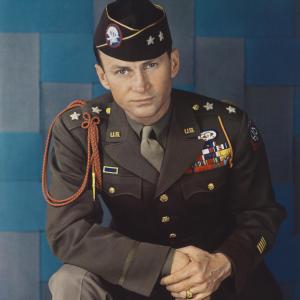
The 82nd Airborne Division, commanded by Major General James Gavin, landed around Nijmegen and the Groesbeek Heights on 17 September. Its objectives included the vital road and railway bridges across the Waal, but Gavin also had to protect the high ground east of the city against a possible German counterattack. This divided his forces at a crucial moment and gave the Germans time to reinforce the northern side of the river. Attempts to capture the Nijmegen road bridge from the south met determined resistance. German troops occupied strong positions in the city and around the bridge approaches, while British tanks arriving with the Guards Armoured Division could not force their way across. With the British airborne troops fighting for survival at Arnhem, every hour of delay threatened the entire operation.
A plan was formed to send American paratroopers across the Waal west of Nijmegen. They would land behind the German defences, advance towards the railway and road bridges and attack their northern ends while British and American troops renewed their assault from the south. The task was given to the 3rd Battalion of the 504th Parachute Infantry Regiment, led by Major Julian Cook. Proper assault boats were not immediately available and canvas boats belonging to British engineers had to be brought forward along the congested road used by XXX Corps. Thirty-two were expected, but only twenty-six reached the river after the vehicle carrying the remainder was destroyed during the journey.
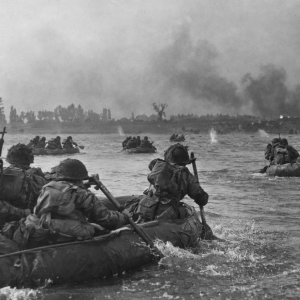
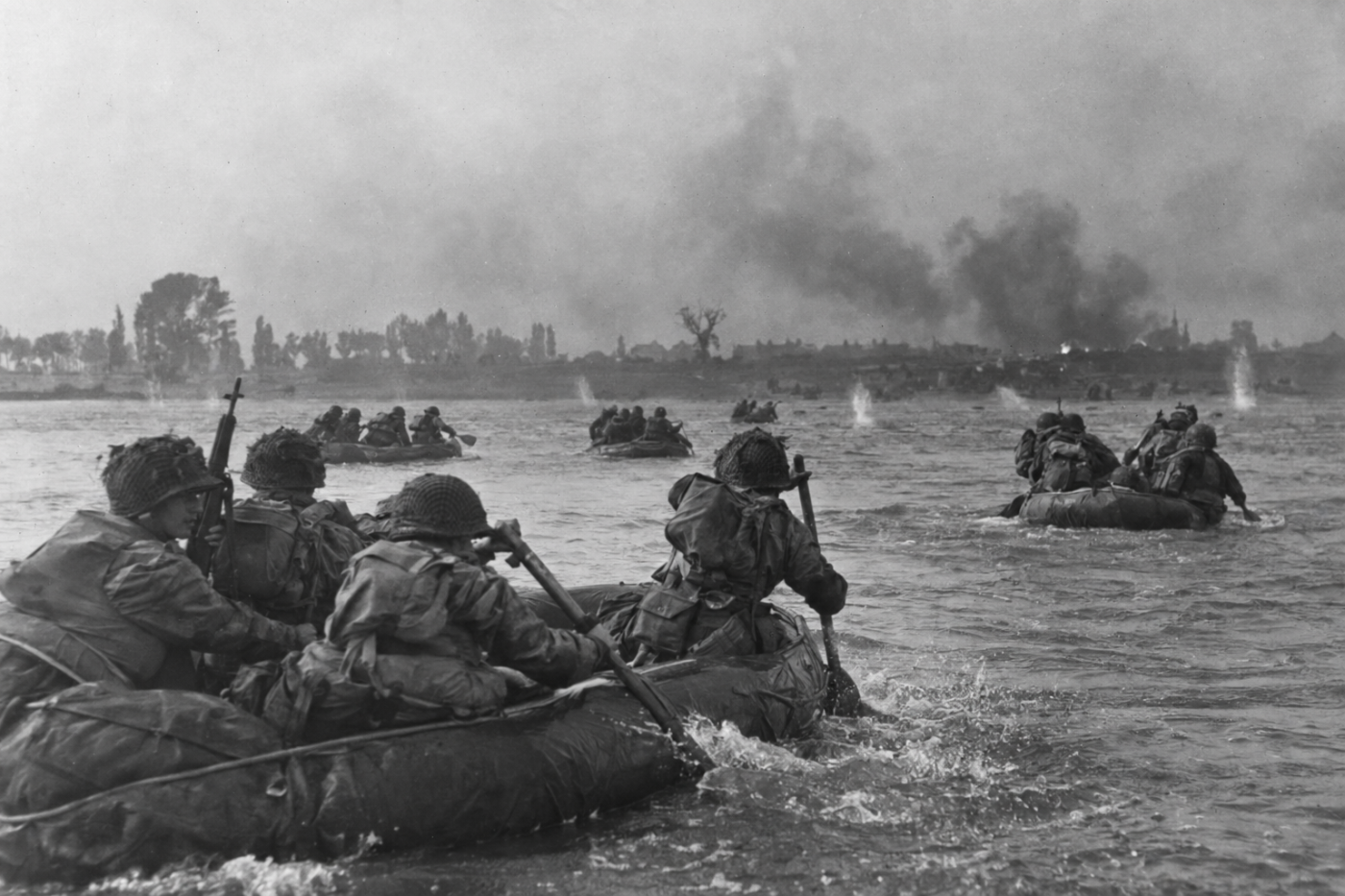
Shortly before 3 p.m., the paratroopers moved towards the southern bank through fields swept by German fire. Smoke was laid to conceal the crossing, but the wind quickly scattered much of it. German machine guns, mortars and artillery opened fire from the opposite bank and the high ground beyond it. The boats offered almost no protection and were constructed from canvas stretched over collapsible wooden frames that could be punctured by bullets or torn apart by shell fragments. Each carried a small group of paratroopers and combat engineers from Company C of the 307th Airborne Engineer Battalion. There were not enough paddles, forcing some men to propel the boats with rifle butts, entrenching tools and their bare hands.
As the first wave entered the river, the Waal became a killing ground. Bullets struck the water around the boats, mortars exploded among them and artillery shells threw columns of water into the air. Boats were holed, overturned or swept downstream. Wounded men struggled in the current while others continued paddling towards the northern bank. Major Cook was said to have encouraged his men by calling out prayers as they crossed. Whatever each soldier’s thoughts during those terrifying minutes, there was little opportunity to turn back. The men could only keep paddling until their boats reached the opposite bank or were destroyed beneath them.
Approximately half the boats survived the first journey. Once ashore, the paratroopers had no time to recover. They charged across the exposed riverbank and attacked the German positions with rifles, grenades and bayonets. Groups of men cleared trenches and machine-gun posts while the remaining boats returned across the river to collect further waves. The crossing continued under fire, with the surviving craft making repeated journeys. More men reached the northern bank and the American foothold gradually expanded. The paratroopers then divided their effort, with one force advancing towards the railway bridge and another turning east towards the main road bridge.
Fighting around the railway bridge was particularly fierce. German troops attempted to withdraw across it but came under fire from the advancing Americans. Other paratroopers pushed along the northern bank towards the massive road bridge, clearing houses, embankments and defensive positions as they went. At the same time, British tanks and American infantry renewed their attack from Nijmegen. Late that afternoon, the Guards Armoured Division began moving onto the road bridge from the south. German demolition charges had been prepared, but the bridge was not destroyed. The reason remains uncertain, although resistance activity, damaged wiring, hurried German preparations and confusion during the battle have all been suggested.
As darkness approached, British tanks crossed the bridge under fire and linked up with the American paratroopers on the northern side. Nijmegen and its vital crossings had finally been secured, but the victory had come at a terrible cost. The riverbank was littered with damaged boats, abandoned equipment and the bodies of men killed during the crossing and the battle beyond it. The courage of the 504th Parachute Infantry Regiment and the airborne engineers had achieved what appeared almost impossible. In daylight and under direct enemy observation, they had crossed a major river in inadequate boats, established a bridgehead and attacked a heavily defended position from the rear.
Yet the capture of Nijmegen came too late to save the main British force at Arnhem. The advance north was delayed by darkness, German defences and the difficulty of moving armour along a raised road surrounded by open ground. By the time XXX Corps attempted to continue towards Arnhem, the British 1st Airborne Division had been fighting in isolation for several days and was running desperately short of ammunition, food and medical supplies. The Waal crossing remains one of the defining actions of Operation Market Garden. It demonstrated the extraordinary determination of airborne troops placed in an almost impossible situation, while also revealing the weaknesses of an operation that depended upon speed, lightly armed paratroopers and the capture of too many bridges along a single vulnerable route.
For the men who climbed into those canvas boats on 20 September 1944, the wider strategy mattered less than reaching the opposite bank and supporting the soldiers beside them. Their assault secured the Nijmegen bridges and entered airborne history as one of the bravest and most costly river crossings of the war.